
Quick Read
- Abigail Spanberger became Virginia’s first female governor, defeating Republican Winsome Earle-Sears.
- Democrats swept all statewide offices in Virginia, including historic wins for Ghazala Hashmi and Jay Jones.
- Spanberger’s campaign focused on economic issues, abortion rights, and bipartisan appeal.
- Her victory is seen as a model for Democrats ahead of the 2026 midterms.
- Republicans face strategic questions after losing another key battleground state.
Spanberger’s Historic Victory: Breaking Barriers in Virginia Politics
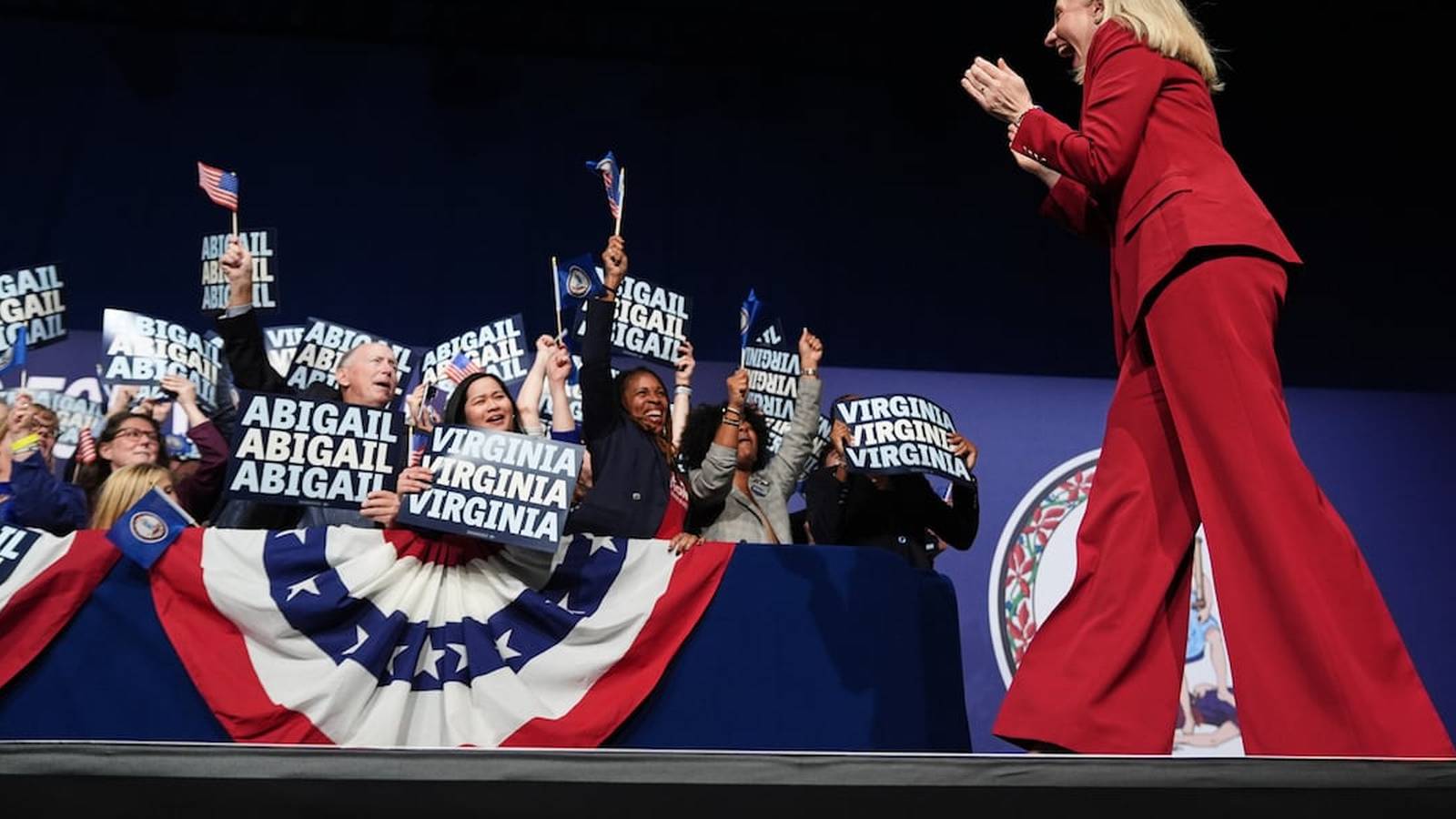
On an unseasonably warm November night in Richmond, Abigail Spanberger stood before a crowd of supporters and made history. The former congresswoman and CIA case officer became Virginia’s first female governor, defeating Republican Lt. Gov. Winsome Earle-Sears in a race closely watched nationwide. The significance of Spanberger’s win extends far beyond Virginia’s borders, sending ripples through the national political landscape as Democrats prepare for the crucial 2026 midterm elections.
“We sent a message to every corner of the commonwealth, a message to our neighbors and our fellow Americans across the country,” Spanberger declared, her voice steady, emotions palpable. “We chose pragmatism over partisanship. We chose our commonwealth over chaos.” Her words captured the mood of the night—a moment where history met strategy, and a state long known for political tradition embraced a new era.
Democratic Sweep and a Night of Firsts
Spanberger’s victory was just the first in a remarkable series of wins for Virginia Democrats. Ghazala F. Hashmi, a state senator, claimed the lieutenant governor’s seat, becoming the first Muslim woman to win statewide office anywhere in the United States. Meanwhile, Jay Jones, the Democratic challenger for attorney general, secured his own historic milestone as Virginia’s first Black attorney general. Together, these victories completed a Democratic sweep of the commonwealth’s top offices, cementing their hold on the state legislature and signaling a broader shift in political power.
For the Republican Party, the outcome was a moment of reckoning. Earle-Sears, who would have become the nation’s first Black female governor, conceded with grace, saying, “If she governs as a moderate, then she will unite us, and she’ll heal our divide and win our support. I hope and pray she does.” Her words reflected both hope and concern, as Republicans face renewed questions about their path forward in battleground states.
Strategy Over Symbolism: Spanberger’s Path to Victory
While Spanberger’s candidacy represented a breakthrough for women in Virginia, she often downplayed the historic aspect during her campaign, focusing instead on economic issues and pragmatic solutions. Her approach was deliberate. She campaigned vigorously across the state, including in traditionally conservative areas, and consistently emphasized her commitment to safeguarding Virginia’s economy from the policies of President Donald Trump’s second administration.
Spanberger’s background as a CIA case officer and her reputation as a bipartisan problem-solver in Congress resonated with voters. She spoke to families about her own experiences raising three daughters in Virginia’s public schools and her dedication to public service. This blend of personal biography and policy expertise helped Spanberger withstand Republican attacks on cultural issues, including claims that she was “extreme” on transgender rights. Instead, she advocated for local control over such decisions, positioning herself as a centrist and bridging divides within the electorate.
Her campaign also leaned into support for abortion rights, a pivotal issue in Virginia, which remains the only Southern state not to enact new restrictions or bans. By balancing her messaging and focusing on the everyday concerns of Virginians—like rising utility costs and job security—Spanberger captured the attention of swing voters who had previously supported Republican Glenn Youngkin.
National Implications: Democrats Eye 2026 with Renewed Optimism
The Virginia gubernatorial race has long been seen as a bellwether for national trends, particularly in years following a presidential election. Since 1976, the commonwealth has often elected a governor from the party opposite the sitting president in their first term. Spanberger’s win, coming less than a year into Trump’s second White House tenure, continues this pattern and raises fresh doubts about the president’s political strength heading into the next cycle.
Democrats nationwide are watching closely. Spanberger’s strategy—emphasizing economic pragmatism, bipartisan appeal, and personal connection—may serve as a template for candidates in other battleground states. Her victory, alongside other center-left women like New Jersey’s Mikie Sherrill, illustrates the growing influence of mainstream Democrats at a time when the party’s progressive wing is also making gains, as seen in Zohran Mamdani’s election as New York City mayor.
For Republicans, the results prompt tough questions about candidate selection, messaging, and the impact of Trump’s polarizing leadership. Notably, Trump offered only lukewarm support for Earle-Sears and did not campaign for her, highlighting internal divisions within the party.
Challenges Ahead: Governing in a Changing Virginia
Spanberger steps into office facing significant challenges. The Trump administration’s moves to shrink the federal workforce, impose tariffs, and pass a reconciliation bill curtailing health care have hit Virginia hard, especially in communities reliant on federal employment. Utility costs are rising, unemployment is creeping upward, and economic uncertainty looms.
Yet Spanberger enters with advantages: a friendly Democratic legislature and a track record of working across the aisle. She has promised to protect Virginia’s fragile economy, invest in public services, and ensure that federal actions do not disproportionately harm her constituents. Early supporters like Stephanie Uhl, a Defense Department employee impacted by the government shutdown, expressed hope that Spanberger’s leadership would bring stability and compassion to state governance.
Her ability to navigate these complex issues will define her tenure. With Democrats controlling both the House of Delegates and the Senate, Spanberger is poised to advance policies previously stymied by Republican vetoes. The next months will test whether her pragmatic, moderate approach can unite a divided state and inspire confidence amid national turbulence.
Controversies and Endorsements: Navigating Political Minefields
No campaign is without controversy, and Virginia’s was no exception. In October, news broke that Jay Jones had sent inflammatory text messages in 2022, prompting calls from Republicans for him to drop out. Spanberger condemned the messages but stopped short of withdrawing her endorsement, highlighting the delicate balancing act required in today’s political climate.
Such moments underscore the complexity of modern campaigns, where personal missteps can have outsized impact and where candidates must constantly weigh principle against pragmatism. Spanberger’s handling of the situation—firm, but not punitive—reflects her broader commitment to measured leadership.
Abigail Spanberger’s election as Virginia’s first female governor is more than a historic milestone—it’s a signal of shifting political dynamics, a triumph of strategic campaigning, and a test case for Democrats aiming to reclaim national momentum. Her challenge now is to translate victory into effective governance, proving that pragmatism and moderation can deliver real results in a divided era.