
Quick Read
- Air Canada has ordered eight Airbus A350-1000 aircraft to replace its aging Boeing 777-300ER fleet.
- The new A350-1000s provide a 9,000-nautical-mile range, enabling nonstop flights to destinations like Sydney and Singapore.
- The transition focuses on fuel efficiency and passenger comfort through lower cabin altitudes and advanced humidity control.
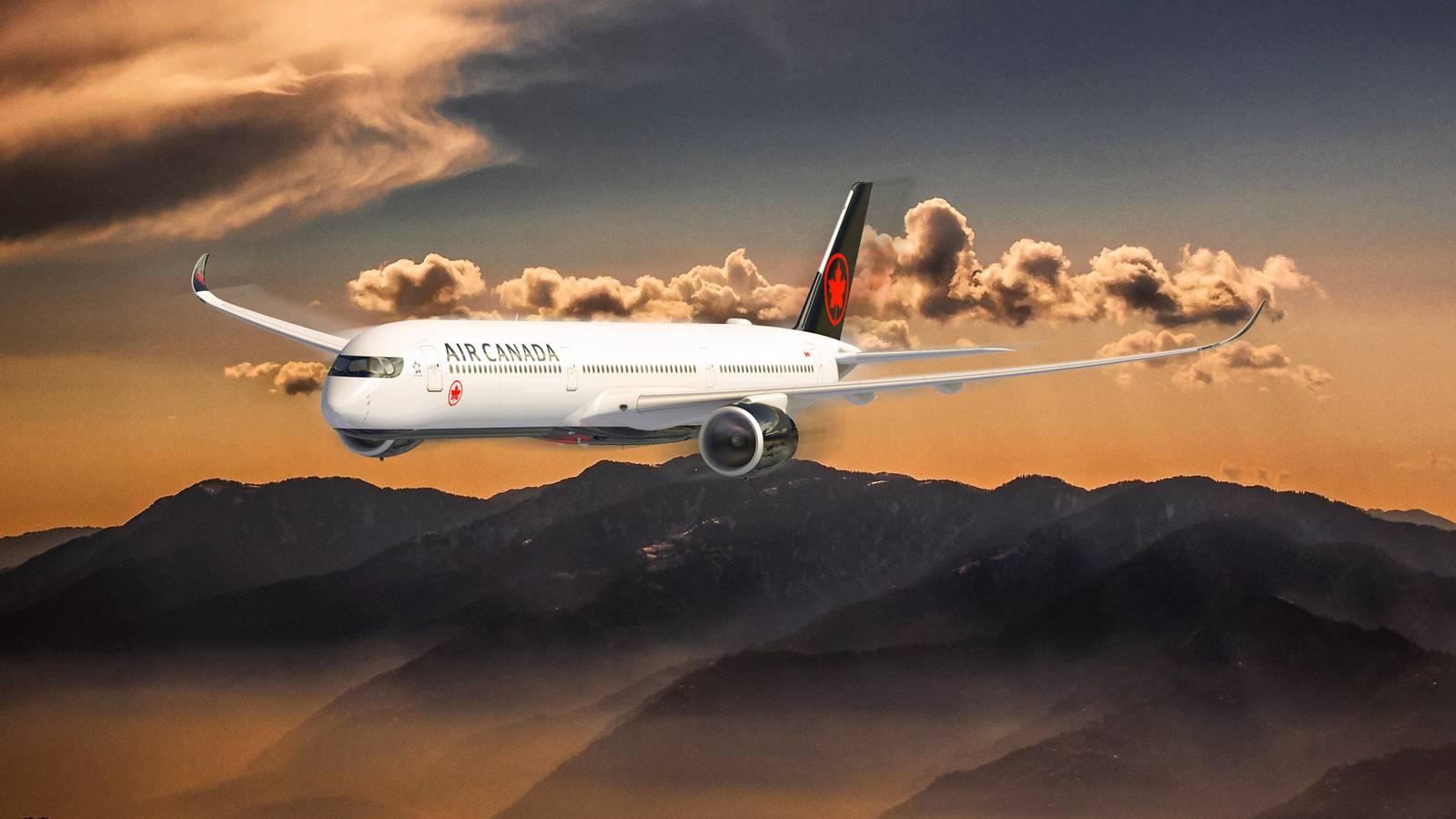
MONTREAL (Azat TV) – Air Canada has officially confirmed a firm order for eight Airbus A350-1000 aircraft, a move that marks a definitive shift in the airline’s long-haul strategy. By transitioning away from its long-standing reliance on the Boeing 777-300ER for ultra-long-haul missions, the flag carrier aims to unlock global routes that were previously physically impossible to fly nonstop with a full payload.
Expanding the Global Flight Envelope
For nearly two decades, the Boeing 777-300ER has served as the backbone of Air Canada’s international network. However, as the fleet nears an average age of 16 years, the aircraft’s inherent limitations in range and fuel efficiency have become a bottleneck for expansion. The A350-1000 offers a significant leap in performance, boasting a range of 9,000 nautical miles compared to the 7,370 nautical miles of the 777-300ER. This difference allows the airline to connect cities such as Toronto and Sydney or Montreal and Singapore without the need for technical fuel stops, effectively turning Canada into a more viable global jumping-off point.
Payload Economics and Operational Efficiency
The transition to the A350-1000 is rooted in the harsh mathematical reality of ultra-long-haul aviation. On the aging Boeing fleet, extreme distances often require restricting passenger capacity or cargo space to accommodate the necessary fuel weight. According to recent industry analysis, the A350-1000’s 70% composite airframe and high-bypass Rolls-Royce Trent XWB-97 engines provide a 25% reduction in fuel burn per seat. This efficiency enables the airline to maintain profitability on thin, high-demand routes that previously required hub-based stopovers, thereby strengthening Air Canada’s competitive position against major US and Asian carriers.
Passenger Wellness as a Strategic Advantage
Beyond the mechanical improvements, the aircraft introduces a cabin environment designed for the biological demands of 17-hour flights. The A350-1000 maintains a cabin altitude of 6,000 feet, significantly lower than the 8,000-foot standard found in older aluminum-bodied jets. This enhancement, coupled with advanced humidity management systems, directly addresses passenger fatigue and dehydration, positioning the onboard experience as a key differentiator in a crowded premium travel market. As the airline prepares for the arrival of these jets, it is building a unified, all-Airbus ecosystem that integrates the A350-1000 with the A321XLR to create a seamless network of primary and regional connections.
The shift to the A350-1000 signifies that Air Canada is no longer prioritizing capacity alone, but rather the operational precision required to dominate the ultra-long-haul market by removing the logistical friction of hub-based transit.