
Quick Read
- Preliminary findings reveal fatal fuel cutoff during Air India Flight 171’s takeoff.
- 260 people, including 241 passengers, died in the crash near Ahmedabad on June 12, 2025.
- Technical and pilot errors, as well as possible software issues, are under investigation.
- The crash has placed India’s aviation safety protocols under global scrutiny.
- This marks the first fatal incident involving Boeing’s 787 Dreamliner model.
The preliminary findings into the tragic Air India Flight 171 crash, which occurred on June 12, 2025, have unveiled a series of critical errors and raised questions about the reliability of modern aviation systems. The crash, which killed 260 people, including 241 passengers and 19 individuals on the ground, remains one of the deadliest aviation disasters in recent history. The Aircraft Accident Investigation Bureau (AAIB) of India released its initial report on July 11, 2025, fulfilling the International Civil Aviation Organization’s (ICAO) requirement to publish findings within 30 days of an incident.
Timeline of the Tragedy
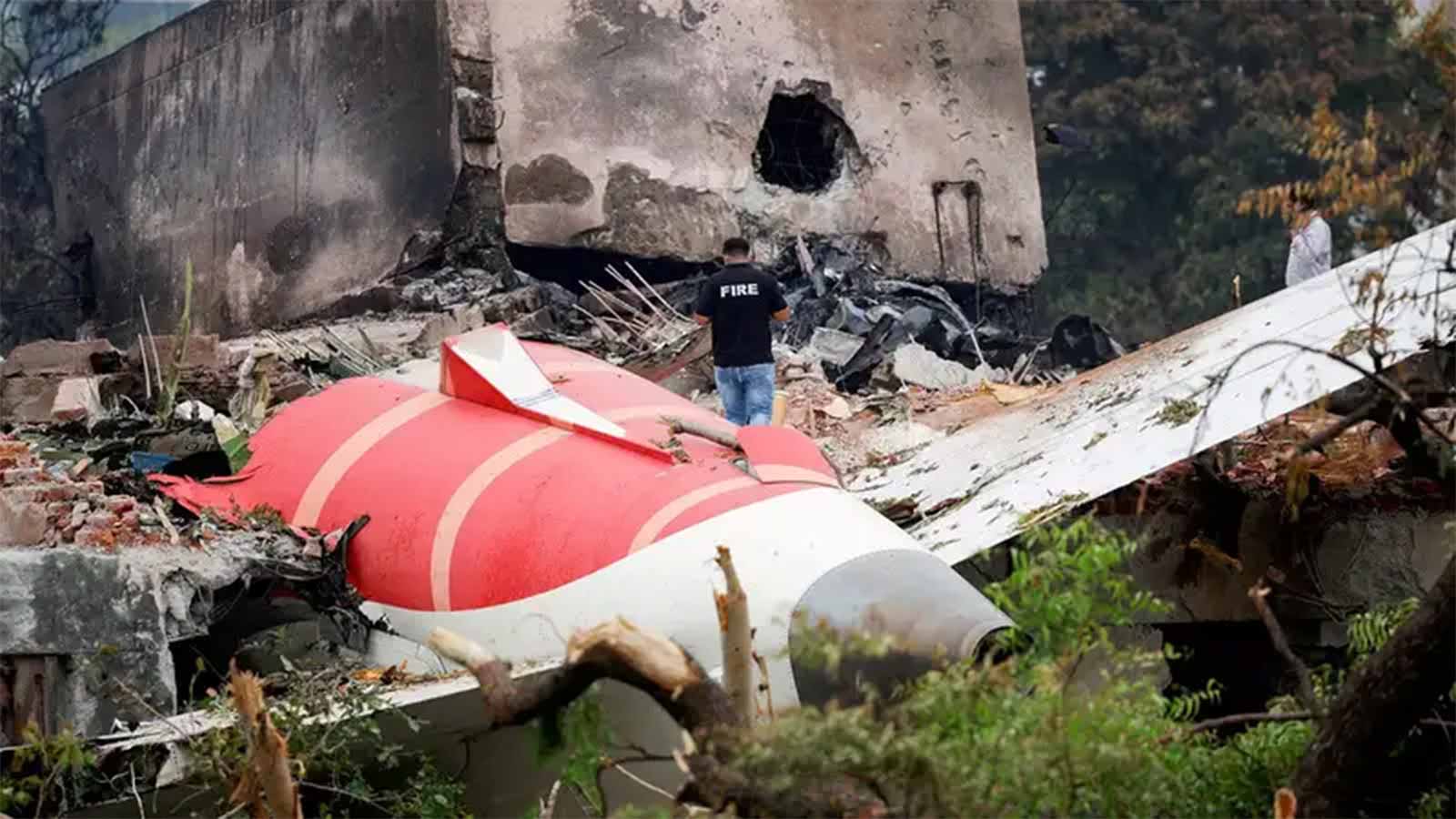
Air India Flight 171, a Boeing 787-8 Dreamliner, departed from Ahmedabad, India, bound for London. Moments after takeoff, the aircraft issued a mayday signal and crashed into a medical hostel building near the Byramjee Jeejeebhoy Medical College. The sole survivor, British national Vishwashkumar Ramesh, described the ordeal as miraculous, saying, “I still cannot believe how I made it out alive.” Among the victims were 169 Indian nationals, 53 British citizens, seven Portuguese nationals, one Canadian, and 12 crew members.
According to BBC, cockpit voice recordings captured a chilling exchange between the captain and the co-pilot. The captain reportedly asked, “Why did you cut off?” The co-pilot responded, “I did not do so.” Investigators found that the fuel cutoff switches for both engines were activated seconds apart, leading to a catastrophic loss of thrust. These switches are designed to remain in the “RUN” position during flight, and their unexpected activation has puzzled experts.
Technical and Operational Concerns
In addition to pilot actions, technical issues have also come under scrutiny. As reported by The Week, U.S.-based investigators, including representatives from the National Transportation Safety Board (NTSB), Boeing, and GE Aerospace, found no immediate mechanical faults with the aircraft. However, the deployment of the emergency ram air turbine (RAT) indicated that both engines lost power due to fuel supply interruption. Questions about possible software faults in the Boeing 787’s Thrust Control Malfunction Accommodation (TCMA) and Full Authority Digital Engine Control (FADEC) systems have also been raised. Aviation attorney Mary Schiavo told Economic Times that such software flaws, if confirmed, could reshape global aviation safety protocols.
The pilot-in-command, Captain Sumeet Sabharwal, had over 10,000 flight hours, while co-pilot Clive Kunder had 3,400 hours of experience. Despite their qualifications, the preliminary findings suggest potential human error in handling the aircraft’s systems. The AAIB has not ruled out sabotage but noted that this line of inquiry remains speculative at this stage.
Ongoing Investigations and Implications
The AAIB’s report emphasizes that the investigation is still in its early stages. The black boxes—comprising the cockpit voice recorder and flight data recorder—were recovered within days of the crash and are being analyzed in collaboration with international experts. According to Mirror, the Indian government has ordered comprehensive inspections of Air India’s fleet of 33 Boeing 787 Dreamliners to ensure safety compliance.
The crash has placed India’s aviation sector under intense global scrutiny. Aviation Week highlighted concerns about the country’s ability to manage large-scale investigations and implement effective regulatory oversight. Critics argue that systemic gaps in training and compliance monitoring may have contributed to the tragedy. Meanwhile, families of the victims are demanding accountability and transparency, with many calling for reforms in aviation safety protocols.
A Tragic Milestone for the Dreamliner
This incident marks the first fatal crash involving Boeing’s 787 Dreamliner, a model celebrated for its advanced technology and safety features. Aviation experts are now questioning whether over-reliance on automated systems may have played a role in the disaster. The findings of this investigation are likely to influence future aircraft designs and operational procedures.
The Air India Flight 171 crash serves as a grim reminder of the complexities and challenges of modern aviation. As investigators work to uncover the full story, the world watches closely, hoping for answers that will prevent such tragedies in the future.