
Quick Read
- The Alaska Volcano Observatory raised the alert level for the Atka complex to Advisory following a surge in seismic tremors.
- Monitoring data indicates elevated sulfur dioxide emissions, suggesting increased volcanic unrest at the Korovin vent.
- The current Yellow aviation code reflects potential risks to regional flight paths, though no immediate eruption is confirmed.
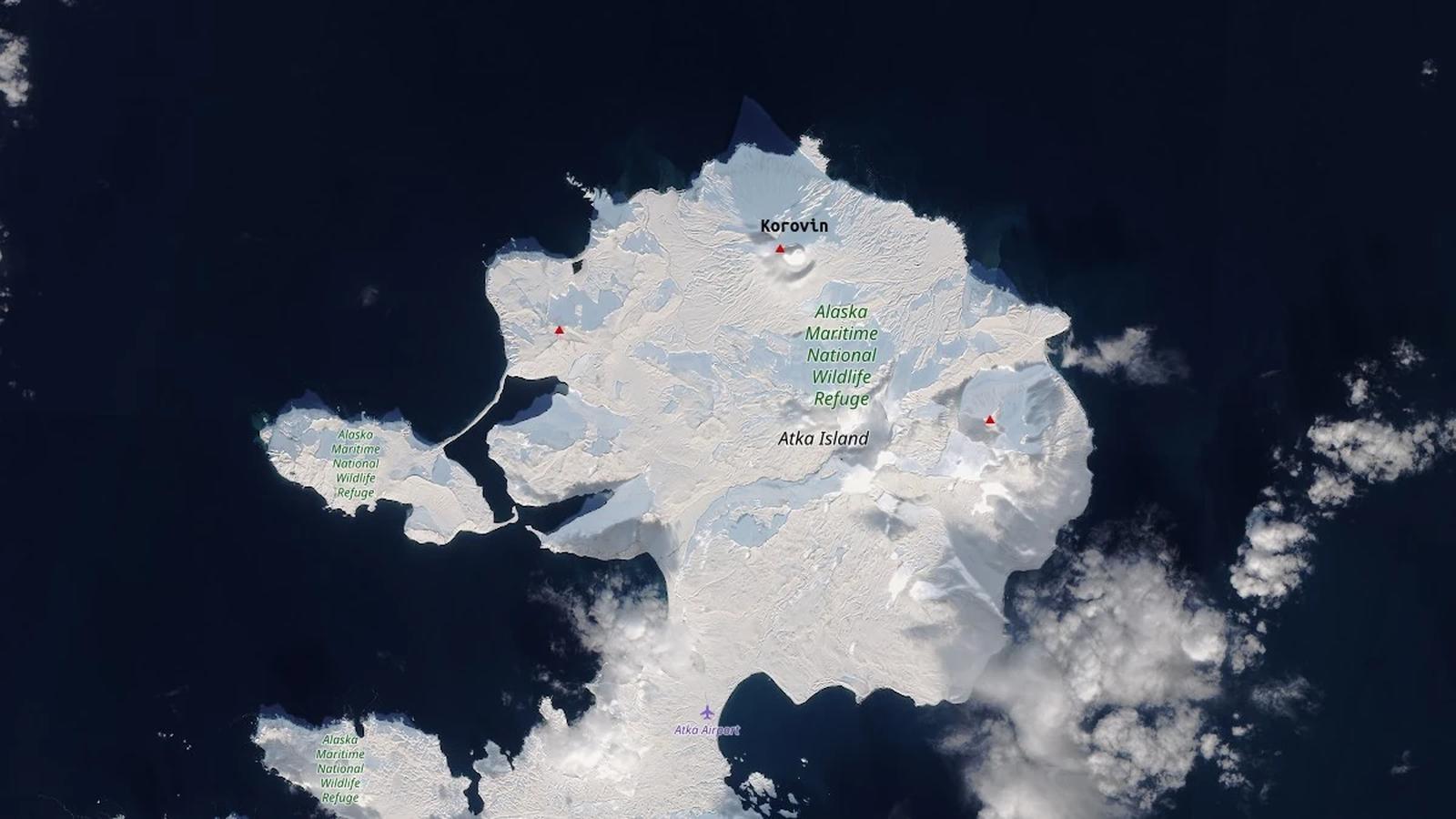
ANCHORAGE (Azat TV) – The Alaska Volcano Observatory (AVO) has raised the alert level for the Atka volcanic complex to Advisory, following a sudden surge in seismic activity and detected gas emissions. The shift, confirmed early March 15, 2026, marks a notable escalation in potential eruptive risk for the central Aleutian Islands region, specifically targeting the Korovin volcano.
Seismic Unrest at Atka Volcanic Complex
Between 00:20 and 00:30 UTC on March 15, monitoring networks captured a distinct burst of earthquake activity accompanied by weak volcanic tremors. This pulse follows a week of elevated unrest characterized by minor seismic events beneath the complex. Satellite data has simultaneously confirmed increased concentrations of sulfur dioxide gas, a primary indicator of magma movement and volcanic unrest.
Geologists at the AVO have identified Korovin volcano as the most probable site for any imminent eruptive activity. Historically the most active vent within the Atka system, Korovin rises 1,533 meters above sea level and has a documented history of explosive events, including significant ash plumes in 1998 that reached altitudes of 10,600 meters. While current activity is classified at an Aviation Color Code of Yellow, officials warn that any escalation could pose immediate hazards to regional flight corridors.
Monitoring and Regional Safety
The AVO continues to utilize an integrated network of seismic sensors and remote sensing technology to track the complex. The current advisory serves as a precautionary measure, distinguishing this genuine geological event from unrelated social media misinformation regarding volcanic activity elsewhere in the United States. While public concern regarding volcanic stability often spikes during periods of seismic unrest, experts emphasize that monitoring protocols are strictly data-driven.
The community of Atka, situated approximately 16 kilometers south of the complex, remains under observation. Although historical eruptions from Korovin have typically involved short-lived explosive phases and limited lava flows, the proximity of the vents to aviation routes necessitates the heightened alert status. The observatory maintains that the current status is strictly an advisory, reflecting the ongoing, rather than immediate, nature of the volcanic unrest.
While seismic data confirms a genuine escalation at the Atka complex, the clear distinction between validated scientific monitoring in Alaska and the recent debunked hoaxes regarding Yellowstone highlights a critical need for localized, data-verified reporting in volatile geological zones.