
Quick Read
- FX’s ‘Alien: Earth’ premieres August 12, 2025, redefining the Alien franchise with Noah Hawley at the helm.
- Set in 2120, the series explores human drama, technological ethics, and extraterrestrial threats two years before the original 1979 Alien film.
- New creatures join the iconic Xenomorphs, with a focus on character-driven storytelling and philosophical themes.
- Wendy, played by Sydney Chandler, leads a mission to investigate a Weyland-Yutani ship crash carrying alien specimens.
- The series has received critical acclaim, boasting a 94% Rotten Tomatoes score and promises to expand the boundaries of sci-fi television.
FX’s latest addition to the iconic Alien franchise, Alien: Earth, premiered on August 12, 2025, on FX and Hulu, marking a bold new direction for the legendary science fiction saga. Under the creative leadership of Noah Hawley, known for his Emmy-winning work on Fargo and Legion, this series offers a groundbreaking narrative that merges philosophical depth with thrilling action. Set two years before the events of Ridley Scott’s 1979 masterpiece, Alien, the series explores humanity’s race for immortality amid a chilling extraterrestrial threat.
A Shift in Storytelling: From Survival to Philosophy
Unlike the films that came before it, which focused on two-hour survival stories, Alien: Earth embraces the long-form storytelling of television. Noah Hawley explained this shift, stating, “An Alien movie is a two-hour survival story, and a television show can’t be that. It’s long-form storytelling about multiple characters who don’t die, that we have to invest in over a long period of time.” This approach allows for a deeper exploration of human drama and philosophical themes, while still delivering the franchise’s signature tension and horror.
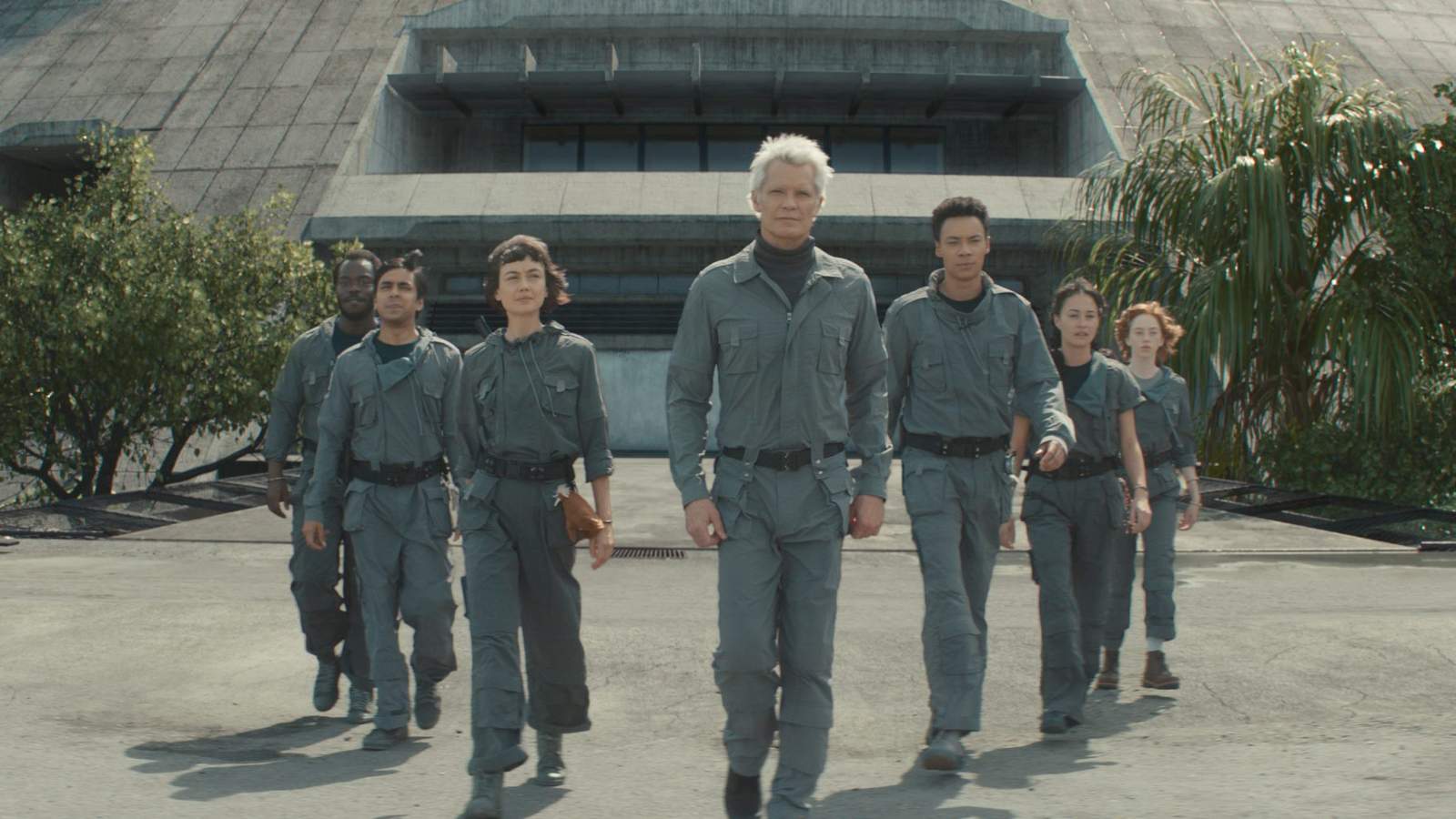
Hawley’s innovative narrative begins with a revolutionary technological breakthrough by the Prodigy Corporation: the creation of hybrids—synthetic beings infused with human consciousness. The story revolves around Wendy, a hybrid prototype played by Sydney Chandler, who leads a mission to investigate the crash of the USCSS Maginot, a Weyland-Yutani vessel carrying samples of five alien life forms, including the iconic Xenomorphs.
New Monsters and Fresh Terrifying Creatures
While the Xenomorph remains central to the Alien mythology, Alien: Earth introduces a host of new creatures designed to rival its terror. As Babou Ceesay’s character Morrow ominously warns, “Five different life forms from the darkest corner of the universe. Monsters.” These new additions promise to expand the franchise’s horror repertoire, adding layers of complexity to the extraterrestrial threat.
Hawley’s decision to momentarily sideline the monsters to focus on character-driven storytelling was a deliberate one. “The point of the show can’t be the monsters; otherwise, you have a very short show,” he explained. This approach allows the series to delve into themes of identity, mortality, and the ethical dilemmas surrounding technological innovation, before reintroducing the terrifying creatures that fans have come to expect.
Connecting the Past and the Future
Set in the year 2120, Alien: Earth is intricately woven into the fabric of the Alien universe. It serves as a prequel, taking place two years before the original film, while also distancing itself from the narrative arc established by Ridley Scott’s Prometheus and Alien: Covenant. According to GQ, Hawley opted to sidestep the bioweapon origin story of the Xenomorphs, instead portraying them as the result of millions of years of evolution. This choice aligns with the series’ overarching theme of existential inquiry, making it accessible to both longtime fans and newcomers.
Hawley’s commitment to the franchise’s legacy is evident in his portrayal of strong female protagonists. Wendy, inspired by the character from Peter Pan, embodies the resilience and ingenuity that have defined the series’ heroines, from Sigourney Weaver’s Ripley to Katherine Waterston’s Daniels. As Hawley noted, “The identity of Alien is female… It was very important for me to stay true to that identity.”
Behind the Scenes: A Production of Epic Proportions
The scale of Alien: Earth is nothing short of extraordinary. With 20 sound stages and a crew of 750, the production reflects Disney’s commitment to delivering high-quality content. As Hawley remarked, “You build a system of human beings in which there’s accountability, responsibility, and respect.” This meticulous approach extends to the show’s visual and practical effects, which aim to create an immersive experience for viewers.
The series also boasts an impressive cast, including Timothy Olyphant as the dry, sassy android Kirsh, and Babou Ceesay as the enigmatic cyborg Morrow. Olyphant, known for his roles in Justified and Fargo, brings a unique blend of wit and gravitas to his role, further elevating the series.
A Bold New Chapter
With an ambitious eight-episode arc, Alien: Earth promises to captivate audiences with its blend of spectacle and substance. As Hawley put it, “My big hope is that I entertain the planet Earth for the summer! But… I hope that people find themselves walking away from every episode not being able to get the story, the characters, and the dilemmas out of their head.”
Premiering to critical acclaim, with a 94% score on Rotten Tomatoes, the series is already being hailed as a triumph. Alien: Earth not only expands the boundaries of the Alien franchise but also redefines what science fiction can achieve on television. For fans of the genre, this is a must-watch event that promises to leave an indelible mark on the legacy of the Alien universe.
As the first live-action Alien series, Alien: Earth is a testament to the enduring power of the franchise, blending innovation with reverence for its roots. It’s a thrilling new chapter that invites viewers to explore the depths of both outer space and the human condition.