
Quick Read
- All living Israeli hostages held by Hamas in Gaza were released today after intense negotiations.
- Israel freed 250 Palestinian prisoners as part of the exchange; 154 were deported to Egypt.
- Only 4 of 28 deceased hostage bodies were returned, sparking outrage among families.
- World leaders, including Trump, gathered in Egypt for a peace summit marking the ceasefire.
- Humanitarian aid convoys entered Gaza, but needs remain critical.
All Living Israeli Hostages Released: A Day of Relief and Reckoning
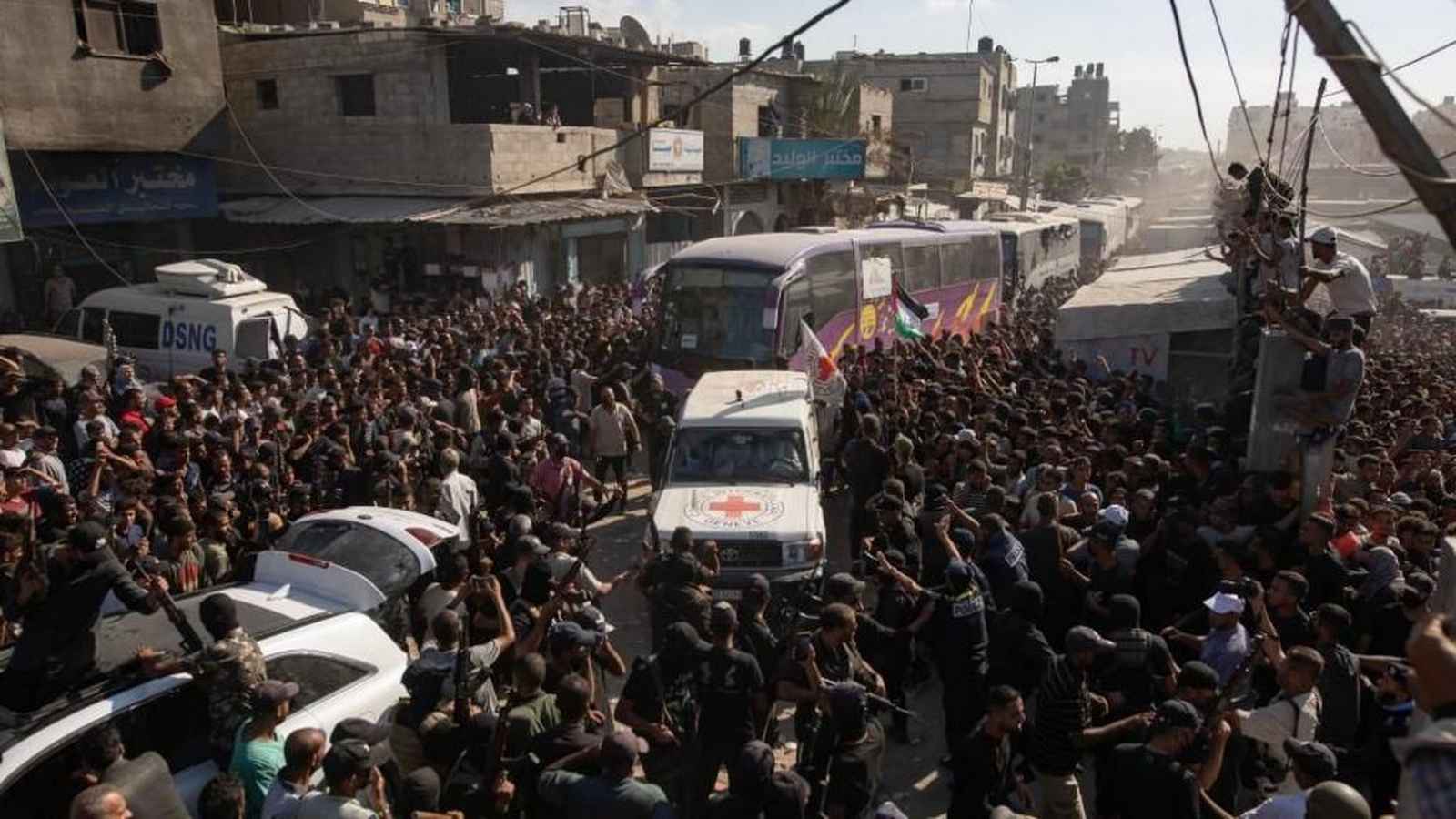
After months of uncertainty, all remaining living Israeli hostages held by Hamas in Gaza were freed today in a landmark prisoner exchange deal, sending waves of emotion through families and political corridors alike. Convoys of Red Cross vehicles carrying the last 13 survivors crossed into Israeli territory, greeted by tearful relatives and medical teams ready to begin the process of healing.
Images from Reuters and NBC News captured the moment hostages like Avinatan Or, Evyatar David, and Ziv Berman arrived at Israeli hospitals, their faces marked by exhaustion and relief. The Israeli Defense Forces released a poignant video showing Eitan Mor, one of the freed hostages, embracing his parents—his father’s sobs echoing the pain and hope of a nation.
Prisoner Exchange: Complex Emotions and Political Calculations
The deal was far from simple. In exchange for the hostages, Israel released 250 Palestinian prisoners, many serving life sentences. While some returned to the West Bank or Gaza, a significant number—154—were deported to Egypt, as confirmed by the Palestinian Prisoners’ Authority. The release was celebrated in Gaza, with crowds gathering at Nasser Hospital to welcome the freed Palestinians. Hamas hailed the event as a «national achievement», framing it as a milestone in their struggle for freedom.
Yet, for families of the deceased hostages, the day brought heartbreak. Of the 28 hostages confirmed dead in captivity, only four bodies were returned. The Hostages and Missing Families Forum called it a «blatant breach» of the agreement, demanding that mediators hold Hamas accountable and ensure all remains are repatriated.
International Summit: Trump, World Leaders, and the Promise of Peace
As the hostages were released, global attention shifted to Sharm el-Sheikh, Egypt, where U.S. President Donald Trump, flanked by Israeli and Egyptian leaders, presided over a summit aimed at cementing the ceasefire and launching what he termed «Phase 2» of peace negotiations. Trump’s speech in the Knesset was met with thunderous applause, as he declared, «the long and painful nightmare is finally over» and envisioned a «historic dawn of a new Middle East».
Trump’s 20-point peace plan proposes an international «Board of Peace» to oversee Gaza’s governance, with Egypt’s President el-Sisi offered a seat. The U.S. president also called for Israeli Prime Minister Netanyahu to be pardoned, a move that surprised many and underscored the deeply personal nature of the day’s diplomacy.
The summit drew over 20 world leaders, including France’s Emmanuel Macron and Britain’s Keir Starmer, all pledging support for Gaza’s reconstruction and for a fragile peace. Notably, Netanyahu’s attendance was subject to last-minute reversals, reflecting the tense and unpredictable nature of the negotiations.
Behind the Headlines: Families, Trauma, and Unanswered Questions
For the families, the release marked the end of a harrowing ordeal—but not all wounds will heal quickly. Videos circulated of hostages making their first calls home, voices trembling with emotion. Elkana Bohbot, taken from the Nova music festival, greeted his mother with «Everything is fine, relax», a phrase that belied the trauma of captivity.
On the Palestinian side, families waited anxiously outside the Ramallah Cultural Palace, many avoiding interviews for fear of re-arrest. Celebrations mingled with caution, as some former prisoners recalled previous detentions and ongoing surveillance.
Amid the relief, tensions persisted. Young Palestinians threw stones at Israeli vehicles outside Ofer Prison, met with tear gas in response. The scars of conflict—physical and psychological—remain raw.
The Road Ahead: Uncertain Future for Gaza and Israel
While the guns have fallen silent for now, the path to lasting peace is fraught with challenges. The devastation in Gaza, the search for remaining hostage bodies, and the question of who will govern the Strip loom large. Trump and his envoys have called for disarming Hamas and establishing a new governing authority acceptable to the international community—a task that will require not just political will, but local trust.
Humanitarian needs are urgent. Over 170 aid trucks entered Gaza yesterday, carrying food, fuel, and medical supplies. Yet, as Hamas officials noted, the quantities remain «very limited» given the scale of destruction.
Political calculations continue. Netanyahu, praised by Trump as a «man of exceptional courage», faces ongoing legal challenges and internal divisions. The Israeli opposition leader, Yair Lapid, was publicly acknowledged by Trump, hinting at the delicate balance of power in Israeli politics.
As the region stands at a crossroads, world leaders have called for translating battlefield victories into a sustainable peace. Trump, compared by Israeli officials to Cyrus the Great, has been cast as a pivotal figure in Jewish history—a narrative that speaks to both gratitude and the high stakes of the moment.
Assessment: Today’s release of all living Israeli hostages marks a watershed in the Israeli-Palestinian conflict, demonstrating the power—and fragility—of diplomacy under immense pressure. Yet, the partial return of bodies and the ongoing humanitarian crisis highlight that peace remains an aspiration, not a certainty. The next chapter will demand careful stewardship from leaders, empathy for those scarred by loss, and vigilance against the resurgence of violence.
Image Credit: bbc.com