
Quick Read
- Andrey Santos started for Chelsea against Fulham on January 7, 2026, after an impressive prior appearance.
- He nearly scored early in the match, hitting the crossbar from an Enzo Fernandez corner.
- Santos was tactically substituted in the 28th minute, replaced by Jorrel Hato.
- His substitution followed Marc Cucurella’s red card (22nd minute), a move to re-establish defensive compactness.
- Chelsea ultimately lost the match 2-1 to Fulham at Craven Cottage.
The chill of a January evening on the banks of the Thames often brings with it the biting intensity of a West London derby. On January 7, 2026, Craven Cottage played host to one such encounter, as Fulham welcomed Chelsea in a match that promised drama and delivered it in spades. For young Brazilian midfielder Andrey Santos, it was an opportunity to build on an ‘impressive substitute appearance at Man City,’ earning him a place in the starting XI under Under-21s boss Calum McFarlane, with new head coach Liam Rosenior observing from the stands. Little did anyone know, Santos’s promising start would become an early casualty of circumstance, overshadowed by a pivotal moment that reshaped the entire contest.
A Glimmer of Promise: Santos’s Early Impact
Chelsea, despite the challenging circumstances of a transitional period, began the match with a clear intent. Six changes had been made to the side, signaling a desire for fresh impetus and energy. Santos, alongside returning players like Sanchez and Cucurella, and the reinstated Moises Caicedo, was tasked with injecting dynamism into the midfield. The early exchanges saw both sides probing, but it was Chelsea who created the first significant moments of genuine threat. Enzo Fernandez, the Argentine maestro, was at the heart of much of Chelsea’s attacking play, particularly from set-pieces.
One such moment arrived when Fernandez swung a corner towards the back post. There, rising above the Fulham defence, was Andrey Santos. With a perfectly timed leap and a precise header, he guided the ball with conviction. The collective gasp from the Chelsea faithful was almost audible as the ball struck the crossbar, denying the young midfielder a spectacular opening goal. It was a tantalizing ‘what if’ moment, a near-perfect execution that showcased his burgeoning talent and attacking instincts. Caicedo’s subsequent follow-up was scrambled off the line, a clear indication that Chelsea were building pressure and Santos was central to their offensive thrust.
The Unforeseen Turning Point: Cucurella’s Red Card
Football, however, is a game of fine margins and sudden shifts. Just as Chelsea seemed to be gaining a foothold, a catastrophic moment turned the tide decisively against them. In the 22nd minute, a long pass from Fulham goalkeeper Bernd Leno initiated a foot race between Harry Wilson and Marc Cucurella. Under pressure, Wilson went down, and referee Peter Bankes made the fateful decision: a free-kick to Fulham and a red card for Cucurella, deemed to have denied a clear goalscoring opportunity. Suddenly, Chelsea were reduced to ten men, facing more than 65 minutes with a significant numerical disadvantage.
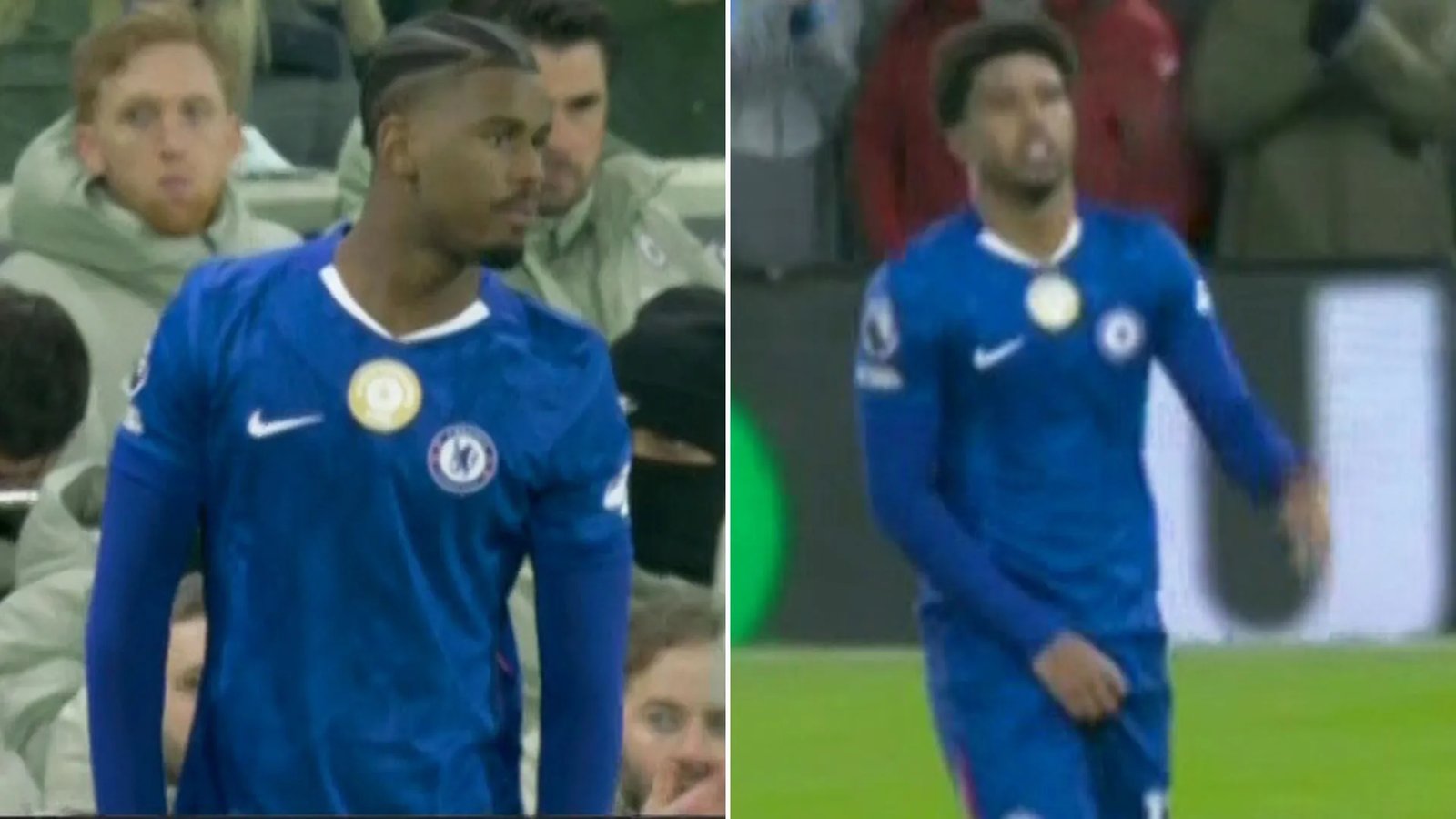
This dismissal fundamentally altered the strategic landscape of the match. Calum McFarlane, thrust into the unenviable position of managing a ten-man side, had to make an immediate and difficult decision. The need for defensive solidity and structural integrity became paramount. It was a cruel twist of fate for Andrey Santos. Just six minutes after the red card incident, in the 28th minute, Santos’s number went up, and he was replaced by Jorrel Hato. This was not a reflection of his performance, which had been bright and impactful, but a harsh tactical necessity. McFarlane’s hand was forced; sacrificing an attacking midfielder was the most logical step to re-establish compactness and prevent Fulham from exploiting the newfound space.
A Battle of Resilience: Chelsea’s Ten-Man Fight
Despite the setback, Chelsea displayed commendable resilience. Playing with ten men is an arduous task, especially against a well-drilled side like Fulham. The Blues had to dig deep, demonstrating character and tactical discipline to remain competitive. Fulham eventually broke the deadlock in the second half through Raul Jimenez, who powered a header beyond Robert Sanchez. Yet, Chelsea refused to yield. Liam Delap, spearheading the attack, equalized from close range after Fulham failed to clear a corner, igniting hope among the travelling support. The momentum, against all odds, seemed to swing back towards the visitors.
However, the numerical disadvantage ultimately proved insurmountable. With just nine minutes left on the clock, Harry Wilson’s shot deflected off Reece James and found the back of the net, sealing a 2-1 victory for Fulham. Chelsea’s efforts, marked by courage and determination, ultimately went unrewarded. The match served as a stark reminder of how quickly fortunes can change in football, and how individual moments can dictate the entire narrative of a game.
Unconfirmed Claims and the Reality of Tactical Decisions
It is important to address a narrative that emerged in some reports following the match. Headlines from publications such as The Sun hinted at a specific, injury-related reason for Andrey Santos’s early substitution, suggesting he was ‘hit in privates with a blistering shot’ just moments before being withdrawn. However, upon reviewing the official match report from Chelsea FC, no confirmed information exists to support this claim. The official account clearly states that Santos’s replacement by Jorrel Hato in the 28th minute was a direct tactical response to Marc Cucurella’s red card. The decision was made to ‘ensure the Blues remained compact’ after being reduced to ten men. In the absence of any factual corroboration from official or confirmed sources regarding an injury, the most accurate conclusion is that Santos’s substitution was a pragmatic, albeit unfortunate, tactical sacrifice by the coaching staff.
Looking Ahead: Santos’s Path in a Dynamic Chelsea Side
Andrey Santos’s journey at Chelsea, like that of many young talents, is likely to be one of fluctuating fortunes and learning curves. This match, though ending in personal disappointment with an early exit, also highlighted his potential. His impactful presence and near-goal moment demonstrated why he is considered a promising prospect. While the immediate aftermath of such a game can be frustrating, the experience of being part of a starting XI in a high-stakes derby, and then being tactically sacrificed, offers invaluable lessons. As new head coach Liam Rosenior begins his work with the squad, Santos will undoubtedly be eager to prove his worth again, ready for the next opportunity to cement his place in a dynamic Chelsea side. His early withdrawal was a consequence of team necessity, not individual failing, a distinction that will be crucial for his continued development.
In the often unforgiving world of professional football, a promising individual performance can sometimes be overshadowed by a sudden, game-altering event. Andrey Santos’s early departure from the Fulham game serves as a potent illustration of how tactical necessity can supersede individual contributions, forcing tough decisions that, while rational for the collective, can be personally frustrating for a young player striving to make his mark. His resilience and ability to learn from such experiences will ultimately define his trajectory at Chelsea.