
Quick Read
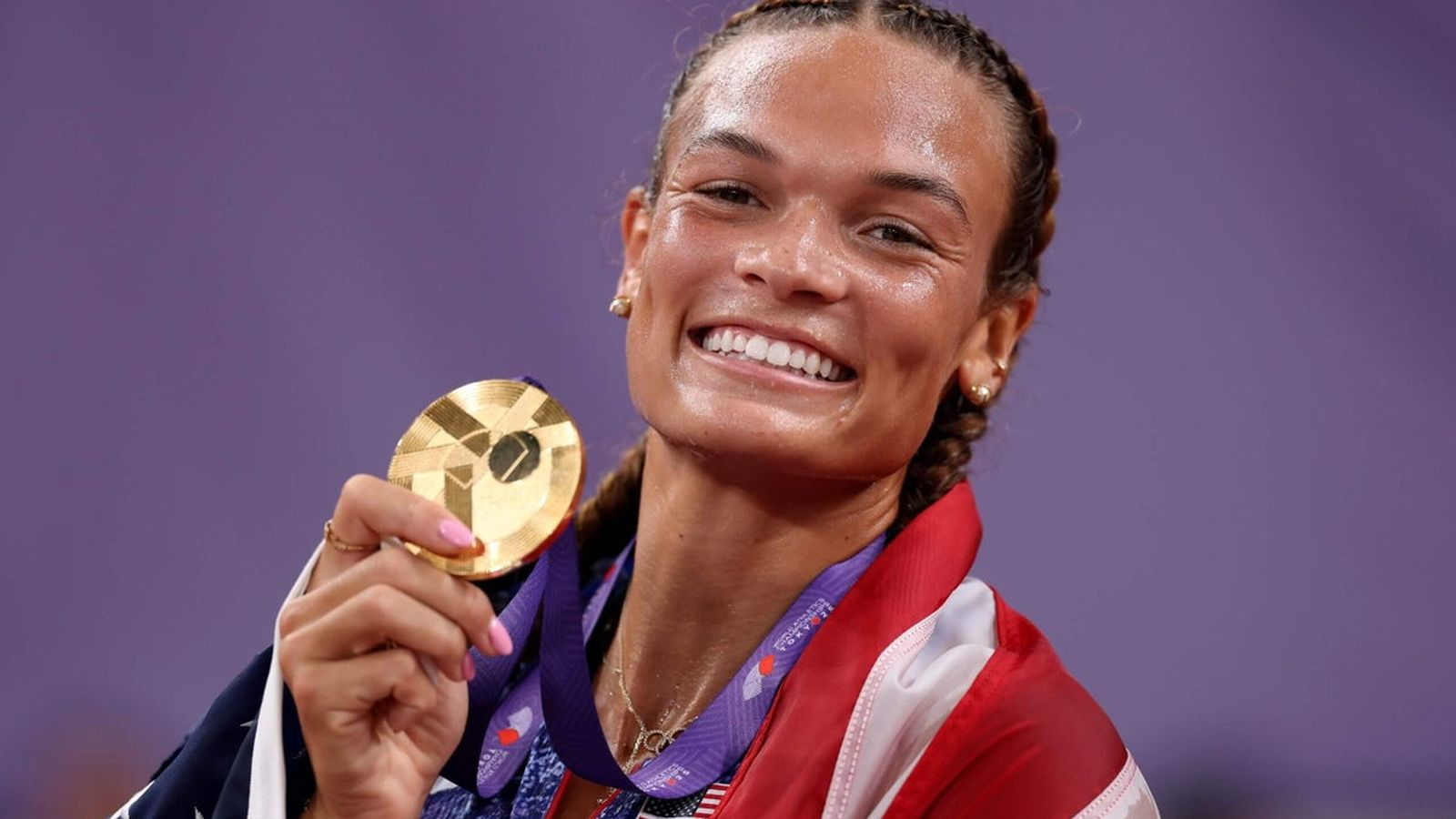
- Anna Hall won the 2025 World Athletics heptathlon gold with 6,888 points.
- She is the first American to win heptathlon world gold since Jackie Joyner-Kersee in 1993.
- Ireland’s Kate O’Connor took silver with a national record; Brooks and Johnson-Thompson shared bronze.
- Hall overcame years of injury and near-misses to reach the top podium.
- This is only the second time two Americans have medaled in heptathlon at a global championship.
Anna Hall Breaks Through: U.S. Heptathlon Gold Returns After Decades
On a cool Tokyo evening in September 2025, Anna Hall crossed the finish line of the 800 meters with a look of pure, exhausted joy. Seven events behind her, a lifetime of resilience in her wake—she had finally done it. With 6,888 points, Hall seized gold at the World Athletics Championships, becoming the first American heptathlete to claim the world title since her mentor, Jackie Joyner-Kersee, in 1993. For Hall, this wasn’t just a victory; it was the culmination of years spent clawing back from injuries, heartbreaks, and near-misses, now forging her own place in history.
Dominance Built on Grit: The Road to Tokyo
The heptathlon is not for the faint-hearted. Seven events spread over two days—100m hurdles, high jump, shot put, 200m, long jump, javelin, and 800m—each demanding a different facet of athleticism. Hall, 24, entered the championships already a familiar face on the podium: bronze in Eugene (2022), silver in Budapest (2023), and a fifth-place finish at the Paris Olympics after battling injuries. But gold, that elusive top step, had always slipped just out of reach.
Her journey was marked by setbacks. In 2021, a fall at the Olympic Trials left her needing surgery on her left foot and ankle. In 2024, another operation, this time on her knee, threatened her Olympic dreams. Yet, Hall refused to let adversity define her. “That entire time, I just put my head down and I worked,” she told NBC Sports’ Lewis Johnson. “My body wasn’t ready to have that show yet, but I’m so glad that I feel like that work is all paying off now.”
The payoff was visible from Day 1 in Tokyo. Hall led after four events, her consistency and technical improvements shining through. She threw personal bests in both javelin (48.13m) and shot put (15.80m), tied the highest mark in high jump (1.89m), ran the second-fastest 200m (23.50s), and clocked the third-best 100m hurdles (13.05s). Heading into the final event, the 800 meters, Hall had built a seven-second cushion over Ireland’s Kate O’Connor—a margin that, in heptathlon terms, is nearly insurmountable.
Historic Moments and Unprecedented Outcomes
But the drama was far from over. The final 800m saw Hall, one of the fastest in the discipline, surge ahead to finish in 2:06.68, securing her gold. O’Connor, meanwhile, delivered the performance of her life—6,714 points and a new Irish national record, becoming Ireland’s first-ever global heptathlon medalist.
Then came a twist for the record books. American Taliyah Brooks and Britain’s defending champion Katarina Johnson-Thompson finished with identical scores of 6,581 points, sharing the bronze medal. It was the first time in the 42-year history of the World Championships that a heptathlon medal had been split—a testament to the razor-thin margins that define this event. Brooks’ throw of 43.37m in the javelin had nudged her into medal contention, and Johnson-Thompson’s season-best 800m (2:07.38) closed the gap, leaving the pair inseparable after seven punishing events.
For Hall, the significance of the moment was deepened by Joyner-Kersee’s presence—her mentor and the last American to claim heptathlon gold. Joyner-Kersee sat with Hall’s family near the finish, offering encouragement throughout the competition. “Jackie and I have talked about it and were like, ‘The USA does make great heptathletes,’” Hall said. “It means the world to be able to bring the title back home where it belongs.” (ESPN)
Resilience Redefined: From Injury to Champion
Hall’s path to gold was paved with more than just physical rehabilitation—it was a mental and emotional revival. After the lows of 2024, she returned to competition at the Hypo Meeting in Götzis, Austria, posting 7,032 points—third all-time, tied with Olympic champion Carolina Klüft and chasing only Joyner-Kersee’s legendary marks. This performance restored her spark, setting the stage for Tokyo.
Her technical focus paid off in the throws, but Hall is quick to point out her next goal: “The long jump is next,” she joked, hinting at her relentless pursuit of improvement. Brooks, meanwhile, described the tension of waiting for the scores to appear: “I feel like it took like 30 seconds for (the score) to come up on the board.” Relief washed over her as she saw the tie for bronze—a shared moment of triumph in a sport where every centimeter and hundredth of a second counts.
For defending champion Johnson-Thompson, the tie marked her fifth global mixed-event medal, further cementing her status among the sport’s elite. Nafi Thiam, Belgium’s Olympic champion and two-time world champion, withdrew after the long jump due to injury—her first global heptathlon exit since 2015, underscoring the event’s physical toll.
Legacy and Impact: A New Era for American Heptathlon
Anna Hall’s victory is more than a personal milestone; it’s a statement for American track and field. Two U.S. athletes on the podium—Hall and Brooks—is a rarity, previously achieved only in 1987 with Joyner-Kersee and Jane Frederick. The win closes a 32-year gap and signals a new era, driven by Hall’s blend of speed, power, and tenacity.
Hall’s story resonates beyond the track. It’s about refusing to surrender to setbacks, about finding motivation in the face of uncertainty, and about the slow, steady work that leads to greatness. “I came back this year, and I felt like I really lost my love, almost, for the sport,” she reflected. “I was just sad all the time. It took a while for my spark to come back.” But when it did, it burned brighter than ever.
For the heptathlon, Hall’s triumph invites a new generation to dream bigger. She stands, finally, in the club with Joyner-Kersee—not as a successor, but as a peer, forging her own legacy with every stride, every jump, every throw.
Anna Hall’s breakthrough is a masterclass in resilience, technical mastery, and the power of mentorship. Her victory not only restores the U.S. to the top of the heptathlon world but also lays the foundation for future champions to rise—proving that greatness is built not just on talent, but on the courage to persevere through adversity.