
Quick Read
- Ant McPartlin and Declan Donnelly (Ant and Dec) apologized and deleted a promotional video for their new podcast.
- The video’s opening shot of feet dangling was deemed ‘triggering’ and ‘insensitive’ by fans, evoking suicide imagery.
- The clip was intended to promote their new podcast, ‘Hanging Out With Ant and Dec,’ on their rebranded ‘Belta Box’ channel.
- Mental health advocate Katie Waissel publicly criticized the video, calling it ‘sickening’ and ‘reckless’.
- The duo issued a statement expressing regret and confirming the video’s removal due to the feedback.
Veteran ITV presenters Ant McPartlin and Declan Donnelly, widely known as Ant and Dec, have issued a public apology and swiftly deleted a promotional video for their new podcast, “Hanging Out With Ant and Dec.” The decision came after significant backlash from fans and mental health advocates who criticized the clip’s opening imagery as “triggering” and “insensitive” due to its perceived resemblance to suicide-related visuals.
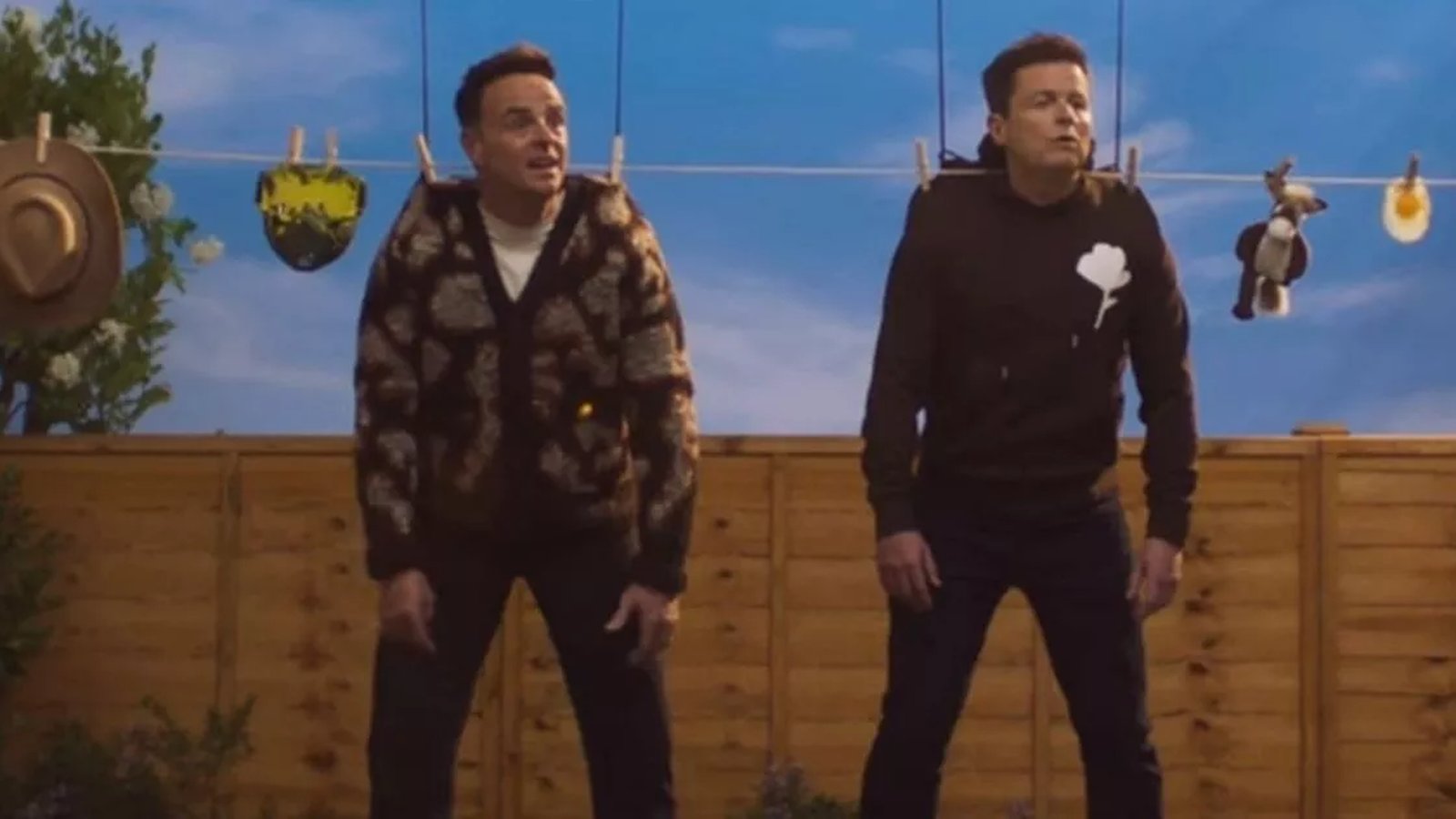
The controversial video, intended to promote the duo’s new venture on their recently rebranded “Belta Box” entertainment channel, featured a close-up shot of feet dangling in the air, seemingly suspended from a washing line. While the presenters later clarified the context within the full clip, the initial visual prompted a wave of concern across social media platforms, including X (formerly Twitter) and Instagram, with many viewers expressing distress and urging its immediate removal.
The Promotional Video and Immediate Backlash
The now-deleted video, shared on Friday evening, was designed to introduce Ant and Dec’s inaugural podcast series. It opened with a stark image of Dec’s feet appearing to hang in mid-air, a visual that quickly drew comparisons to imagery associated with self-harm and suicide. The subsequent frames revealed the duo suspended from a washing line, with Dec asking, “Did you agree to this?” and Ant replying, “No, I thought this was your idea.” Dec then stated, “This is not what we meant by hanging out,” before Ant pleaded, “Can someone get us down please?” The clip concluded with an announcement for “Hanging Out With Ant & Dec,” launching on January 22.
Despite the playful intent behind the “hanging out” pun, the initial visual proved deeply unsettling for a significant portion of their audience. Social media users swiftly voiced their concerns, highlighting the potential for the imagery to trigger individuals struggling with mental health issues. One follower on X reportedly wrote, “Errm you guys are great, but this video is horrendous. Come on, surely one person during editing could see how triggering the start would be to some people. Remove it.” Another commented, “I’d hate for someone in distress to see this. Guys I know it isn’t intentional, but maybe take this down and re-edit the promotional materials.” Comments on Instagram echoed similar sentiments, with one user stating, “Whoever thought that having JUST hanging legs and feet as the start of an is a good idea needs firing. If it indicated they were on a washing line first, that’s different.” Many pointed out the “suicide imagery” as “impossible to ignore,” as reported by BBC News.
Celebrity Criticism and Ant and Dec’s Swift Apology
The criticism extended beyond general fans. Katie Waissel, a former contestant on “The X Factor” and a vocal mental health advocate, publicly condemned the video. She described the “creative direction” as “genuinely sickening and deeply disappointing,” emphasizing that the opening visual of “feet suspended above the ground is not a harmless ‘play on words’.” Waissel asserted that the presenters, given their prominent platform, have a clear duty to act responsibly, calling the video “triggering, insensitive and frankly reckless to push out as ‘entertainment’.” Her comments, along with others, underscored the seriousness of the public’s perception.
In response to the mounting pressure, Ant and Dec acted quickly. The video was removed by Saturday morning, and an apology was issued via their representatives. “We did not mean to cause any offence with this promo video and we are sorry if it has upset anyone,” their statement read, as shared with The Mirror. “We have taken on board the comments and have deleted the video.” This swift action was praised by some, indicating an understanding of the gravity of the situation and a willingness to listen to their audience’s feedback.
The Launch of Belta Box and New Podcast
The controversy overshadowed, albeit temporarily, the launch of Ant and Dec’s exciting new digital venture. The duo had announced their new project just days prior on “Saturday Night Takeaway’s” official social media channels. Their existing online presence has been transformed into “Belta Box,” a new entertainment channel designed to host original digital content, including their podcast, and revisit highlights from their extensive careers. The name “Belta Box” itself is a nod to their Geordie roots, with “belta” meaning excellent or fantastic.
The podcast, “Hanging Out With Ant & Dec,” is a key component of this new platform. Speaking about the new venture before the promotional video incident, Ant McPartlin, 50, expressed enthusiasm: “We’ve spent our whole careers celebrating great entertainment, so launching Belta Box feels like the natural next step. Alongside our new podcast, we’re excited to create a space packed with fun, feel-good content that brings people together—no matter where they’re watching or listening.” Dec Donnelly, also 50, added, “What better way to launch Belta Box than with our first ever podcast series! We asked our audience if we did a podcast what would they like it be about, and they said we just want you guys to hang out. So that’s what we’re doing! Ant & I don’t get to hang out as much as we used to, so it’s perfect for us.” The podcast is set to launch on January 22 across major podcast platforms and will also be available on the Belta Box YouTube channel.
The rapid and unified public response to Ant and Dec’s promotional video underscores the heightened awareness and sensitivity surrounding mental health issues in contemporary media. This incident serves as a salient reminder of the critical responsibility public figures and content creators bear in considering the potential impact of their creative choices, especially when imagery can be misinterpreted or inadvertently trigger distress among vulnerable audiences, irrespective of intent.