
Quick Read
- Archer Aviation partnered with NVIDIA at CES 2026 to develop AI-powered aviation tech using the IGX Thor platform.
- NVIDIA IGX Thor will enhance pilot safety, enable seamless airspace integration, and support autonomy-ready flight controls for Archer’s eVTOL aircraft.
- Cathie Wood’s ARK Invest added Archer Aviation to its portfolio, reflecting a shift towards emerging innovation sectors.
- 2026 is a critical ‘year of proof’ for Archer, focusing on generating first revenue, securing FAA approvals, and successful Midnight aircraft test flights.
- Analyst consensus for Archer Aviation (ACHR) is a ‘Moderate Buy’ with an average price target of $12.40, implying a 39.95% upside.
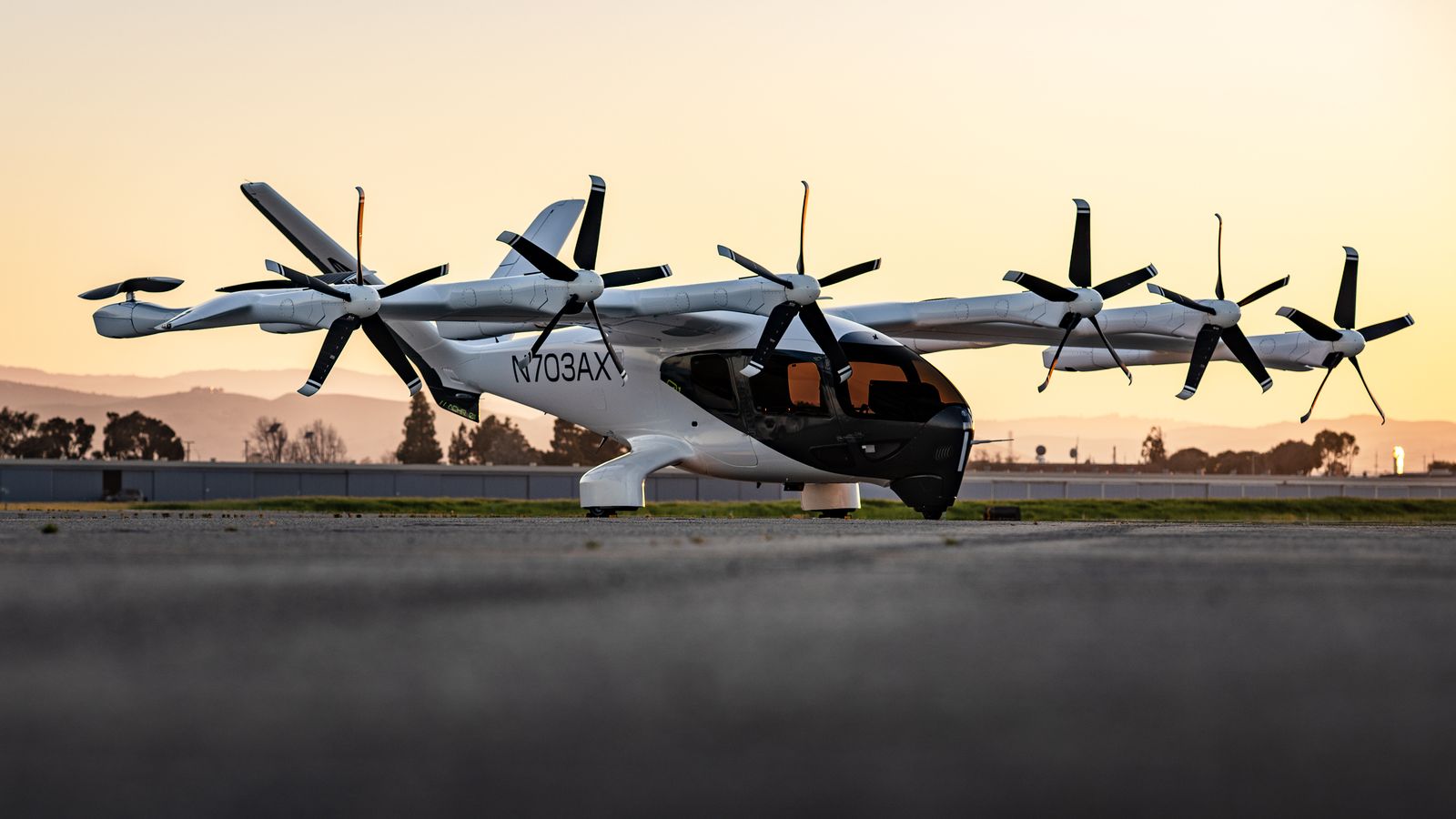
Archer Aviation Inc. is making significant strides in the advanced air mobility sector, recently announcing a pivotal partnership with NVIDIA to integrate cutting-edge artificial intelligence into its electric vertical takeoff and landing (eVTOL) aircraft. This collaboration, unveiled at CES 2026, underscores Archer’s commitment to enhancing safety, autonomy, and airspace integration, positioning the company at the forefront of aviation’s next generation.
Adding to its momentum, Archer Aviation has also captured the attention of major investors. Cathie Wood’s ARK Invest, known for its focus on disruptive innovation, recently added Archer Aviation to its portfolio, signaling a strategic shift towards emerging technology sectors. This financial backing, alongside the ambitious technological advancements, sets the stage for 2026 to be a transformative year for Archer, marked by critical milestones that could redefine its market perception.
Pioneering AI in Aviation: The NVIDIA Partnership
The collaboration between Archer and NVIDIA is not merely a technical integration; it represents a foundational shift in how aviation technology will evolve. The core of this partnership involves deploying NVIDIA’s IGX Thor platform, described as the company’s most powerful safety-capable AI computing module, into future iterations of Archer’s aircraft programs. This platform is engineered for high-reliability, real-time onboard computing, crucial for safety-critical environments like urban air mobility.
Archer’s vision for AI integration extends across three core areas. First, it aims to enhance pilot safety and predictive awareness. By leveraging NVIDIA’s high-throughput edge computing, Archer’s aircraft will be able to sense their environment and process flight-path data in real-time. This capability promises to arm pilots with earlier, clearer, and more actionable insights, effectively augmenting human decision-making with advanced computational power.
Second, the partnership seeks to enable seamless airspace integration. As urban air mobility networks expand, the complexity of managing airspace will grow exponentially. Archer plans to develop AI systems that can modernize current airspace management, allowing eVTOL aircraft to safely navigate today’s intricate airspace. This includes improvements in routing logic and dynamic, traffic-aware flight planning, which are essential for preventing congestion and ensuring smooth operations.
Finally, Archer is focusing on autonomy-ready flight controls. By pairing NVIDIA IGX Thor with its proprietary avionics and control software, Archer is building a next-generation computing architecture. This architecture is designed to support not only current piloted operations but also future autonomous and semi-autonomous flight capabilities, paving the way for fully automated air taxi services down the line. Adam Goldstein, Archer’s Founder and CEO, highlighted the significance of this collaboration, stating that NVIDIA’s AI compute capabilities provide the foundation to accelerate towards safer, smarter aircraft systems and modernize aviation’s interface with the world’s airspace, as reported by UAS Weekly.
Initial integration of NVIDIA IGX Thor is already underway, with broader applications anticipated across manufacturing, fleet operations, and pilot training. Archer’s recently acquired Hawthorne airport in central Los Angeles is slated to become an operational hub for its planned LA air taxi network and a critical test bed for these AI-powered aviation technologies, showcasing a tangible commitment to bringing these innovations to life.
ARK Invest Bets on Archer’s Disruptive Potential
The investment landscape for emerging technologies is dynamic, and Cathie Wood’s ARK Invest has made a notable move by adding Archer Aviation to its portfolio. As detailed by CoinCentral, ARK purchased shares in both Joby Aviation and Archer Aviation, both leaders in the electric vertical takeoff and landing (eVTOL) space. This move is part of a broader strategy by ARK to shift capital from established tech companies, such as Meta Platforms and Illumina, towards earlier-stage biotech firms and emerging innovation sectors.
This reallocation of funds by ARK Invest signals confidence in the long-term disruptive potential of companies like Archer. While ARK trimmed positions in more mature tech names, its investment in advanced air mobility companies like Archer underscores a belief in the future of autonomous transport and advanced manufacturing. For Archer, this backing provides not only capital but also a significant vote of confidence from a prominent investment firm known for identifying future market leaders.
2026: A Year of Proof, Not Just Promise
As Archer Aviation navigates 2026, the company faces a year that is less about immediate profitability and more about demonstrating tangible progress and viability. TipRanks outlines two distinct scenarios for Archer’s performance this year: an optimistic path towards proof of viability and a pessimistic one where progress fails to translate into immediate payoff.
The Optimistic Scenario: Proof of Viability
In the best-case scenario, Archer successfully delivers on several key goals. The company is expected to report its first revenue in early 2026. This initial income, though likely small, could stem from Middle East launch deals, airport-related activities, or defense powertrain work. Such a development would mark a crucial shift from a pure development phase to early execution, providing concrete evidence of its business model.
Simultaneously, Archer needs to continue its momentum with U.S. flight approval steps. Each positive update from the Federal Aviation Administration (FAA) would significantly reduce uncertainty surrounding regulatory timing. Progress tied to White House eVTOL pilot efforts could further build trust with public agencies and potential partners, smoothing the path for future operations.
Crucially, the Midnight aircraft must continue logging successful test flights with its updated rotor design. Smooth results would bolster safety claims and help avoid costly design changes. Alongside this, Archer aims to ramp up early production at a measured pace. If cash burn remains within expectations, the company could avoid an urgent need for additional capital raises, mitigating potential share dilution for existing investors.
This optimistic path wouldn’t necessarily make Archer a profitable business in 2026, but it would fundamentally alter how the market perceives the stock. It would transform Archer from a speculative concept bet into an early-stage aerospace firm with a real, tangible footing in a burgeoning industry.
The Negative Scenario: Progress Without Payoff
Conversely, the downside scenario presents clear challenges. The primary concern would be if early revenue targets slip into later quarters or fall below expectations. This would undermine the narrative that non-passenger income can support the business in the near term, casting doubt on its financial sustainability.
Furthermore, slower-than-expected progress with FAA approvals could significantly delay any U.S. launch plans. Even modest regulatory setbacks could push back critical timelines. The Midnight aircraft’s redesign could also introduce unforeseen tradeoffs in range or cost, necessitating further extensive testing and potentially delaying market entry.
Under this scenario, spending could remain high while timelines stretch, potentially forcing Archer to raise more funds to support ongoing testing and production. Such capital raises often lead to share dilution, which could limit upside for existing shareholders and dampen investor enthusiasm, even if the company continues to show technical promise. In this situation, investors might struggle to find traction, waiting for firmer proof of commercial viability.
Overall, 2026 is a pivotal year for Archer Aviation. It is a period where the company must demonstrate its ability to translate technological progress into concrete results and operational milestones. The outcome of these efforts will undoubtedly shape investor valuation and determine Archer’s trajectory in the rapidly evolving urban air mobility market.
Archer Aviation stands at the precipice of a new era in transportation, with its strategic NVIDIA partnership and ARK Invest backing providing a formidable foundation. While the technological prowess and investor confidence are undeniable strengths, 2026 will be the ultimate crucible, demanding flawless execution on regulatory approvals and initial revenue generation to solidify its position from an innovative concept to a tangible, market-ready enterprise.