
Quick Read
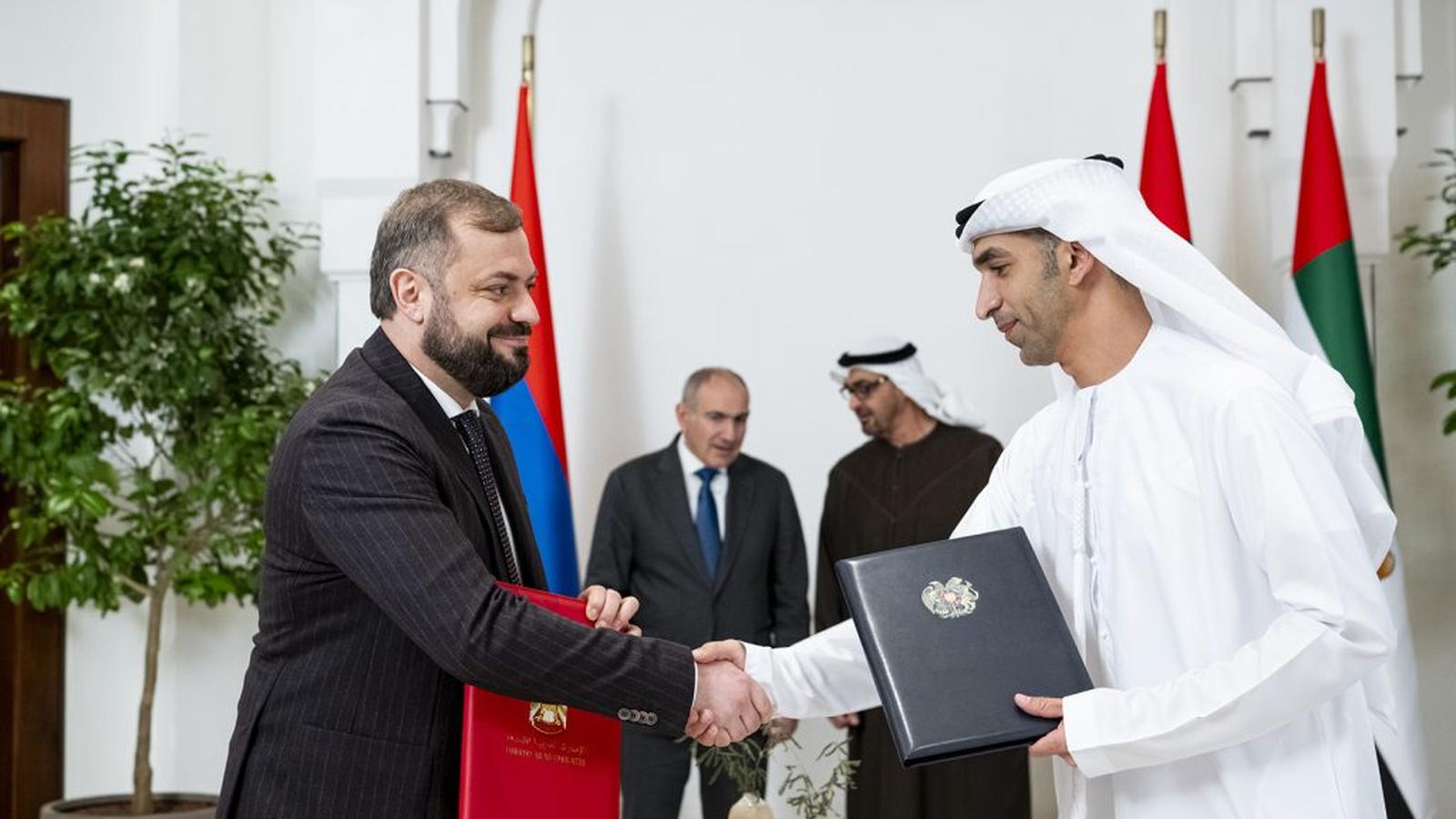
- Armenia’s Prime Minister Nikol Pashinyan signed a new economic cooperation agreement with the UAE president in Abu Dhabi.
- The agreement aims to deepen bilateral economic cooperation between Armenia and the United Arab Emirates.
- The signing occurred during an official visit to the UAE.
- No detailed terms of the pact were disclosed in the initial reports.
- The move signals Armenia’s ongoing outreach to diversify its external economic partners.
Armenia’s Prime Minister Nikol Pashinyan signed a new economic cooperation agreement with the President of the United Arab Emirates during a visit to Abu Dhabi. The ceremony occurred in the UAE’s capital as part of the leaders’ official engagements, underscoring a diplomatic initiative aimed at shaping a broader economic relationship between the two countries.
The document was described by officials as a framework intended to deepen bilateral economic cooperation. In such arrangements, the aim is typically to establish a formal channel for increased trade, investment, and collaboration across various economic sectors. The exact terms and sectoral focus of the pact, however, were not disclosed in the initial reporting, leaving room for forthcoming statements detailing what the agreement will cover in practice.
Observers and participants in the diplomacy surrounding the signing noted that the pact represents more than a ceremonial gesture. While the immediate financial commitments or project timelines have not been published, the move is positioned as part of Armenia’s broader strategy to diversify its international partnerships and access Gulf markets. The Emirates remain a regional hub for investment and trade, and many governments pursue such agreements to facilitate smoother regulatory environments, easier market access, and cooperative projects that span infrastructure, technology, and energy-related sectors.
The signing occurred in a broader context of Armenia seeking to expand its economic diplomacy beyond its traditional partners. For Armenia, expanding ties with Gulf states can offer new avenues for investment, technology transfer, and potential routes for Armenian exporters to reach Gulf and wider regional markets while attracting UAE-based capital into Armenian projects. It also reflects a trend in which Gulf economies seek to expand their international engagement by forming strategic partnerships with countries across a range of regions, including the South Caucasus.
Details on the agreement’s implementation remain pending. Officials have not provided a timetable for next steps, and there is no public disclosure yet of specific sectors or projects that will be prioritized under the pact. In such cases, working groups are typically established to explore opportunities in trade facilitation, investment frameworks, regulatory alignment, and joint ventures, with subsequent announcements outlining concrete projects and funding arrangements. The absence of immediate detail in the initial reporting suggests that the parties intend to proceed through formal negotiations before any binding commitments are announced.
From an international perspective, the development is being watched as part of a broader pattern where Armenia looks to broaden its economic partnerships beyond Europe and neighboring regions. The UAE, meanwhile, has pursued a strategy of expanding its influence through diversified international economic ties, strengthening its role as a regional and global investment partner. The new agreement, therefore, sits at the intersection of diplomacy and economic policy, with potential implications for cross-border commerce, technology transfer, and regional cooperation in the weeks and months ahead.
As with many such pacts, the true significance will become clearer once implementing mechanisms are disclosed and concrete projects are identified. The success of the agreement will depend on timely negotiations, transparent communication from both sides, and the ability to translate diplomatic goodwill into tangible economic activity that benefits businesses and consumers in both Armenia and the United Arab Emirates.
FINAL ANALYSIS: The signing of the economic cooperation agreement signals Armenia’s ongoing effort to broaden its external economic partnerships, particularly with Gulf states, and points toward a period of negotiated detail that could shape trade and investment dynamics if implemented. Looking ahead, success will depend on timely disclosure of terms, effective negotiation, and concrete follow-up measures that translate diplomatic goodwill into tangible economic activity.