
Quick Read
- Over 1,500 flights were disrupted across Asia on April 13, 2026, due to extreme operational pressure at major hubs.
- Jakarta, Bangkok, and Tokyo recorded the highest volume of delays, straining regional and international connectivity.
- Airlines including Batik Air, IndiGo, and ANA are struggling with fleet and crew logistics, leading to cascading delays for passengers.
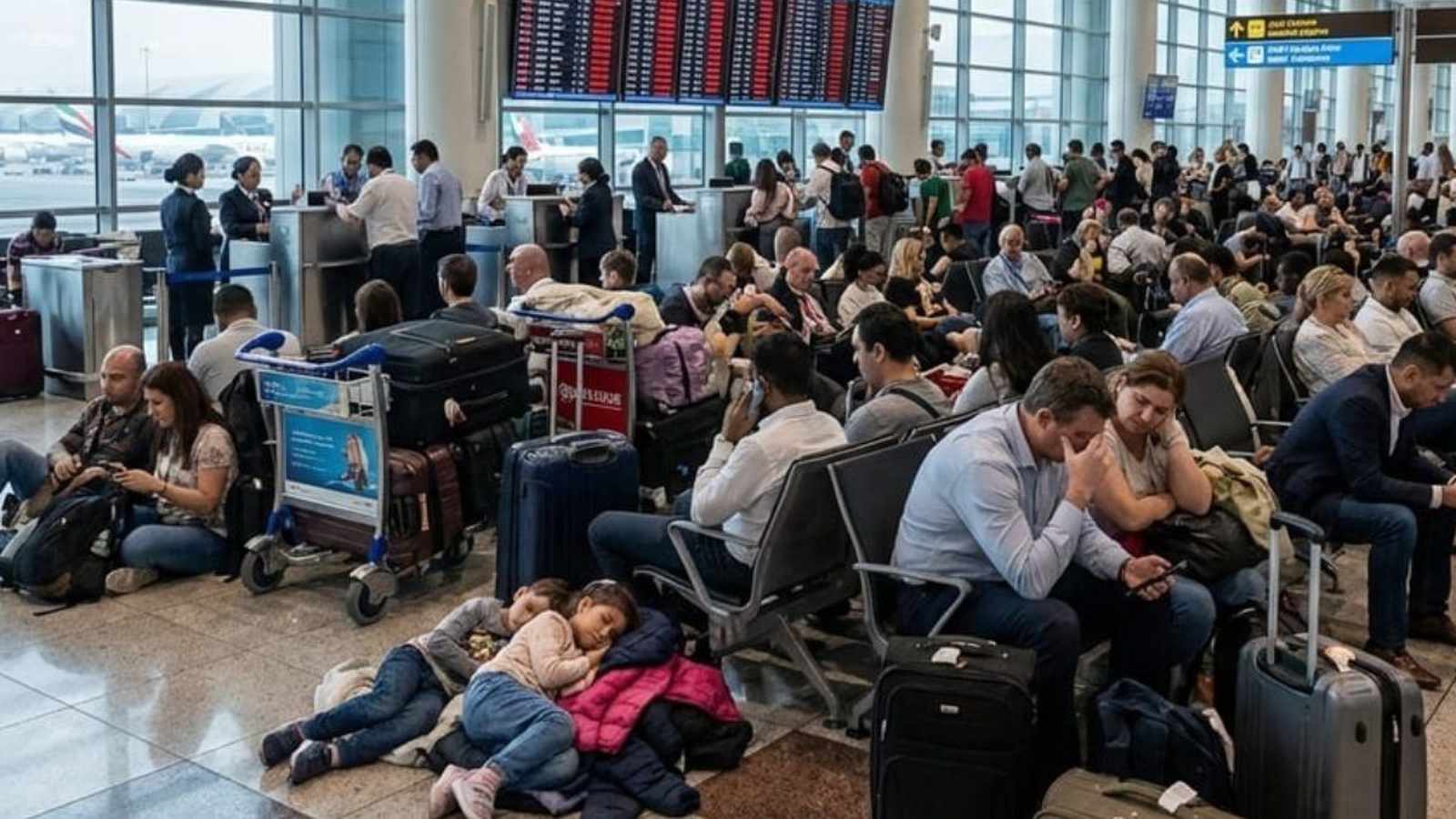
JAKARTA, TOKYO, DELHI (Azat TV) – A severe wave of air travel disruption is sweeping across Asia, leaving thousands of passengers stranded as airlines struggle to manage a massive backlog of 1,470 delayed flights and 67 cancellations. The crisis, which peaked on April 13, 2026, has hit critical transit hubs from the Gulf to Northeast Asia, with Jakarta, Bangkok, and Tokyo recording the highest levels of operational strain.
Operational Pressure at Asia’s Busiest Hubs
The disruption is concentrated in high-density airports where domestic and regional traffic has surged beyond current capacity. According to data cited by Travel And Tour World, Soekarno-Hatta International Airport in Jakarta emerged as the epicenter of the chaos, reporting 216 delays and 13 cancellations. Bangkok’s Suvarnabhumi Airport followed closely with 199 delays, while Tokyo’s Haneda Airport saw 182 flights stalled. The ripple effect has extended to India, where Indira Gandhi International Airport in Delhi recorded 176 delays, further impacting connectivity for travelers moving between the Middle East and the Asia-Pacific region.
Airlines Struggle with Fleet and Crew Availability
Major carriers are reporting significant operational hurdles as they attempt to reconcile schedules. Batik Air has been identified as one of the most heavily affected airlines, recording 10 cancellations and 51 delays, primarily across its Indonesian network. Indian low-cost carrier IndiGo reported 93 delays, while Air India faced 74 delays and four cancellations. Japan’s All Nippon Airways (ANA) also struggled, with 75 delays reported at its Tokyo hubs. The Sunday Guardian notes that these disruptions are exacerbated by rising fuel costs and the complex task of repositioning aircraft and crew across an interconnected regional network.
Interconnected Risks to Global Transit
The impact of these cancellations is not limited to domestic routes. Long-haul connections involving carriers like Emirates, United Airlines, and Air China have also been disrupted, causing cascading delays for travelers attempting to transit through hubs like Kuala Lumpur and Hong Kong. In Taiwan, United Airlines was forced to cancel a service to Guam, and Hong Kong International Airport reported interruptions on routes to Riyadh and Saipan. Aviation analysts suggest that the recurrence of cancellations on identical routes indicates persistent structural strain rather than isolated incidents, forcing passengers to face increasingly constrained rebooking options.
The widespread nature of these delays suggests that the aviation sector’s rapid recovery has outpaced the operational resilience of regional infrastructure, revealing a vulnerability in the hub-and-spoke model that becomes critical during peak traffic periods.