
Quick Read
- On January 4, 2026, a technical issue disrupted flights across Greece due to a problem at the Athens Flight Information Region (FIR).
- The malfunction affected central radio frequency systems of the Athens and Macedonia Area Control Centers, operated by the Civil Aviation Authority (CAA/HCAA).
- All departures from Greek airports were suspended, while airborne aircraft were managed for safe, often manual, landings.
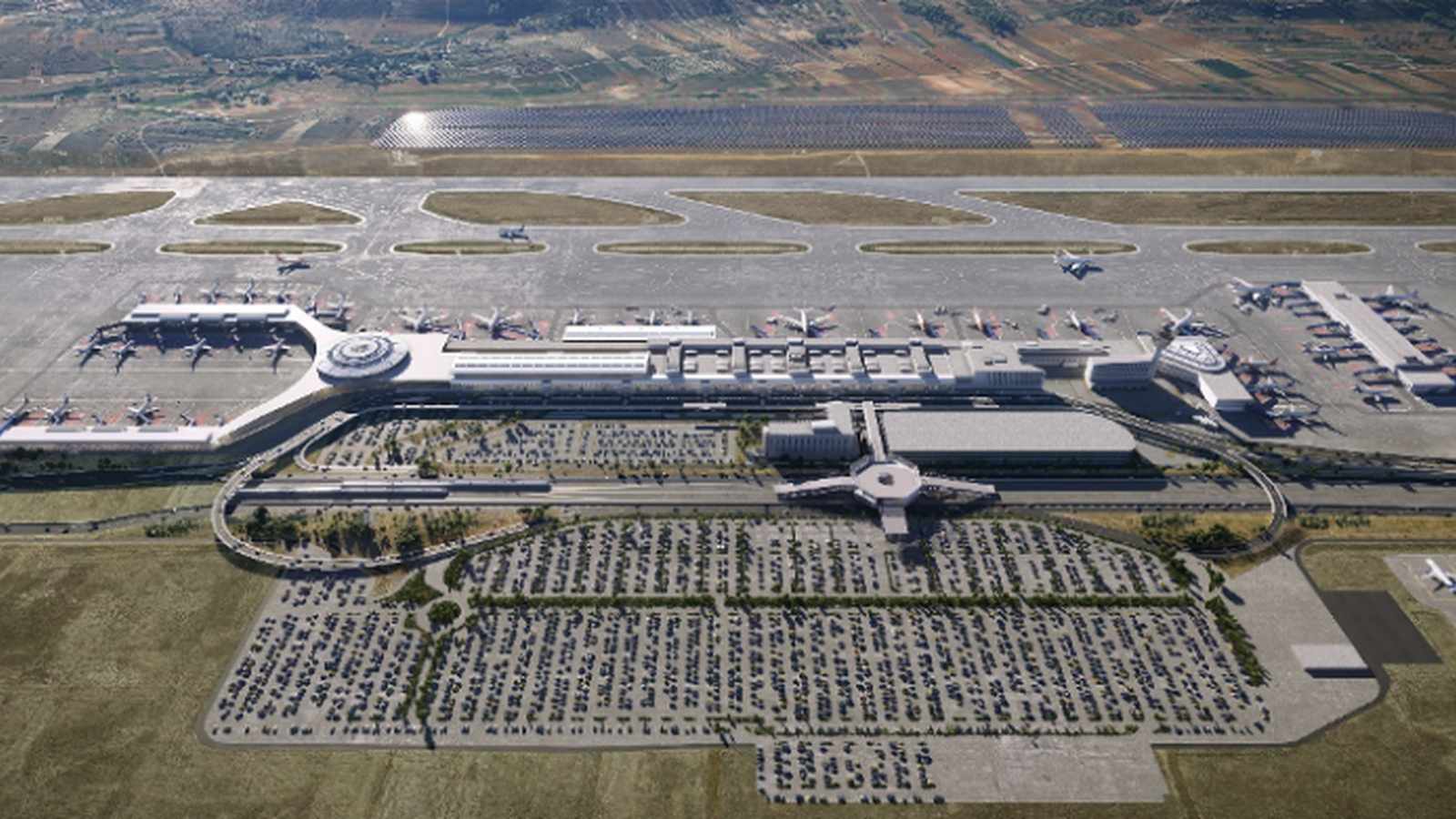
- Athens International Airport “Eleftherios Venizelos” and regional airports were significantly impacted, leading to diversions.
- Preliminary reports suggest a circuit failure, with HCAA investigating the precise cause; restoration time remains unknown.
The skies over Greece, typically bustling with arrivals and departures, fell silent on Sunday, January 4, 2026, as a critical technical malfunction crippled the central radio frequency systems of the Athens Flight Information Region (FIR). This unprecedented disruption brought air travel across the nation to a grinding halt, affecting not only Athens International Airport “Eleftherios Venizelos” but also regional hubs, leaving thousands of passengers stranded and diverting numerous flights to alternative destinations.
Imagine planning a long-awaited journey, arriving at the airport, only to be met with the stark reality of a system-wide failure. That was the experience for countless travelers across Greece, as the Civil Aviation Authority (CAA) grappled with an issue that effectively cut off vital communication lifelines. The incident underscored the delicate balance that keeps modern aviation running smoothly and the profound impact when even a single, critical component falters.
Understanding the Silent Stoppage: The Role of Athens FIR
At the heart of this disruption lies the Athens Flight Information Region (FIR), a vast expanse of airspace for which Greece is responsible for providing air traffic services. Think of the FIR as the nervous system of Greek aviation, where every aircraft entering or departing must establish and maintain constant communication. This intricate network relies heavily on sophisticated radio frequency systems, which are the ears and voice of air traffic controllers.
On that fateful Sunday morning, these critical central radio frequency systems, operated under the Hellenic Civil Aviation Authority (HCAA), simply went out of operation. The failure affected both the Athens and Macedonia Area Control Centers, which are pivotal for managing the flow of air traffic across a significant portion of the Mediterranean and Southeast Europe. Without these frequencies, the air traffic control capacity was severely reduced, making it impossible to safely manage takeoffs and landings.
As Panagiotis Psaros, president of the Air Traffic Controllers Association, explained to Kathimerini, the immediate and unavoidable consequence was the suspension of all departures from Greek airports. This wasn’t merely a delay; it was a complete halt, a necessary measure to prevent further congestion and potential safety hazards in an already compromised airspace. The gravity of the situation was palpable, as authorities scrambled to manage aircraft already airborne, ensuring they could land safely, even if it meant doing so manually without automated assistance.
Chaos on the Tarmac and in the Skies: The Passenger Experience
For passengers, the technical glitch translated into a cascade of inconveniences and anxieties. Flights bound for Greece were diverted to other countries, while those scheduled to depart found themselves indefinitely grounded. Imagine being midway through a flight, only to learn your destination airport is effectively closed, forcing a diversion to an unfamiliar city, potentially thousands of miles from your original plans. Or picture the frustration of sitting on a plane on the tarmac, engines off, with no clear indication of when – or if – your journey would resume. This was the reality for travelers that day.
Airlines quickly began notifying passengers of extensive delays and cancellations, though the uncertainty surrounding the restoration time made precise information difficult to provide. The greatest impact was felt at Athens International Airport, Greece’s busiest hub, but regional airports across the country also experienced significant disruptions. Boarding gates became waiting areas, filled with people checking their phones for updates, trying to rebook, or simply seeking answers that were slow to come. The collective sigh of frustration and the palpable sense of helplessness painted a vivid picture of the human cost of a technical failure in an interconnected world.
The situation also posed unique challenges for air traffic controllers. While new departures were halted, their focus shifted to the delicate task of guiding inbound aircraft. Flights already in the air, destined for Greek airports, were permitted to continue, but with a critical caveat: they would land manually, bypassing automated systems. This required heightened precision and coordination between pilots and controllers, a testament to the human skill that underpins aviation safety, even in the face of technological setbacks.
The Unseen Battle: Air Traffic Controllers and Emergency Response
Behind the scenes, the Hellenic Civil Aviation Authority (HCAA) was in full crisis mode, coordinating with relevant external agencies to investigate the incident. Preliminary reports pointed towards a circuit failure, a seemingly small component with monumental consequences. However, the precise cause or origin remained undetermined, adding another layer of complexity to the efforts to restore normal service. The challenge wasn’t just fixing a single problem, but understanding why it occurred and ensuring it wouldn’t happen again.
To mitigate risks, the affected sector of the Athens FIR was temporarily closed. A directive was issued, allowing only overflights – aircraft merely passing through Greek airspace without landing – to continue operations. This strategic decision aimed to keep international air corridors open where possible, minimizing the global ripple effect, while simultaneously ensuring the safety of aircraft that absolutely had to interact with the compromised Greek airspace.
The tireless efforts of air traffic controllers, engineers, and support staff during such a crisis often go unnoticed. They are the unseen heroes, working under immense pressure to maintain safety and restore order. Their ability to adapt, communicate, and implement contingency plans is paramount when automated systems fail. The incident served as a stark reminder of the critical human element in modern, highly automated systems.
Economic Ripples and Future Concerns
Beyond the immediate travel chaos, such a widespread disruption carries significant economic implications. Airlines face substantial costs from diversions, cancellations, passenger re-accommodation, and crew scheduling issues. For Greece, a country heavily reliant on tourism, a prolonged disruption could have far-reaching effects on its economy, impacting everything from hotels and tour operators to local businesses. The incident, though resolved relatively quickly, serves as a crucial case study in the vulnerability of national infrastructure to technical glitches.
The HCAA is expected to provide a detailed update on the restoration time and the long-term measures being implemented to prevent similar incidents. As the world becomes increasingly interconnected and reliant on complex digital and electronic systems, the resilience of critical infrastructure, especially in sectors like aviation, becomes a paramount concern. Regular maintenance, robust redundancy systems, and comprehensive emergency protocols are not just best practices; they are essential safeguards against widespread disruption.
The Athens FIR technical failure on January 4, 2026, was more than just a momentary glitch; it was a potent demonstration of how a single point of failure in a highly complex, interconnected system can ripple across an entire nation’s vital infrastructure, underscoring the indispensable role of human expertise in navigating technological fragility and the relentless demand for robust, resilient aviation systems.