
Quick Read
- Hundreds of properties in Abbotsford, B.C., and Chilliwack are under evacuation orders due to flooding from an atmospheric river.
- Reception Centres have been opened for displaced families, and farmers are evacuating livestock from affected areas.
- Major highways between the Lower Mainland and Interior are closed; Amtrak train service between Seattle and Vancouver is suspended.
- Washington State has declared a statewide emergency, with up to 100,000 people potentially displaced.
- The event recalls the devastating 2021 floods, prompting renewed focus on emergency preparedness.
Atmospheric River Hits Hard: Mass Evacuations Ordered in B.C. and Washington
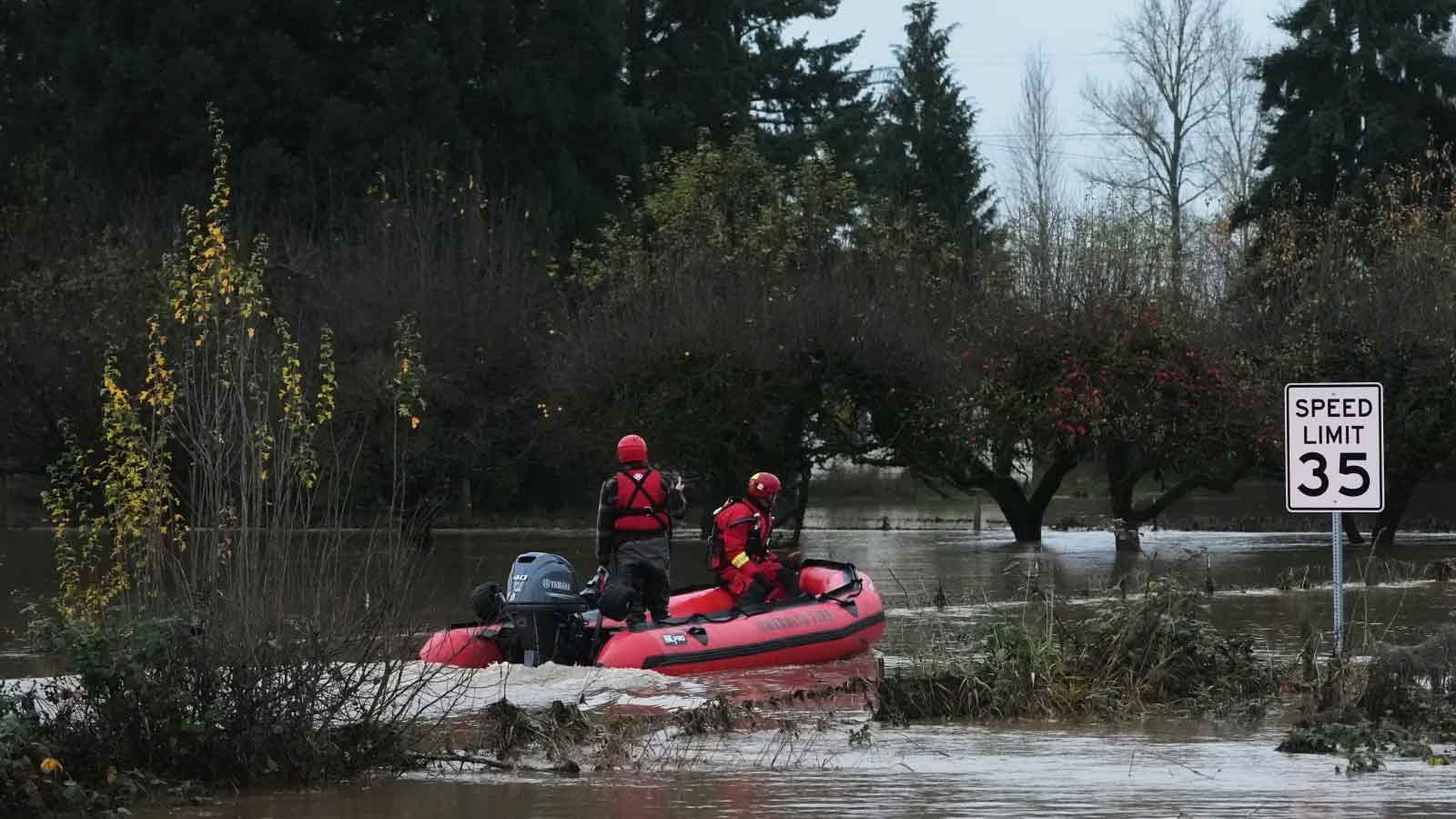
Hundreds of residents on both sides of the Canada-U.S. border are facing evacuation orders and alerts after an intense atmospheric river swept through the region starting Wednesday. The deluge, which brought relentless rain and flooding, forced local governments in British Columbia and Washington State into emergency response mode, echoing the devastation of the 2021 floods that left billions in damage.
Abbotsford: A City on Edge as Waters Rise
In Abbotsford, British Columbia, the impact has been immediate and severe. Authorities issued a new evacuation order for 82 properties in Huntingdon Village, stretching to 2nd Ave. and Sumas Way. The broader Sumas Prairie West remains under evacuation order, affecting 371 properties, while alerts persist for over 1,000 more in the surrounding area. Clayburn Village, once on alert, has now been deemed safe, but officials urge residents to steer clear of waterways and avoid crossing flooded roads and bridges.
The city has activated its Reception Centre at the Abbotsford Recreation Centre, offering shelter and support to those forced from their homes. On the first night alone, 15 families found refuge there, with more expected as conditions evolve. The Reception Centre remains open, with authorities requesting all evacuated residents to check in within 24 hours, either in person or online.
Farmers Scramble to Save Livestock Amid Flood Threat
The agricultural heart of the region has not been spared. Farmers, many of whom remember the chaos of previous floods, worked through the night to evacuate livestock from at-risk areas. In total, 165 farming operations with livestock find themselves in the evacuation zone, with 66 of those under direct evacuation order. The urgency is palpable—every minute counts when the safety of animals and livelihoods is on the line.
Landslides and Infrastructure Closures Compound Crisis
Crews in Abbotsford are also contending with a landslide on the southeast corner of Sumas Prairie, impacting a property and the SRY rail line. Meanwhile, the Fraser Valley Regional District issued its own evacuation order for eight properties along the Chilliwack River, specifically in the Wilson Road area. Several more properties on Chilliwack Lake Road remain under alert.
Local states of emergency have been declared in both Abbotsford and the Fraser Valley Regional District. The atmospheric river’s force was enough to close all major highways connecting the Lower Mainland to the Interior, cutting off crucial transportation links and complicating relief efforts.
Washington State Declares Emergency as Floodwaters Spread
South of the border, the situation is equally dire. Washington State Governor Bob Ferguson declared a statewide emergency Wednesday night as floodwaters surged. Amtrak suspended train service between Seattle and Vancouver, a move that underscores the gravity of the event. Officials estimate up to 100,000 people may be displaced across the state, with communities bracing for further impact as rivers and creeks threaten to breach their banks.
Recalling the 2021 Floods: Lessons and Lingering Risks
For many in the Fraser Valley and beyond, the current crisis brings painful memories of the 2021 floods. That disaster, triggered by similar atmospheric river conditions, saw waters from the Nooksack River inundate Sumas Prairie, destroying infrastructure and leaving a trail of economic and personal hardship. Now, as Environment Canada reports rainfall peaking at 140 millimetres in Hope and 110 millimetres in Chilliwack, the parallels are impossible to ignore.
Local officials and residents are on high alert, their actions shaped by lessons learned just four years ago. The emphasis on rapid evacuation, livestock protection, and real-time mapping reflects a more coordinated response, but the unpredictability of extreme weather remains a constant threat.
Community Response: Shelters, Support, and Uncertainty
In the face of mounting challenges, community organizations and emergency teams are mobilizing resources. Reception Centres, such as the one in Abbotsford, serve as lifelines for displaced families, offering shelter, food, and information. Volunteers work alongside city staff, ensuring that vulnerable residents—especially the elderly and those with mobility issues—receive the help they need.
Farmers, too, have banded together, sharing equipment and manpower to move livestock and secure property. While the worst-case scenarios remain possible, the region’s resilience is once again being tested, with neighbors supporting neighbors in ways large and small.
Looking Ahead: Recovery and Unanswered Questions
As the rain subsides and the immediate threat recedes, attention will turn to recovery and assessment. Infrastructure repairs, insurance claims, and cleanup efforts will dominate the coming weeks. For many, the emotional toll will linger long after the waters retreat.
This atmospheric river event raises pressing questions: Are communities better prepared than in 2021? Will investments in flood prevention and early warning systems pay off? And how will climate change continue to shape the risks facing border communities?
For now, the priority remains safety—getting residents and livestock out of harm’s way and ensuring that everyone affected has access to shelter and support. But as the region begins to pick up the pieces, the story of this storm will serve as a stark reminder of nature’s power and the ongoing need for vigilance.
As documented by Global News and The Canadian Press, the atmospheric river has again exposed the vulnerability of border communities to extreme weather. The rapid mobilization of emergency services and community networks highlights improved preparedness, but lasting solutions will require ongoing investment in infrastructure and climate adaptation strategies.