
Quick Read
- Army may revive the next-generation Patriot interceptor (LTFI) program after last year’s cancellation.
- Demand for air defense systems has surged amid global conflicts.
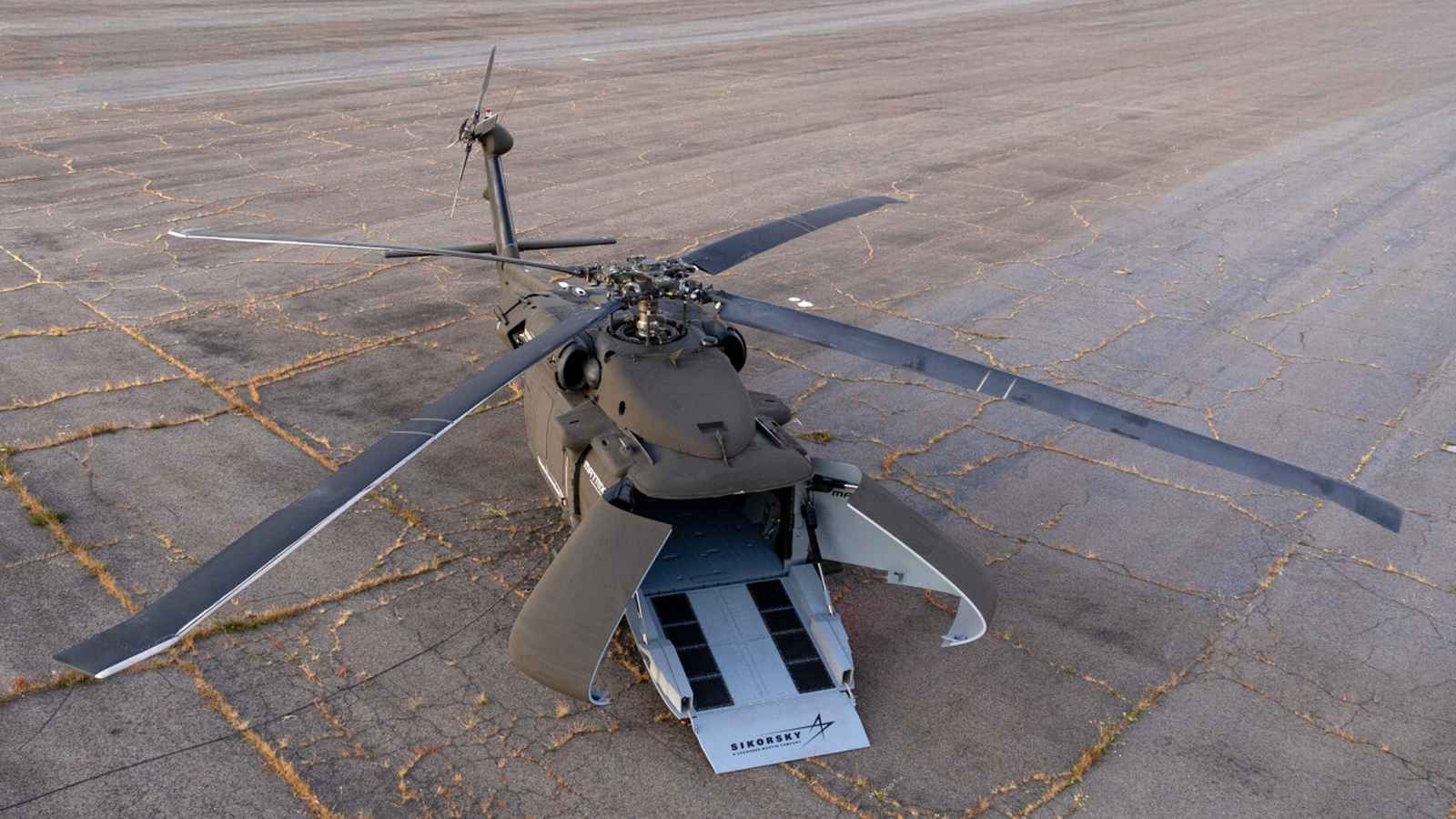
- Sikorsky showcased a fully autonomous Black Hawk (U-Hawk) with expanded capabilities.
- Hanwha proposes a fully automated artillery shell production facility, aiming for 300,000 rounds per year.
- US Army increases munitions output in response to high consumption rates in Ukraine.
Army Considers Rebooting Next-Gen Patriot Interceptor Program
The annual Association of the United States Army (AUSA) exposition in Washington, D.C., is more than just a showcase for military hardware—it’s often a barometer for where the Army is headed. This year, one of the most watched storylines centers on the possible revival of the Lower-Tier Future Interceptor (LTFI), a next-generation missile for the Patriot system. After last year’s abrupt cancellation due to cost, the Army’s missiles and space portfolio chief, Maj. Gen. Frank Lozano, revealed that momentum may be shifting. ‘There are some aspects of the LTFI program that are still somewhat pre-decisional,’ Lozano told attendees, but signaled cautious optimism. ‘The glass is probably half full.’ (Breaking Defense)
Why the change? For starters, demand for robust air defense systems has surged globally. From the battlefields of Ukraine to the tensions in the Middle East, the effectiveness of missiles and drones has made air defense a top priority. The Army, previously focused on upgrading the PAC-3 segment, now sees renewed funding and strategic urgency—potentially paving the way for a formal LTFI program in the coming year.
Lozano’s approach this time is to cast a wider net across industry, seeking rapid prototyping and a minimum viable capability within three to five years. The Army wants innovation, not just from legacy contractors like Lockheed Martin and Raytheon, but also from new entrants. The aim: field solutions that match the pace of evolving threats.
Showcasing Autonomous Vehicles and Uncrewed Aircraft
Innovation wasn’t limited to missile defense. On the show floor, autonomous technologies took center stage. Sikorsky, a Lockheed Martin company, unveiled its new S-70UAS U-Hawk—a fully uncrewed version of the iconic Black Hawk helicopter. With 25% more cargo space than its predecessor, the U-Hawk can transport outsized cargo, deploy uncrewed ground vehicles, and launch swarms of drones for reconnaissance or strike missions. Instead of a cockpit, it features actuated clamshell doors and a ramp, while the flight controls have been replaced with a fly-by-wire system powered by MATRIX autonomy technology. (Military Embedded Systems)
This leap in design means the U-Hawk isn’t just a pilotless Black Hawk—it’s a multi-role platform that can carry longer missiles, roll on and off autonomous vehicles, and even extend its operational range with internal fuel tanks. It’s a vision of logistics and battlefield flexibility that would have seemed like science fiction just a few years ago.
Other autonomous solutions at AUSA included Oshkosh Defense’s Extreme Multi-Mission Autonomous Vehicle (X-MAV), engineered for the future of long-range munitions, and General Atomics’ collaboration with Hanwha Aerospace on a short takeoff-and-landing drone variant. The autonomous revolution is no longer hypothetical—it’s arriving on the Army’s doorstep.
Munitions Production: Meeting Demand in a High-Intensity World
If there’s a single word that captures the Army’s mood at AUSA 2025, it’s urgency. Nowhere is this more evident than in the scramble to ramp up munitions production. Hanwha Aerospace, a South Korean defense giant, is pitching its Fully Automated Modular Charge Facility—a factory where not a single person sets foot inside. With a goal to produce 300,000 rounds of 155mm artillery shells per year, Hanwha is in talks with the US government to localize production using a government-owned, company-operated model. (Army Technology)
Why the race? The US Army’s shift from counterinsurgency in the Middle East to preparing for large-scale conflict—especially as seen in Ukraine—has exposed a critical artillery gap. Consumption rates in Ukraine have pushed the US Department of Defense to increase annual output from 168,000 to a staggering 1.2 million rounds. To meet the challenge, the Army is qualifying new suppliers for metal shells and forging capabilities, and even redirecting funds to extract tungsten, a vital component for armor-piercing shells.
Hanwha’s automated approach promises not just volume, but consistency and safety. The first such facility is set to open in South Korea in 2027, with potential expansion to the US, UK, and Europe. The push to modernize production isn’t just about keeping pace with adversaries—it’s about ensuring that supply matches strategic intent.
Industry Partnerships and the Future Force
AUSA’s show floor was a microcosm of the Army’s evolving priorities. Rheinmetall, in partnership with GM Defense, showcased the HX Common Tactical Truck, signaling moves to modernize logistics. Saab’s Ground-Launched Small Diameter Bomb, based on Boeing’s SDB and Lockheed’s MLRS, highlighted new ways to deliver precision at range. Rafael’s Iron Beam—a 100kW-class laser weapon—hinted at a future where energy weapons could become operational within the year.
These partnerships reflect a strategic shift. The Army isn’t just buying products; it’s cultivating ecosystems of innovation, seeking to leverage the strengths of global industry leaders and nimble newcomers alike. The underlying message is clear: success on tomorrow’s battlefield will depend on adaptability, speed, and collaboration.
Challenges and Opportunities Ahead
Of course, modernizing a military force is rarely straightforward. The balancing act between cost, capability, and speed is ever-present. As Lozano noted, the LTFI program’s fate remains partially undecided, subject to funding and acquisition strategy. Hanwha’s automated facility promises efficiency, but localizing such cutting-edge production comes with regulatory and security hurdles.
Meanwhile, the Army must grapple with integrating autonomous platforms into a doctrine built around human operators. Will technologies like the U-Hawk redefine logistics and combat support, or will they face cultural and operational resistance? The answers will shape not just the Army’s future, but the wider trajectory of defense innovation.
What’s clear from AUSA 2025 is that the Army is at a crossroads. The lessons of recent conflicts, the realities of global supply chains, and the promise of autonomous systems are all converging. The choices made in the next year will reverberate far beyond Washington.
Assessment: AUSA 2025 marks a pivotal moment for the US Army—where technological ambition meets operational urgency. The potential revival of the LTFI program, the embrace of autonomous platforms, and the drive to scale munitions production all reflect a force seeking adaptability amid uncertainty. If the Army can balance innovation with execution, it will shape a future force ready for the demands of modern conflict. But the stakes are high, and the window for decisive action is narrowing.
Image Credit: Photo courtesy Sikorsky