
Quick Read
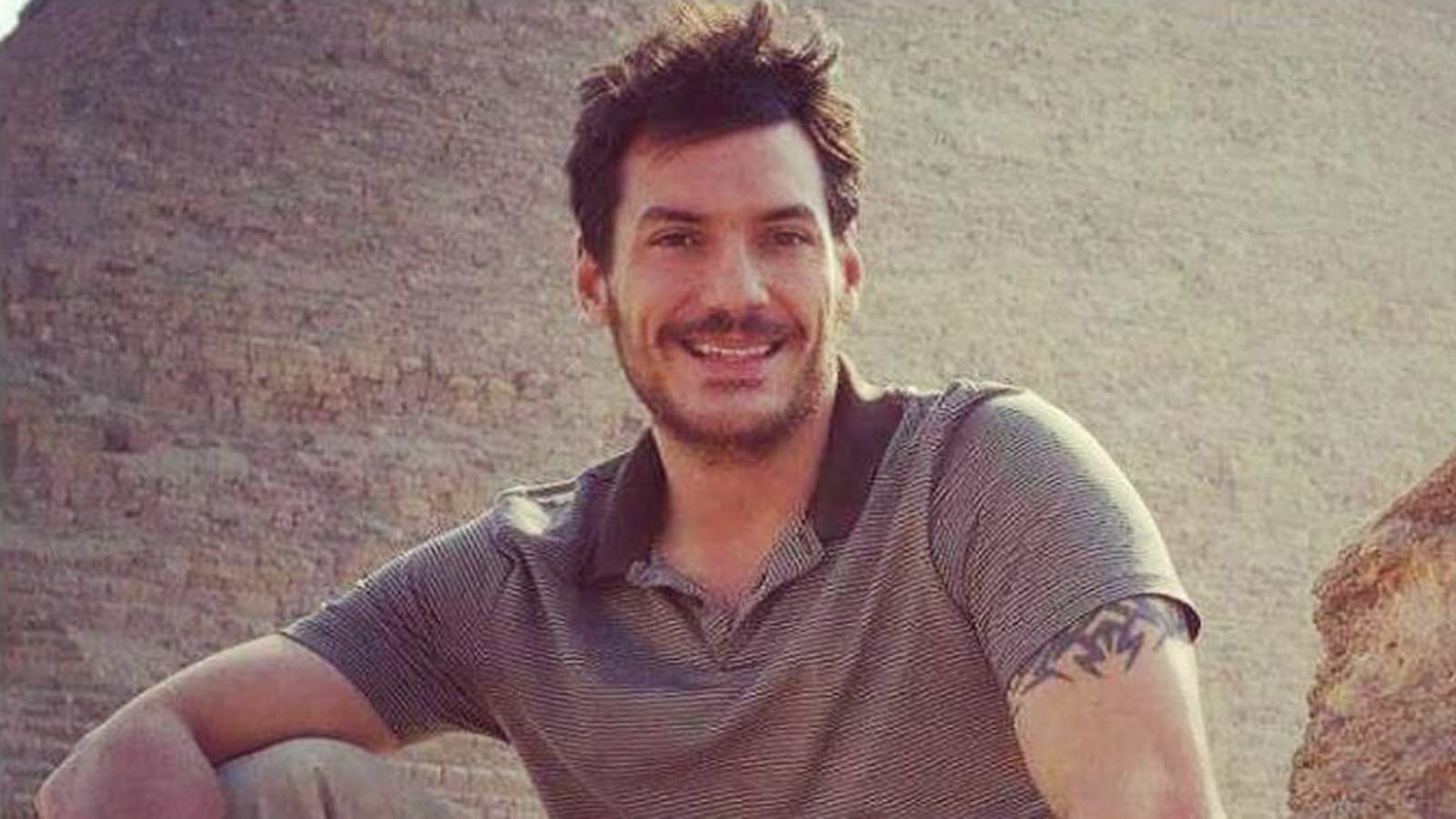
- Austin Tice, American journalist, disappeared in Syria in August 2012 while reporting on the conflict.
- Recent witness accounts after Assad regime’s fall suggest Tice was executed on Assad’s orders, but no definitive proof has been found.
- The FBI and US officials continue to investigate, with the new Syrian government showing willingness to cooperate.
- Tice’s family maintains hope he is alive, dismissing key witness claims as unreliable.
- The search for answers highlights the broader struggle for truth and justice in post-Assad Syria.
Tracing the Last Steps: An Investigation Begins Anew
In the dusty outskirts of Damascus, a barricaded road snakes up Mount Qasioun, past layers of military checkpoints and silent guards. For years, this road has been off-limits, its destination hidden behind the walls of the Syrian Scientific Studies and Research Center—a place whispered about but rarely seen. In September, an FBI-led American team arrived in a convoy of armored vehicles, searching not just for answers, but for the remains of Austin Tice, the American journalist whose disappearance in 2012 became a haunting mystery.
Thirteen years have passed since Tice’s last report from Darayya, a suburb battered by war. In that time, hope has flickered and faded, reignited by rumor and crushed by silence. The Americans combed through the labyrinthine facility, following leads from witnesses—including Bassam Al-Hassan, once a powerful adviser to Syria’s president Bashar al-Assad and the man who held Tice after his capture. Their search lasted less than three days, cut short by an Israeli attack on Qatar, and the team abruptly withdrew. Yet, even as they left, the question lingered: What really happened to Austin Tice?
Unraveling the Regime’s Web: Eyewitnesses Emerge
After the Assad regime collapsed in December 2024, the first cracks in the official story appeared. Witnesses began to speak. Al-Hassan, having fled Syria for Iran and then Lebanon, was interrogated by FBI agents in Beirut. In a rare, filmed encounter with CNN journalists, Al-Hassan was asked bluntly if Tice was alive. His reply—”Of course, Austin is dead. Austin is dead”—came with a nod and an admission: Assad himself had ordered the execution, and Al-Hassan had relayed the order to a subordinate in the notorious National Defense Forces.
But the story is far from straightforward. Several sources questioned Al-Hassan’s account. CNN confirmed he failed an FBI polygraph test, and some described him as cunning, Machiavellian—a man not to be trusted, shaped by a regime built on deception and rivalry. Others pointed out that Al-Hassan was not known for challenging Assad, casting doubt on his claim that he tried to resist the execution order.
Still, the pieces began to fit together. General Safwan Bahloul, once of Syria’s external intelligence branch, described interrogating Tice in 2012. According to Bahloul, Tice was cooperative, calm, even brave—”He wasn’t shaky. He was brave enough to face his custody. Sometimes even we talked about music.” Tice was held in a Republican Guard compound called Tahoune, under Ghassan Nassour, an officer who later spoke to CNN from the UAE.
Captivity and a Daring Escape
The details of Tice’s captivity are harrowing. Nassour recounted how regime soldiers, under Al-Hassan’s direction, staged a video of Tice, blindfolded and led by men posing as jihadists—a ruse meant to mislead the world into believing he was in extremist hands. The video, posted online, was quickly exposed as a fake, providing the only proof of life.
Months later, Tice engineered a desperate escape, using soap and a towel to slip through a high window and over the compound’s wall. He made it as far as Mazzeh, a neighborhood known for embassies and generals’ homes, before being caught and handed back to the National Defense Forces. Bahloul saw Tice one last time, describing him as “depressed” and “not responding.” After that, Tice vanished into the shadowy apparatus of Assad’s security state.
For years, the Syrian government denied holding Tice, maintaining silence even as the US pressed for proof of life. When Assad fled to Russia after his regime’s fall, more witnesses spoke out, but hard evidence remained elusive. The line between truth and fiction blurred—a hallmark of Assad’s rule, which thrived on secrecy, fear, and the disappearance of thousands.
The Tice Family’s Relentless Search
Throughout the ordeal, Tice’s family, especially his mother Debra, refused to give up hope. She traveled to Damascus, met with the new Syrian president, and dismissed Al-Hassan as a “pathological liar.” The family issued a statement to CNN: “Austin Tice is alive. We look forward to seeing him walk free.”
Their determination stands in contrast to the shifting stories of officials and the faded traces of Tice’s captivity. US investigators, now working with the new Syrian government, continue their search—not just for closure, but for justice. The FBI has intensified its efforts, collecting evidence on the ground. “As well as a recovery operation this is also an active federal investigation and there is always the goal of trying to bring some justice to this situation,” one person familiar with the investigation told CNN.
The Politics of Hostage Diplomacy and Elusive Justice
Austin Tice’s fate became a pawn in high-stakes negotiations. Both Nassour and Bahloul told CNN that Assad saw Tice as a valuable bargaining chip. “Assad knew about Tice and knew he could use him in negotiations. It would be extremely stupid to kill him,” Nassour said. Yet, failed negotiations and the regime’s steadfast denials suggested something was wrong. General Abbas Ibrahim, Lebanon’s former spy chief, described years of fruitless talks with Syrian negotiators, who never provided proof of life. “The regime in Syria had a big opportunity to save themselves [with] Austin, but they didn’t play this card because maybe they don’t have this card anymore,” he reflected.
As Syria’s dungeons were opened after Assad’s fall, hope for missing persons—including Tice—faded. Families clung to hope, refusing to accept death without evidence. The truth, many believed, lay buried in secret graves or hidden in millions of government documents.
The Human Toll of Endless Uncertainty
The search for Austin Tice has become more than a quest for one man—it is a symbol of the agony endured by families of the disappeared, and the enduring shadow cast by a regime built on secrecy and fear. Even as CNN journalists left Al-Hassan’s apartment in Beirut, the man’s voice cracked with remorse: “Truly, it upsets me to remember it. I wish what happened hadn’t happened.” His words hung in the air, heavy with regret but offering little closure.
For the Tice family, and for countless others, the search goes on. The story of Austin Tice is not just about a missing journalist; it is about the struggle for truth in a landscape shaped by lies, and the relentless hope that even the darkest mysteries can someday be solved.
The enduring uncertainty surrounding Austin Tice’s fate exemplifies the challenges faced by families and investigators in confronting the legacy of authoritarian regimes. Despite rare admissions and shifting allegiances, hard proof remains elusive, and the human cost of secrecy persists. Ultimately, the pursuit of truth is as much about justice for the disappeared as it is about holding power to account, a struggle that continues in Syria and beyond.