
Quick Read
- Tropical Cyclone Narelle caused significant destruction in Exmouth, including the destruction of the local airport and damage to residential infrastructure.
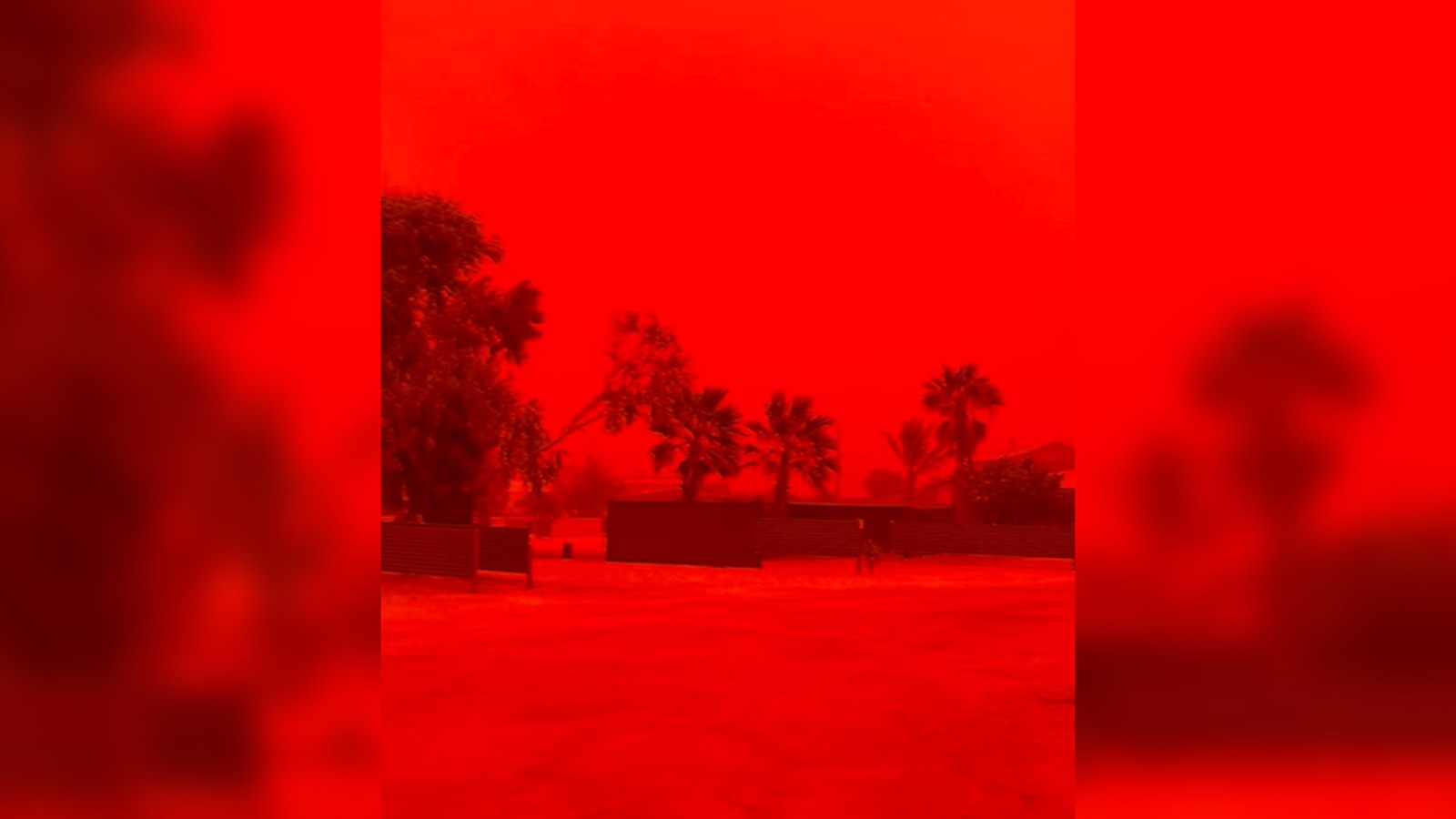
- The ‘blood-red’ sky was a result of iron-rich dust from the Pilbara region being lifted into the atmosphere and scattering sunlight.
- Government-led financial aid packages of up to $4,000 are being distributed to residents following widespread property and crop damage.
EXMOUTH (Azat TV) – A rare and unsettling meteorological phenomenon has gripped Western Australia, as the skies over the Gascoyne region turned a deep, blood-red hue in the wake of Tropical Cyclone Narelle. While the visual spectacle drew global attention, it served as a precursor to significant physical destruction, with the storm leaving behind a trail of damaged infrastructure and crippled agricultural sectors.
The Science Behind the Crimson Sky
The eerie transformation, which occurred as the cyclone approached between March 27 and March 30, 2026, was driven by the region’s unique geography and the intensity of the storm’s winds. According to the Bureau of Meteorology, high-velocity winds whipped up vast quantities of iron-rich dust from the southern Pilbara region. This dust, which has rusted over millions of years, saturated the atmosphere. As sunlight attempted to penetrate this dense, particulate-heavy air, shorter blue wavelengths were scattered, leaving only the longer red wavelengths visible. The effect was compounded by thick cloud cover, which created a uniform, dim illumination that residents described as apocalyptic.
Stakes of the Cyclone’s Path
Beyond the visual impact, Cyclone Narelle caused extensive damage upon making landfall in Exmouth. Local reports confirm that roofs were torn from numerous buildings, and the town’s marina sustained severe structural damage. Perhaps most significantly, the local airport was reported to be effectively obliterated. Even facilities designed to withstand such weather, including a primary evacuation centre housing 40 people, suffered structural failures as portions of the roof were compromised.
Agricultural and Economic Impact
The economic toll is mounting, particularly for the agricultural community. In Carnarvon, producers have reported devastating losses, with some banana growers facing the destruction of over 80 per cent of their crops. Furthermore, thirty pastoral properties have been flagged for extensive damage. In response, WA Premier Roger Cook has initiated a financial relief package, offering one-off payments of $2,000 for primary home damage and up to $4,000 for residents whose homes were entirely destroyed. A massive clean-up operation remains underway as the region begins to assess the full scale of the recovery effort.
The contrast between the striking, viral imagery of the crimson sky and the stark reality of destroyed homes and lost livelihoods underscores the deceptive nature of extreme weather events, where a rare aesthetic phenomenon can effectively obscure the immediate, life-altering dangers posed by atmospheric instability.