
Quick Read
- Australian journalist Lauren Tomasi injured while covering Los Angeles protests.
- Incident occurred during demonstrations against U.S. immigration policies.
- Raises concerns about press safety and freedom during civil unrest.
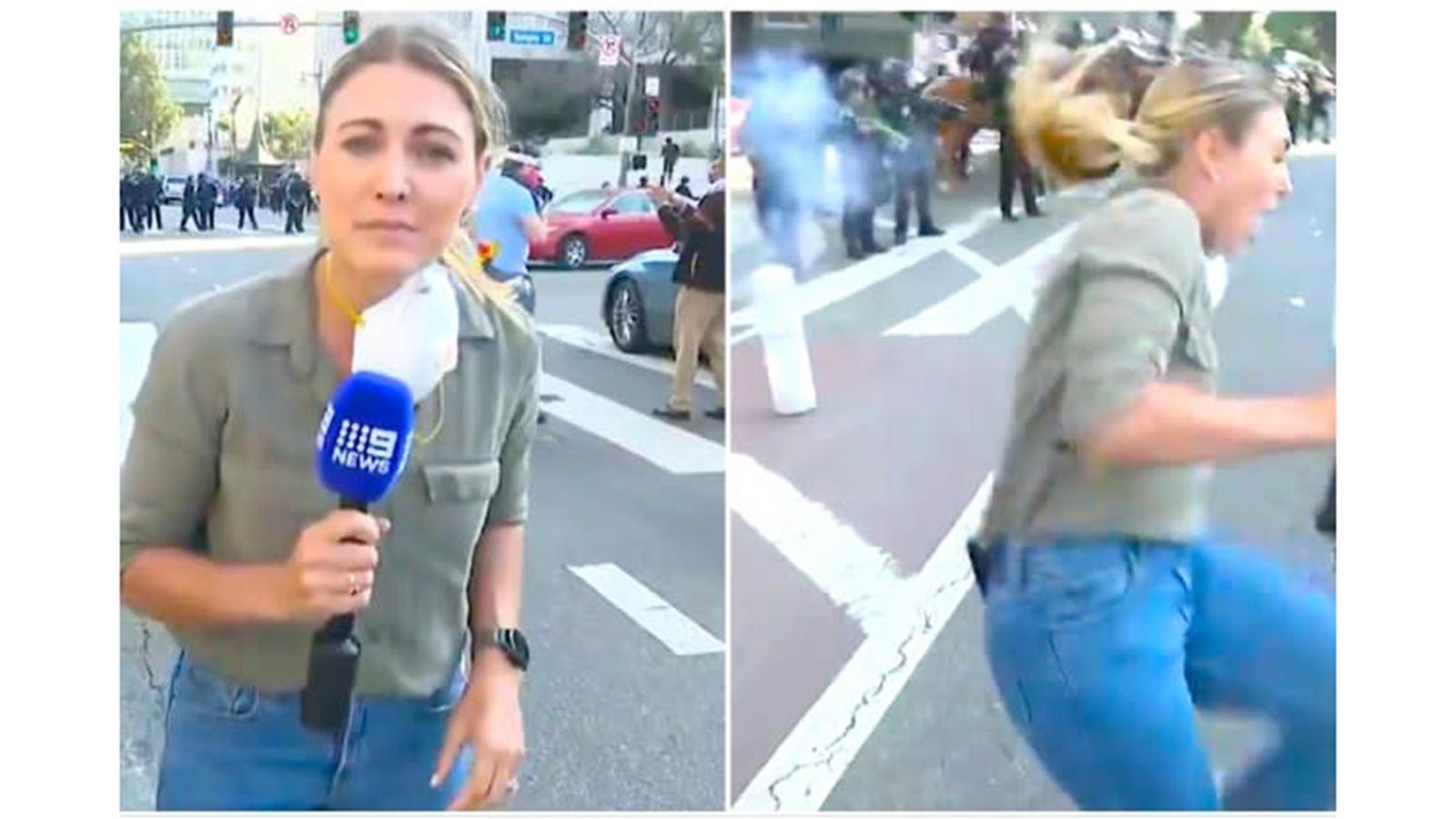
In a stark reminder of the risks journalists face in conflict zones, Australian reporter Lauren Tomasi was struck by a rubber bullet while covering protests in Los Angeles on June 9, 2025. The incident unfolded during widespread demonstrations opposing U.S. immigration enforcement policies, with thousands gathering in downtown L.A. to express dissent.
How the Incident Unfolded
Tomasi, a correspondent for an Australian news network, was reporting live amidst escalating tensions between protesters and law enforcement. According to video footage captured during the demonstration, the reporter was positioned near a line of police officers when a rubber bullet struck her shoulder, momentarily disrupting the broadcast. Despite the injury, Tomasi reassured viewers of her safety, showcasing remarkable composure under pressure.
The protests were part of a broader backlash against controversial immigration policies, including the detention of migrants and heightened enforcement measures by U.S. Immigration and Customs Enforcement (ICE). Los Angeles has been a focal point for such demonstrations, given its significant immigrant population and history of activism.
The Broader Context of Press Safety
This incident reignites concerns about the safety of journalists covering protests, especially in volatile environments. The use of rubber bullets, tear gas, and other crowd-control measures has been criticized for endangering both protesters and members of the press. Advocacy groups, including the Committee to Protect Journalists (CPJ), have called for stricter accountability and training for law enforcement to avoid such occurrences.
Tomasi’s experience is not isolated. Over the years, numerous journalists have been injured while performing their duty to inform the public. During the George Floyd protests in 2020, several reporters were targeted with similar non-lethal weapons, prompting widespread condemnation from media organizations and human rights advocates.
Local and Global Reactions
The incident has drawn reactions from various quarters. California Governor Gavin Newsom, already engaged in a heated standoff with the Trump administration over immigration policies, condemned the use of excessive force during protests. “The press has a fundamental role in our democracy,” he stated, emphasizing the need to protect journalists on the front lines.
Media organizations in Australia and beyond have rallied in support of Tomasi, urging authorities to investigate the incident thoroughly. The Australian government has also reached out to its U.S. counterparts to ensure the safety of its citizens working in high-risk environments.
For many, this episode underscores the importance of safeguarding press freedoms, which are increasingly under threat worldwide. The rise of authoritarian policies, coupled with growing hostility toward the media, has created a challenging landscape for journalists, particularly those reporting on contentious issues.
What’s Next?
As protests continue in Los Angeles and other U.S. cities, the focus remains on balancing public safety with the protection of fundamental rights, including freedom of speech and the press. Advocacy groups are pushing for policy reforms to regulate the use of crowd-control weapons and ensure accountability for their misuse.
For Lauren Tomasi, the incident serves as a stark reminder of the risks inherent in journalism. Yet, her unwavering commitment to reporting the truth exemplifies the courage and resilience of journalists worldwide.
This incident is a sobering example of the challenges faced by the press in volatile situations. As public demonstrations persist, ensuring the safety and freedom of journalists remains a critical priority for democratic societies.