
Quick Read
- Bangladesh’s general election is set for February 12, 2026, amidst significant political turmoil.
- The Awami League is banned from contesting, raising doubts about the election’s credibility.
- BNP leader Tarique Rahman has returned to Dhaka, and the BNP is back in the electoral race.
- Extremist and radical forces, including Jamaat-e-Islami and its ally NCP, are gaining influence, threatening parliamentary democracy.
- India’s core security interests are paramount, focusing on preventing the misuse of Bangladeshi territory by insurgent or terrorist groups.
Bangladesh stands on the precipice of a pivotal general election scheduled for February 12, 2026, a vote that promises to reshape its political landscape amidst profound turbulence. The nation, often described as having experienced a ‘cruel birth’ and a ‘legacy of blood,’ according to figures like Ambassador Archer Blood and journalist Anthony Mascarenhas, now navigates what many perceive as a ‘cruel adulthood.’ This period of heightened volatility, reminiscent of the chaotic aftermath of Sheikh Mujibur Rahman’s assassination in 1975, has drawn global attention, particularly from its powerful neighbor, India.
The upcoming election is fraught with controversy and uncertainty. The ruling Awami League has been debarred from contesting, a decision that casts a long shadow over the election’s credibility and legitimacy. How can a democratic exercise truly represent the will of the people when one of its major political players is sidelined? This absence paves the way for the Bangladesh National Party (BNP), which boycotted previous elections, to re-enter the fray with its leader, Tarique Rahman, reportedly returning to Dhaka after 17 years in exile. While the BNP and Jamaat-e-Islami were once allies against the Awami League, the current political vacuum has shifted allegiances, with Jamaat now partnering with the National Citizens Party (NCP), an emergent force from the 2024 student protests. These new alliances, coupled with a significant demographic of young, first-time voters, introduce an unpredictable element into the electoral calculus.
A Nation on Edge: The Disputed Election Landscape
The political chessboard in Bangladesh is complex, with 300 directly elected seats in the Jatiya Sangsad, the Bangladesh Parliament, and an additional 50 seats reserved for women, decided by proportional representation. To form a government, 151 directly elected seats are required. The absence of the Awami League, which historically commanded a solid 35-40 percent of the vote, raises critical questions about where this significant bloc of liberal, secular voters will go. Many observers believe this loyal constituency, deeply rooted in the ideals of the Liberation War, may simply abstain, leading to a potentially lower voter turnout. This scenario could dramatically alter the political dynamics, creating opportunities for other parties to gain ground.
The BNP, which champions a ‘Bangladeshi nationalism’ contrasting with the Awami League’s ‘Bengali nationalism,’ maintains a similarly robust core vote bank. In the absence of its primary rival, the straightforward assumption is that the BNP could secure a comfortable or even landslide victory, enabling it to form the next government. However, this outcome, as independent journalist Amit Baruah and former R&AW head in Bangladesh Ramanathan Kumar discussed in a recent Frontline webinar, may merely set the stage for the ‘next round of confrontation,’ rather than ushering in stability. The Jatiya Party, an attempt at a centrist force, remains fractured and unlikely to absorb the Awami League’s disenfranchised voters.
The Rising Tide of Extremism and India’s Security Dilemma
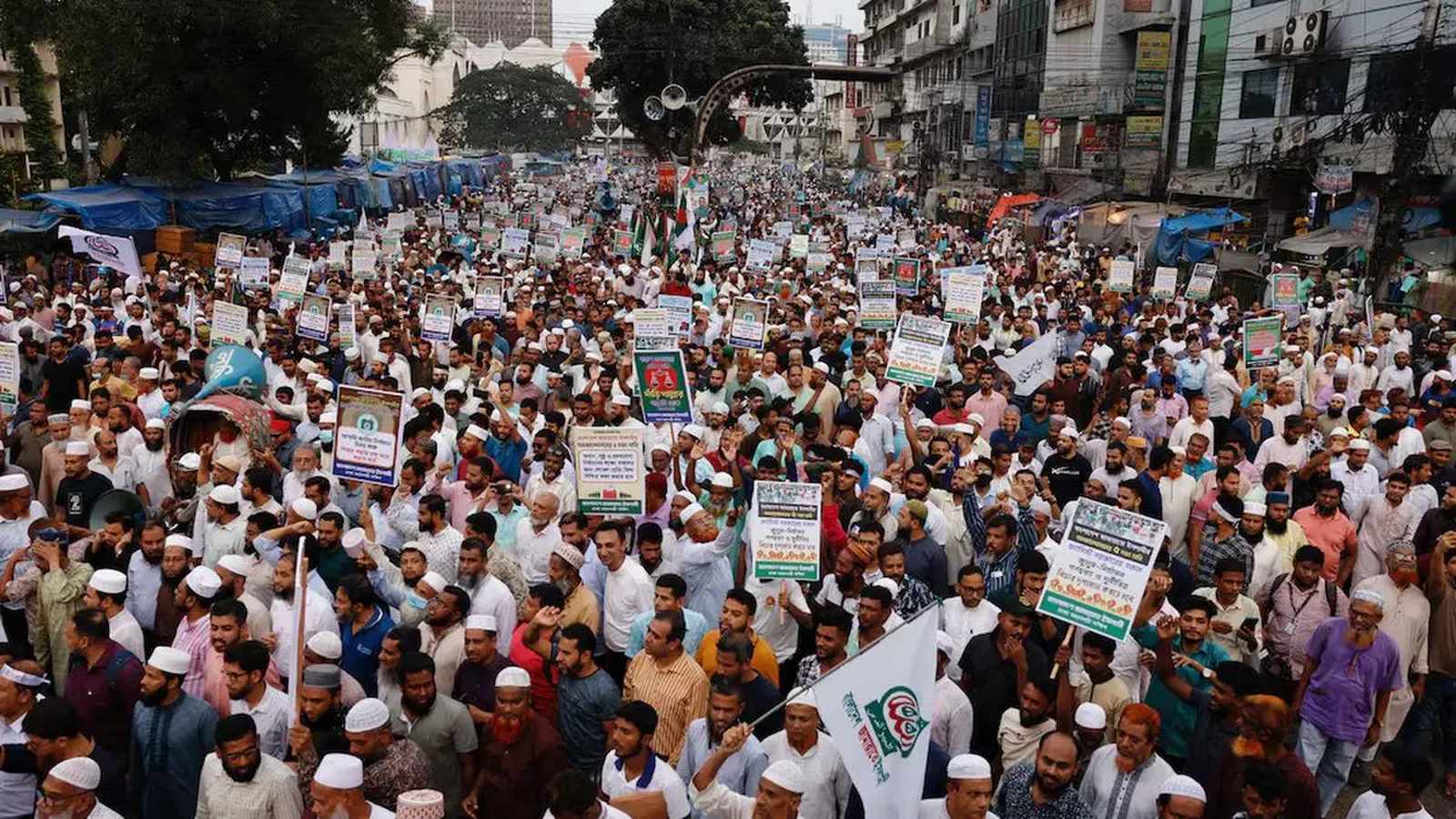
Beyond the electoral mechanics, a more ominous threat looms: the growing influence of extremist and radical forces. These groups, historically present in Bangladesh, now perceive a fertile ground to discredit parliamentary democracy and advocate for a move towards ‘pure Islamic rule.’ The Jamaat-e-Islami, despite never winning more than 30 seats since independence or exceeding 12 percent of the popular vote, could see a surge in support. Analysts draw parallels to Nepal’s 2008 Constituent Assembly election, where mainstream parties’ failures led voters to embrace the untested Maoists. A similar dynamic, where a disillusioned populace turns to radical alternatives, cannot be ruled out in Bangladesh.
The interim government, installed with the backing of some Western countries who had an uneasy relationship with former Prime Minister Sheikh Hasina, was hoped to bring reform and cleanup. However, the situation appears to have deteriorated, with law and order challenges intensifying. This environment has emboldened extremist elements, as evidenced by systematic attacks on minorities, mainstream media outlets like Prothom Alo and The Daily Star, and cultural organizations. These actions, designed to create friction and delegitimize democratic institutions, aim to pave the way for a more obscurantist vision of society. The deliberate targeting of minorities, in particular, is seen as an attempt to provoke reactions from India, escalating regional tensions.
Navigating Complex Geopolitics: India-Bangladesh Relations and External Influences
India’s relationship with Bangladesh, characterized by ‘shades of grey’ rather than clear-cut black and white, has a history of numerous ups and downs. India’s core interest remains its national security: ensuring Bangladeshi territory is never exploited for activities prejudicial to India. This concern is not new; periods like 2001-2006, when the BNP and Jamaat were allied, saw Bangladesh become a security nightmare for India, with Pakistani terrorist groups (Lashkar-e-Taiba, Jaish-e-Mohammed) and various Indian insurgent groups (ULFA, NDFB, UNLF, NLFT, ATTF) operating freely from its soil. While the past decade and a half under Sheikh Hasina brought relative peace and decisive action against such groups, the ‘wheel of history seems to have turned,’ as noted by Ramanathan Kumar.
Pakistan, long marginalized, now senses an opportunity to regain influence, potentially leveraging Bangladeshi territory for ‘mischief’ with the backing of an increasingly powerful China. This geopolitical alignment poses a significant threat to India’s regional strategic influence. The situation is further complicated by the presence of the ousted Prime Minister Sheikh Hasina in Delhi, a delicate matter that has fueled anti-India sentiment in Bangladesh. Extraditing her, however, could embolden extremist forces, making it a complex diplomatic tightrope walk for New Delhi. India’s strategy, as emphasized by the Frontline webinar participants, is not about favoring one party but about safeguarding its core security interests. It’s about ensuring ‘the cat catches the mice,’ regardless of its color.
Beyond high politics, even the realm of sport has been affected. The Board of Control for Cricket in India’s request for IPL player Mustafizur Rahman to return prompted Bangladesh to suspend visa and consular services for Indian nationals, and calls to shift T20 World Cup games from India to Sri Lanka. Such ‘overreactions’ risk vitiating the entire atmosphere, demonstrating how deeply intertwined politics and public sentiment are in both nations.
As Bangladesh braces for its uncertain future, the global community, and especially India, watches closely. The strengthening of extremist and radical forces presents a profound challenge to any incoming government, regardless of its democratic mandate. For India, the imperative is clear: engage with whichever administration comes to power, but unequivocally uphold its core security concerns and extend unwavering support to the forces of democracy, pluralism, inclusiveness, and secularism. This dual approach is not merely in India’s interest, but vital for the stability and prosperity of Bangladesh and the wider South Asian region.