
Quick Read
- Advanced DNA sequencing has confirmed the Beachy Head Woman was a local Roman-era Briton from southern England.
- Previous theories suggested African or Cypriot descent based on skull shape and degraded DNA, but these have now been disproved.
- Her remains were first rediscovered in Eastbourne Town Hall in 2012, originally excavated near Beachy Head in the 1950s.
- She lived between AD 129 and 311, likely enjoyed a seafood-rich diet, and showed no signs of heavy labor.
- The findings revise public understanding of her identity, highlighting the evolution of scientific methods.
For more than a decade, the Beachy Head Woman was a symbol of Britain’s multicultural past—her story shaped by shifting scientific interpretations and public imagination. Yet, as DNA technology advanced, the real narrative behind this Roman-era skeleton from southern England has finally emerged, challenging the assumptions that once placed her at the center of Britain’s early diversity story.
Her remains, first rediscovered in 2012 among the archives of Eastbourne Town Hall, were originally excavated near the dramatic cliffs of Beachy Head during the 1950s. In the years that followed, forensic anthropologists and historians pieced together her story from the clues her bones offered: a young woman, aged between 18 and 25, standing about five feet tall, who lived and died during the Roman occupation of Britain, sometime between AD 129 and 311. A healed leg wound suggested she survived a significant injury, and chemical analyses of her bones revealed a diet rich in seafood—an indicator she was no stranger to the local coastline.
But the most controversial aspect of her story came from the shape of her skull. Early morphometric analysis, led by experts such as Prof Caroline Wilkinson, pointed towards features typically associated with sub-Saharan African ancestry. This led to her being celebrated as the ‘first black Briton,’ a narrative further popularized by a commemorative plaque and a feature in David Olusoga’s 2016 BBC series “Black and British: a Forgotten History.” The interpretation was compelling, resonating with contemporary efforts to recognize the longstanding diversity of Britain’s population.
Yet science, as ever, is a process of constant revision. As Prof Wilkinson herself notes, more recent research has shown that facial and skull features can overlap significantly between populations, making ancestry classification by cranial shape increasingly unreliable. The initial confidence in Beachy Head Woman’s African origin began to waver as technology improved and scientists sought more definitive answers in her DNA.
In 2017, an attempt at DNA analysis hinted at a Mediterranean connection, possibly Cyprus. However, the sample was so degraded that only fragments could be recovered, leaving the question of her true origins unresolved. For years, the plaque at a local cricket club stood as a testament to the earlier theory, while debates within the scientific and local community continued to simmer.
The breakthrough came with the introduction of capture array technology—a sophisticated method that allows researchers to extract and piece together even the tiniest fragments of ancient DNA. This innovation, applied by a team led by Dr Selina Brace at the Natural History Museum and Dr William Marsh of University College London, resulted in a more than tenfold increase in the quality and coverage of genetic data from the skeleton.
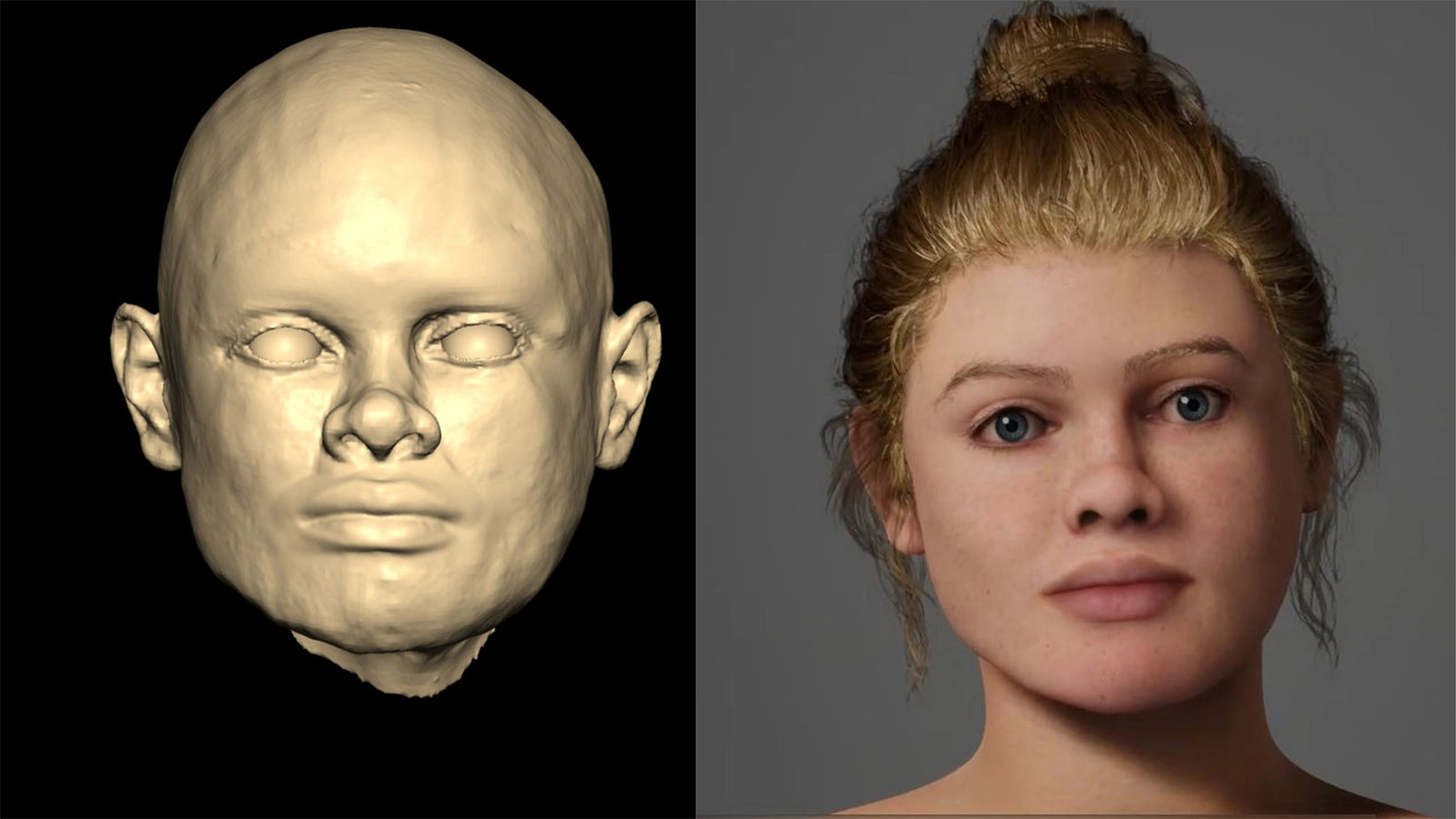
The findings were decisive. Published in the Journal of Archaeological Science, the new analysis demonstrated that the Beachy Head Woman’s DNA matches that of local Roman-era Britons from southern England, with no evidence of recent African or Mediterranean ancestry. In fact, genetic indicators suggest she likely had blue eyes, lighter hair, and an intermediate skin tone—far from the earlier reconstructions that depicted her with dark features.
“She’s just this local girl who grew up in Eastbourne,” Dr Brace reflected, underscoring how public narratives can shift as scientific understanding evolves. Her team’s work highlights not only the power of new technology, but also the responsibility researchers hold in accurately portraying historical figures. The removal of the commemorative plaque was a nod to this ongoing commitment to truth, even when it means rewriting stories that have become embedded in public consciousness.
Other details from the latest research add nuance to Beachy Head Woman’s life. The absence of grave goods or a clear burial site leaves open questions about her social standing, but researchers speculate she may have been linked to a Roman villa or local trade networks. The lack of physical signs of heavy labor on her skeleton suggests she could have enjoyed a relatively privileged existence, perhaps as part of a community connected to the bustling activity of Roman Britain’s south coast.
Her story, however, is not just about ancestry—it’s a reflection of the broader challenges in reconstructing the lives of ancient individuals. The shifting interpretations of her origins mirror the evolving nature of scientific inquiry, where each technological advance offers new insights and sometimes, profound corrections. As Dr Brace put it, “It doesn’t alter the story of Britain. It just alters her story and we owed it to her to put that right.”
The Beachy Head Woman’s journey from local anonymity to national icon—and back again—serves as a case study in the intersection of science, identity, and public history. While her personal narrative has been transformed, the broader tapestry of Roman Britain remains rich and complex, filled with stories waiting to be told, retold, and refined as our tools and perspectives change.
This episode underscores the importance of scientific humility and the ongoing dialogue between evidence and interpretation. As technology continues to evolve, the stories we tell about the past must remain open to revision—grounded in facts, but always ready for deeper truths.