
Quick Read
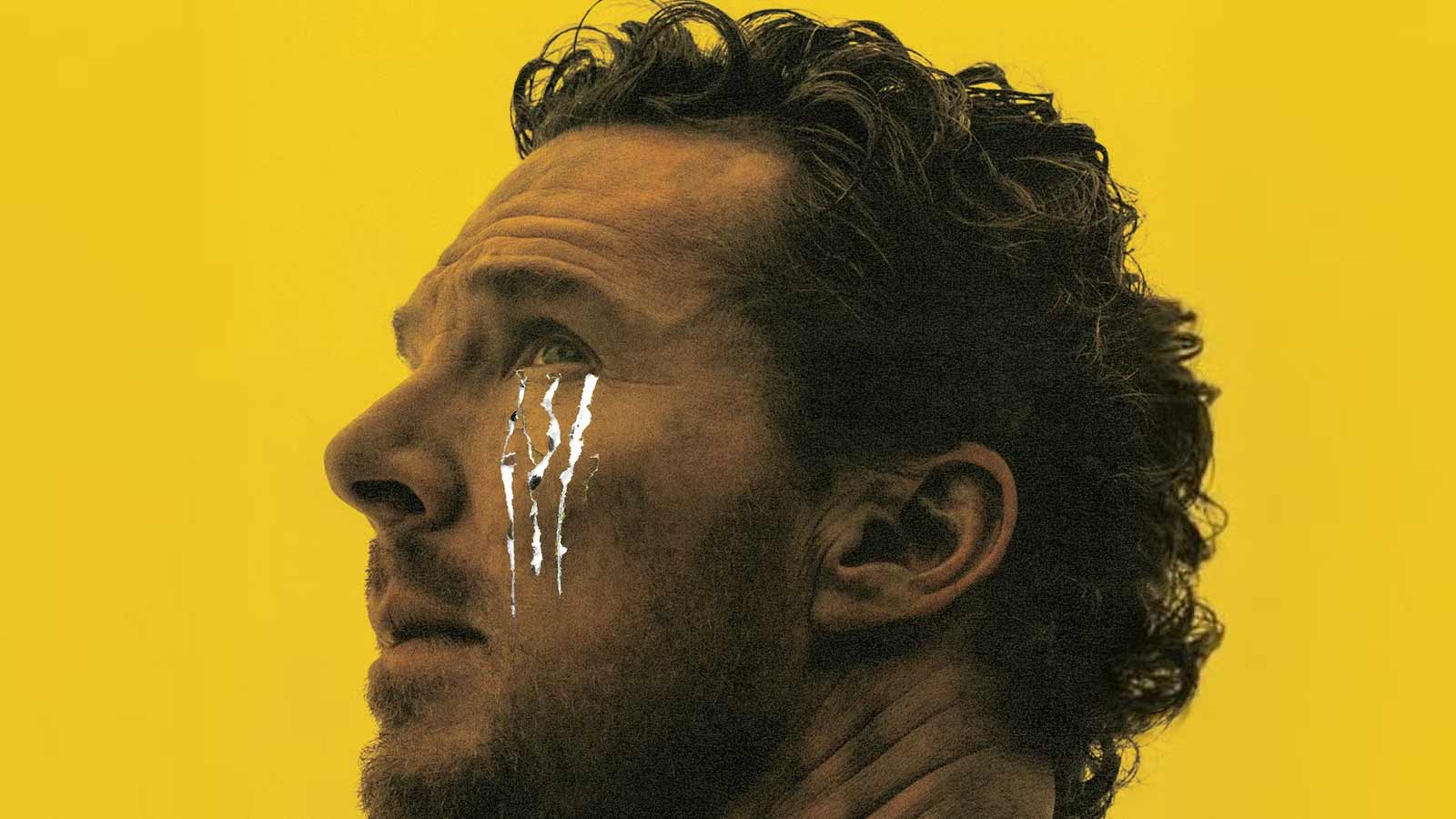
- Benedict Cumberbatch stars in ‘The Thing With Feathers’, a surreal film about grief based on Max Porter’s novel.
- Cumberbatch’s performance is described as emotionally extreme and intensely affecting.
- The film uses surrealist imagery to depict the fractured realities of a grieving family.
- Director Dylan Southern brought a bold, experimental approach, maintaining the spirit of the original book.
- Real-life brothers played the sons, adding authenticity to the portrayal of loss and childhood.
Benedict Cumberbatch Brings Unfiltered Humanity to a Story of Loss
In cinema, grief is often tidied up for public consumption—softened at the edges, tucked neatly into act structures. But in ‘The Thing With Feathers,’ Benedict Cumberbatch and director Dylan Southern have chosen a different path. Here, raw sorrow pulses through every frame, refusing to be sanitized or simplified. The result is a film that doesn’t just ask viewers to observe grief, but to live inside it, if only for a couple of hours.
A Literary Experiment Translated to the Screen
The film is adapted from Max Porter’s ‘Grief Is the Thing with Feathers,’ a book that defied easy categorization from the start. When Porter first penned his 11,000-word experimental work—part poetry, part prose, part fable—he didn’t expect it to be published, let alone adapted. But its unvarnished look at loss, inspired by Porter’s own experience of losing a parent, struck a chord. A decade later, his ‘strange little book’ has become a cultural touchstone, inspiring both stage and screen adaptations.
On the surface, the story is simple: a father, newly widowed, struggles to care for his two young sons. But as their world unravels, the boundaries between reality and imagination blur. In the film, Cumberbatch’s character is a graphic novelist obsessed with drawing crows, a fixation that soon takes on a life of its own. As grief deepens, the Crow—a trickster, a monster, a figment—begins to haunt their home, offering comfort, chaos, and an escape from pain.
Cumberbatch at His Most Daring
Benedict Cumberbatch’s performance is the film’s gravitational center. According to Porter, “as an actor he has a kind of aura. And because of the role he’s playing, he’s gonna go to emotionally extreme places. Therefore so are the camera crews, so are the sound guys, so are the boys.” On set, the intensity was palpable. The process became almost communal, with everyone—from the director to the camera operator—bringing their own ghosts into the room. Grief, after all, is universal, and this shared vulnerability bleeds through the film’s dreamlike imagery and fractured storytelling.
Cumberbatch’s portrayal of ‘Dad’ is not simply a portrait of sadness. He is, at times, a rock-and-roll, screaming, chaotic presence; at others, utterly broken. He’s not just a ‘sad dad,’ and his sons aren’t just ‘sad kids.’ Their imaginations, wild and untamed, create a world that is both terrifying and beautiful. The ambiguity of the Crow—foe or friend, hallucination or healing—mirrors the unpredictable, often contradictory nature of grief itself.
Surrealism and Sibling Energy: The Film’s Secret Weapons
Director Dylan Southern, known for his music video and documentary work, brought a bold, gonzo sensibility to the adaptation. The film leaps between registers, mixing sentimental waves with absurdist humor. The two boys at the story’s heart, real-life brothers Richard and Henry Boxall, weren’t trained actors, but regular kids with raw, unfiltered energy. Sometimes they needed to be bribed with sweets to film a scene, and sometimes they made a mess of the set—but on camera, their performances are startlingly real.
Porter himself made a cameo, describing his brief appearance as a “paradigm shift in acting” with characteristic self-deprecation. He mostly stayed out of the creative process, trusting Southern and his team to translate the book’s spirit. But he was moved to see how the film captured the messy, beautiful contradictions he’d written: “There’s people crying in the corner but there’s also a lot of love and a lot of thought about who we are as children, who we become as adults and what we are all carrying. What’s visible and invisible.”
Messiness as Authenticity: Redefining Grief in Film
What makes ‘The Thing With Feathers’ so potent is its refusal to package grief into tidy stages or offer easy answers. The Crow, as Porter describes, is “anti-Hallmark cards, anti-rented M&S suits at the funeral and people saying Uncle Robert was such a sweet man when he was a racist old fuck.” In other words, Crow disrupts the rituals and platitudes that often surround loss, forcing characters—and viewers—to confront the full spectrum of pain and absurdity that comes with it.
Viewers have responded viscerally. Porter recounts being approached by people who saw themselves in the story, who had their own ‘Crow’—whether a mental breakdown, an addiction, or recurring dreams of the dead. Grief, he insists, is not a neat process: “It’s fucking chaos that every single one of us is going to experience at least once or twice in our lives.” Sometimes, the only way through is to accept that language, reality, and even sanity can break down—and in those moments, imagination becomes a lifeline.
‘The Thing With Feathers’ lands in cinemas with a reputation for being both challenging and cathartic. Cumberbatch’s performance is already being called one of his best—a reminder of his A-list charisma and his willingness to lay himself bare. For Porter, the film’s release is a deeply personal milestone: “It moves me for deeply personal reasons and knowing it will do the same for people in cinemas too.”
Assessment: ‘The Thing With Feathers’ is more than an adaptation—it’s a testament to the power of art to make sense of chaos. Benedict Cumberbatch’s performance, anchored in vulnerability and intensity, elevates the film from a study of grief to a communal act of catharsis. In refusing to tidy up the mess, the film honors the reality of mourning, making space for both pain and joy. It is a rare, honest portrayal that lingers long after the credits roll.