
Quick Read
- Bethlehem resumed Christmas celebrations in 2025 after two years of mourning for Gaza.
- Tourism, vital to the city’s economy, collapsed during the war, causing unemployment to surge to 65%.
- Festivities returned cautiously with local and some foreign visitors, but economic and political challenges persist.
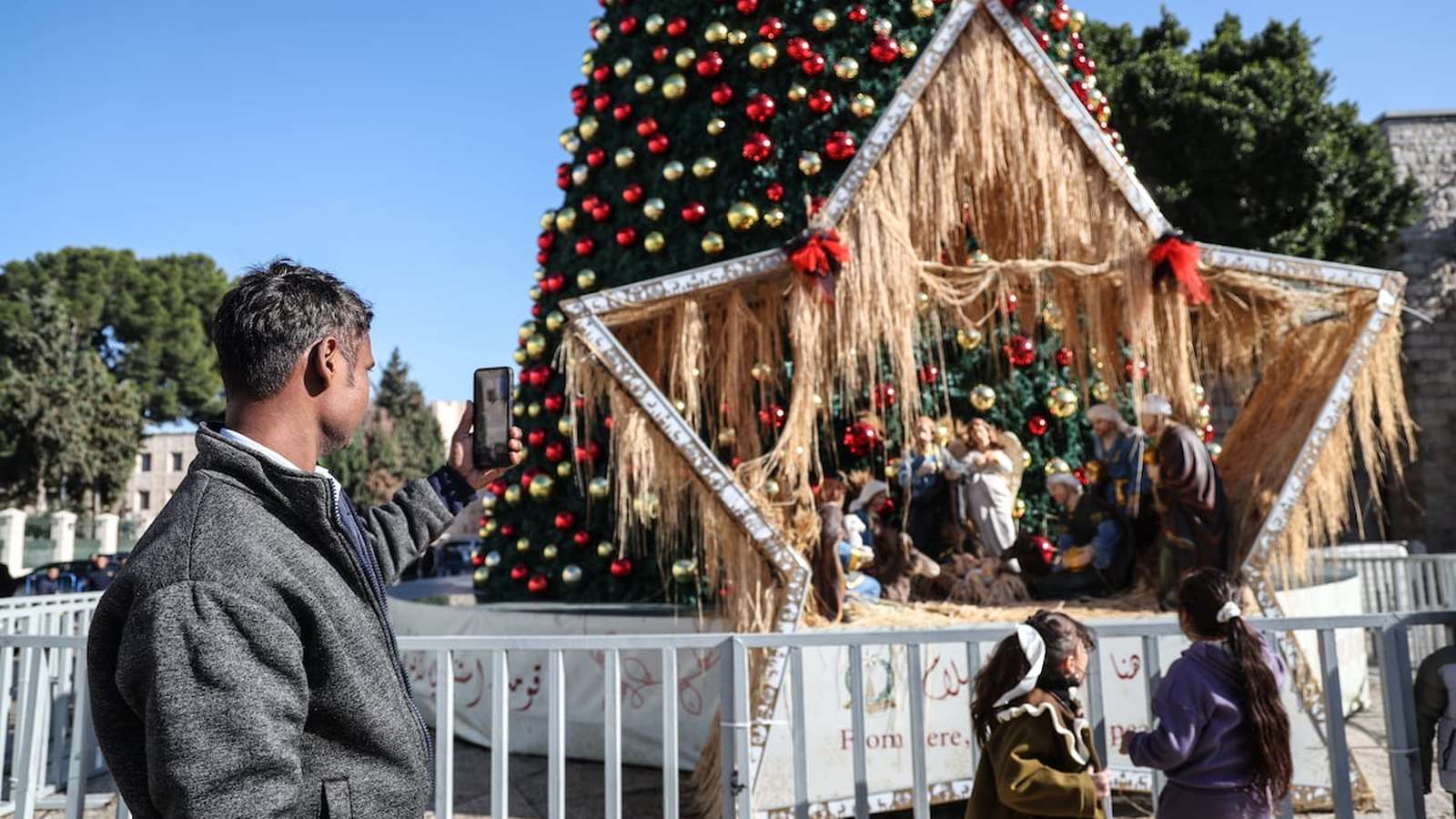
For the first time in two years, Bethlehem’s Manger Square is alive with celebration. The towering 15-meter Christmas tree stands as both a symbol and a beacon, vying in height with the basilica built over the grotto where Christians believe Jesus was born. This Christmas, the city resumes public festivities, a move that signals not just seasonal joy but a resilient hope in the face of economic and social adversity.
The backdrop to Bethlehem’s muted celebrations has been grim. Since Hamas’s attack on Israel in October 2023, the city’s lifeblood—tourism—dried up almost overnight, plunging unemployment from 14% to a staggering 65%. For two years, Christmas was marked not by music and lights but by somber nativity scenes depicting baby Jesus among rubble and barbed wire, a stark homage to Gaza’s suffering. The city council’s decision to resume festivities follows an October ceasefire in Gaza, though the reality remains fraught: Israeli military operations persist, settler violence surges, and economic hardship deepens, as reported by El País, AP News, and the New York Post.
For Bethlehem, the impact of conflict is magnified by its reliance on religious tourism. Unlike neighboring West Bank cities with diverse economies, Bethlehem’s families—85% of them—depend directly or indirectly on visitors drawn to its sacred sites. The absence of pilgrims emptied hotels, shuttered shops, and left taxi drivers, tour guides, and artisans without work. Poverty has risen to 60%, and the mayor, Maher Nicola Canawati, laments that up to 4,000 residents have emigrated in search of stability.
Yet, despite the hardships, the city has clung to hope. The return of visitors, though tentative, brings flickers of normalcy. On December 8, hotels reported 7,000 reservations for the tree-lighting ceremony—a modest recovery, but a sign that the world’s gaze is once again turning to Bethlehem. Foreign visitors snap photos, a Santa rings his bell, and the familiar sounds of bagpipes from scout parades echo through the streets. These parades, silent in protest for two years, now march in celebration, tartan and Palestinian flags waving side by side.
Locals like Rony Tabash, a third-generation seller of religious carvings, have kept their businesses afloat out of tradition and a stubborn sense of hope. “Every day my father would say, ‘Rony, go open the shop.’ And I would reply, ‘But Dad, what for, if there’s no one here?’ He’d answer, ‘No! It’s for hope, for our history!’” Tabash’s family has survived on savings, while others have lost their livelihoods entirely. The city’s Christian population, once a majority, has dwindled as emigration and hardship reshape its demographic landscape.
The spiritual dimension of Christmas in Bethlehem has taken on new meaning. The heads of churches in Jerusalem, in previous years, urged congregations to forego festive activities and focus on prayer for peace. Father Marcelo Ariel Cicchinelli, guardian of the Nativity, notes that today’s pilgrims are not average tourists—they come despite risk, driven by faith. The few who arrive find an experience unmarred by crowds, while for locals, each visitor represents a return to work and a step toward recovery.
Across the region, resilience is evident in small acts. In Nazareth, Santas parade under a warm sun; in Damascus, worshippers gather where tragedy struck; in Florida, surfers dressed as Santa ride the waves. These celebrations—whether in the shadow of conflict or in peace—reflect a global yearning for joy and unity.
Even far from the Holy Land, the symbolism of Bethlehem endures. In rural Iowa, under a supermoon, families gather to sing “Oh, Beautiful Star of Bethlehem.” A sky lantern, launched into the night, becomes a metaphor—a small star against the vast darkness, echoing the hope that has sustained Bethlehem through its trials (Iowa Capital Dispatch).
For residents like Fadi Zoughbi, the return of Christmas parades is more than a tradition—it’s a sign that life, though changed, is slowly returning. His children, ecstatic at the sight of marching bands, embody the hope that Mayor Canawati insists is essential: “Without hope, we cannot go on. To tell people that there can be a better future for their children.”
Still, challenges remain. Israeli checkpoints lengthen travel times, the Palestinian Authority faces financial strain, and attacks by settlers have reached their highest levels since 2006. Christians, now less than 2% of the West Bank’s population, continue to leave the region, and the city’s economy teeters on the edge. Yet, amid these difficulties, the resilience of Bethlehem’s people is unmistakable.
The city’s story this Christmas is not one of triumph, but of perseverance—a community battered by conflict, refusing to let go of faith, tradition, or hope. The celebrations may be modest, the future uncertain, but the light of Bethlehem—like its famous star—shines on.
In 2025, Bethlehem’s revival of Christmas stands as a testament to the power of collective hope in the face of adversity. The city’s struggle to reclaim its spirit and economy, as documented by El País, AP News, New York Post, and Iowa Capital Dispatch, reveals that true resilience is not found in grand gestures, but in the quiet determination to keep traditions alive even when the world seems darkest.