
Quick Read
- Construction at the new Buffalo Bills stadium halted due to discovery of graffiti and vandalism.
- Gilbane Building Company and Turner Construction launched an investigation, stating zero tolerance for such acts.
- The stoppage’s impact on the stadium’s 2026 completion timeline is currently unknown.
- The Buffalo Bills face over $29 million in dead cap space for 2026 due to void-year contract deadlines.
- The team is considering using a franchise tag on offensive guard David Edwards, a move costing around $27 million.
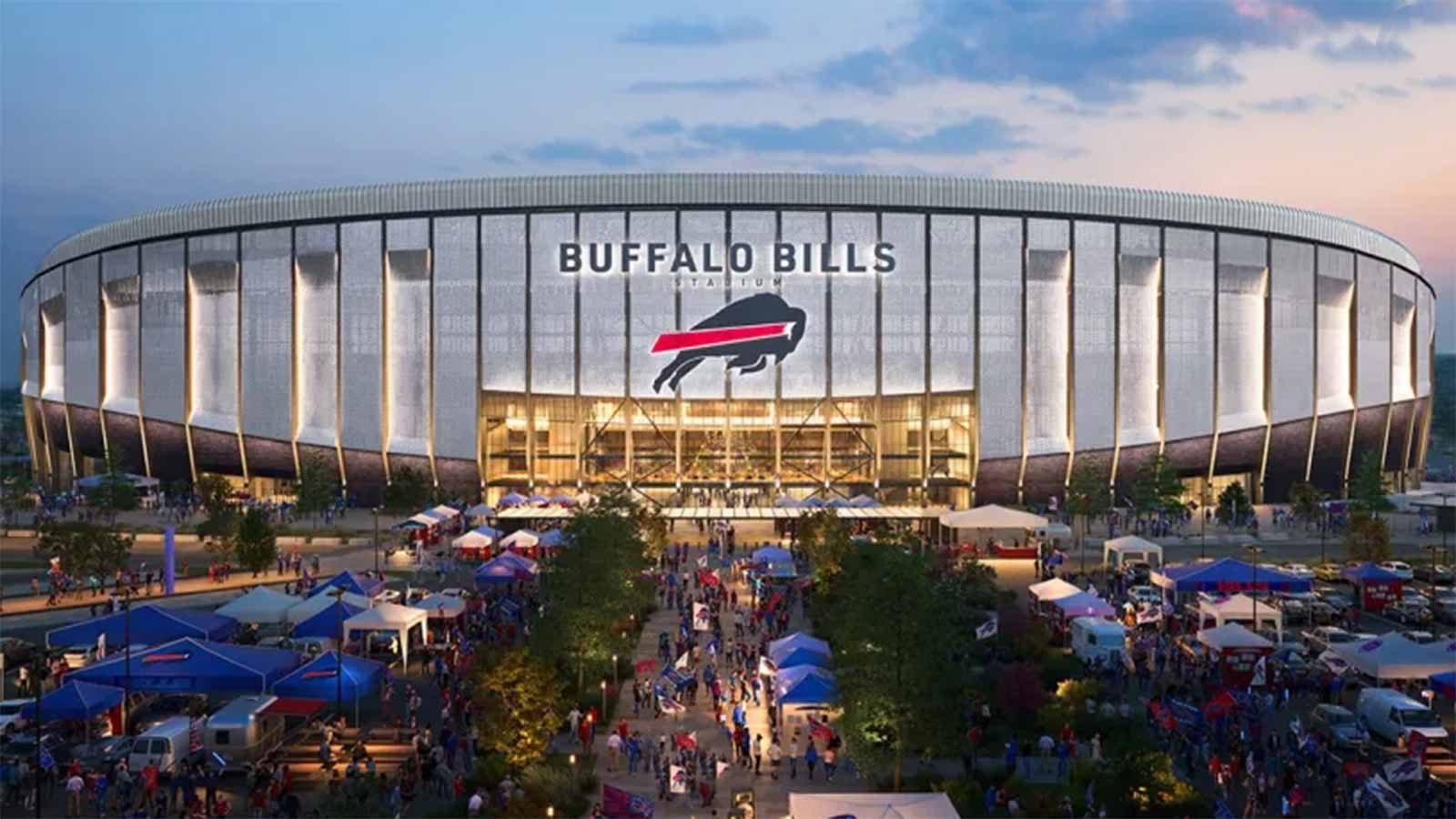
BUFFALO, N.Y. (Azat TV) – Construction work at the new Buffalo Bills stadium in Orchard Park, New York, has been suspended following the discovery of graffiti and other vandalism at multiple secure locations within the site. The halt, confirmed by the Gilbane Building Company on Tuesday, February 17, 2026, marks a significant disruption to the $1.7 billion project, which is slated for completion before the 2026 football season. This incident compounds a challenging period for the Bills organization, which is also navigating substantial financial implications from recent contract decisions and upcoming free agency.
The Gilbane Building Company, in partnership with Turner Construction, issued a statement detailing the suspension. “Over the weekend, graffiti was discovered in several secure locations in both finished and unfinished areas of the stadium project site,” the statement read. “We suspended work and launched a full investigation in partnership with the trade contractors and unions to send a clear message about how seriously we take this matter.” The companies emphasized a zero-tolerance policy for vandalism, citing property damage, legal violations, and the undermining of the professional environment they aim to maintain. While a spokesperson for Turner Construction affirmed their commitment to meeting deadlines, the immediate effect of the stoppage on the overall construction timeline remains unclear.
New Bills Stadium Faces Construction Delays
This is not the first time the new Bills stadium project has faced a work suspension due to site incidents. In 2024, work was briefly halted after a suspected hate symbol was discovered. A subsequent police investigation concluded that no criminal activity occurred, and the display was not malicious. Despite these setbacks, the stadium is still expected to be ready for the 2026 football season, providing a new home for the Buffalo Bills following their final game at Highmark Stadium in January, which itself raised concerns about fan behavior.
The current investigation into the graffiti is ongoing, with Gilbane | Turner maintaining that such behavior is ‘unacceptable’ and does not align with the standards expected on the project. Details regarding the nature or extent of the newly discovered graffiti have not been publicly disclosed, but the decision to suspend all work underscores the seriousness with which the construction management views the incident.
Buffalo Bills Navigate Salary Cap and Free Agency
Concurrently with the stadium challenges, the Buffalo Bills organization is grappling with significant financial maneuvers as the NFL offseason progresses. A crucial void-year deadline has triggered over $29 million in dead cap space for the 2026 season, according to Buffalo Rumblings. This acceleration of prorated bonus money from expiring contracts impacts players no longer under contract, including linebacker Matt Milano ($11 million), center Connor McGovern ($4.8 million), defensive tackle DaQuan Jones ($3.7 million), defensive end A.J. Epenesa ($2.8 million), and defensive end Joey Bosa ($7.2 million). President of football operations and General Manager Brandon Beane has historically used void years as a cap management tool, often offsetting these hits with extensions or restructures, but the current figure represents a substantial amount of money against the cap for players not currently on the roster.
Adding to the team’s strategic decisions, the Bills are considering utilizing a franchise tag on high-priced offensive guard David Edwards. Edwards, who will become a free agent on March 11, has been a consistent performer, missing only one regular-season game since joining the Bills in 2023 and recording a 97.2% pass blocking efficiency rating last season, as reported by Pro Football Focus. While tagging Edwards would secure his presence for another year, it would cost the Bills approximately $27 million, exceeding his expected market value of $19.9 million, according to Spotrac. The Bills have not used a franchise tag since General Manager Brandon Beane took over in 2017, making this a notable potential shift in their roster management strategy.
Project Outlook Amid Operational and Financial Pressures
The new stadium project, a cornerstone of the Bills’ future, represents a substantial investment and a symbol of the team’s commitment to the region. Repeated disruptions, even if temporary, can affect morale and public perception, in addition to potential cost overruns or delays. The Gilbane | Turner joint venture is under pressure to complete the facility on schedule, especially given the high expectations surrounding the new venue.
Meanwhile, General Manager Brandon Beane’s approach to the salary cap, particularly the use of void years, highlights the complex financial tightrope NFL teams walk. While an immediate acceleration of dead cap space might seem alarming, it is often part of a long-term strategy to manage player contracts and maintain flexibility. The decision on David Edwards’ franchise tag will be a critical indicator of the team’s immediate priorities in building a competitive roster for the upcoming season.
The Buffalo Bills organization is facing a confluence of operational and strategic challenges in early 2026, from ensuring the timely and secure completion of their new stadium to navigating intricate salary cap mechanics and crucial free agency decisions. These concurrent pressures underscore the multifaceted demands on an NFL franchise striving for both infrastructure development and sustained on-field success.