
Quick Read
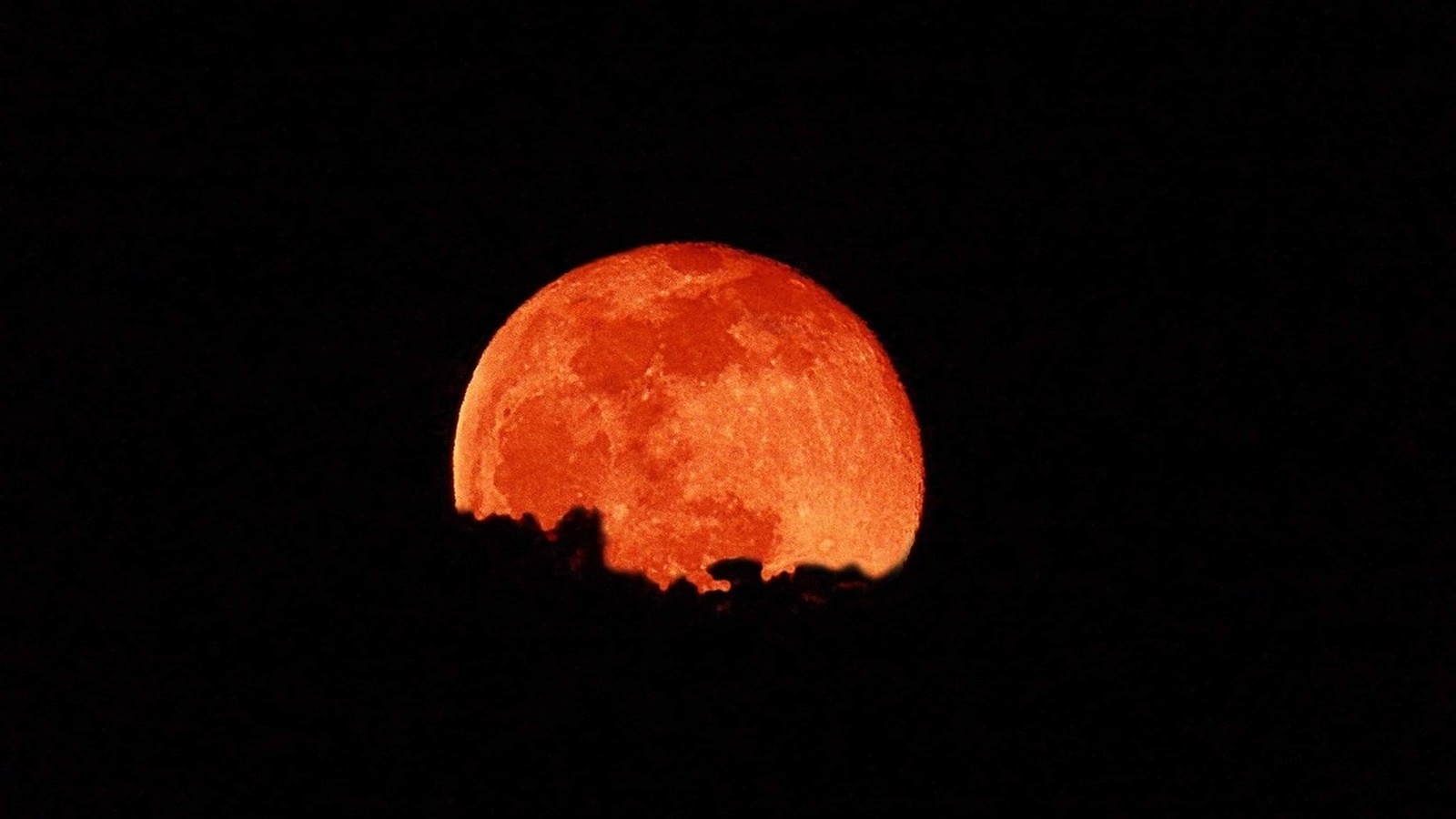
- The Blood Moon, a total lunar eclipse, will occur on September 7-8, 2025.
- The eclipse will be visible across Asia, Europe, Australia, and Africa.
- The totality phase will last for 82 minutes, turning the Moon a deep red.
- Americans can watch a live stream of the event due to daylight hours.
- The phenomenon is safe to view with the naked eye and requires no special equipment.
The night sky is set to dazzle millions on September 7-8, 2025, as a rare celestial event unfolds—a total lunar eclipse, popularly known as the Blood Moon. This stunning phenomenon will transform the Moon into a deep red orb, captivating skywatchers across Asia, Europe, Australia, and Africa. As the longest total lunar eclipse since 2022, this event is eagerly anticipated for its 82-minute duration of totality, offering an extraordinary display of nature’s artistry.
**The Science Behind the Blood Moon**
A total lunar eclipse occurs when the Earth aligns perfectly between the Sun and the Moon, casting its shadow (known as the umbra) onto the lunar surface. Unlike solar eclipses, which require special eye protection and are visible only from specific regions, lunar eclipses are safe to view with the naked eye and can be observed by anyone on Earth’s night side.
During the totality phase, the Moon does not disappear but instead glows with an eerie red hue. This coloration is caused by Rayleigh scattering, the same atmospheric phenomenon responsible for vivid sunsets and sunrises. As sunlight passes through Earth’s atmosphere, shorter wavelengths like blue and violet scatter away, while longer red and orange wavelengths bend and illuminate the Moon. In essence, the Moon reflects Earth’s sunsets and sunrises all at once, creating the striking Blood Moon effect.
According to India Today, the Moon can remain red for up to 107 minutes during some eclipses, though this event’s totality will last 82 minutes, offering an extended opportunity for observation.
**When and Where to Watch the Eclipse**
The total lunar eclipse will begin at 15:28 GMT on September 7, 2025, and conclude at 20:55 GMT, with the totality phase occurring between 17:30 and 18:52 GMT. This means the phenomenon will unfold over approximately five and a half hours, providing ample time for sky enthusiasts to enjoy the view.
Observers in Asia, Europe, Australia, and Africa will have front-row seats to this celestial spectacle. More than 6 billion people will be able to witness the eclipse in its entirety, according to Science Alert. Unfortunately, much of North and South America will miss the live event due to daytime hours. However, Hawaii, parts of Alaska, and a small portion of Brazil will catch glimpses of the partial eclipse.
For those unable to view the eclipse in person, virtual broadcasts, such as the one hosted by the Virtual Telescope Project in Italy, will stream the event live, ensuring no one misses out on this astronomical wonder.
**Tips for Viewing the Blood Moon**
Viewing a lunar eclipse is a straightforward and rewarding experience. Unlike solar eclipses, no special equipment is required to observe the Blood Moon safely. However, there are some tips to enhance the experience:
- Find a location with minimal light pollution to enjoy a clear and vivid view of the Moon.
- Use binoculars or a telescope for a closer look at the lunar surface during the eclipse.
- Check local weather conditions to ensure an unobstructed sky.
- Mark the specific times of the eclipse phases in your local time zone to catch the event from start to finish.
As The Times of India notes, the Blood Moon is a unique opportunity for both seasoned astronomers and casual observers to connect with the cosmos, making it a must-see event.
**The Cosmic Context: Linked Solar and Lunar Eclipses**
Lunar eclipses do not occur in isolation. They are part of a cosmic rhythm where a solar eclipse either precedes or follows a lunar eclipse by about two weeks. In this case, a partial solar eclipse will take place on September 21, 2025, visible to select regions such as New Zealand, Antarctica, and parts of the Pacific. This interplay between solar and lunar eclipses underscores the intricate alignment of celestial bodies in our solar system.
Such events not only inspire awe but also deepen our understanding of astronomical phenomena, bridging the gap between science and wonder.
As the world looks to the skies on September 7-8, 2025, the Blood Moon serves as a reminder of the beauty and complexity of our universe, uniting humanity in a shared moment of celestial admiration.