
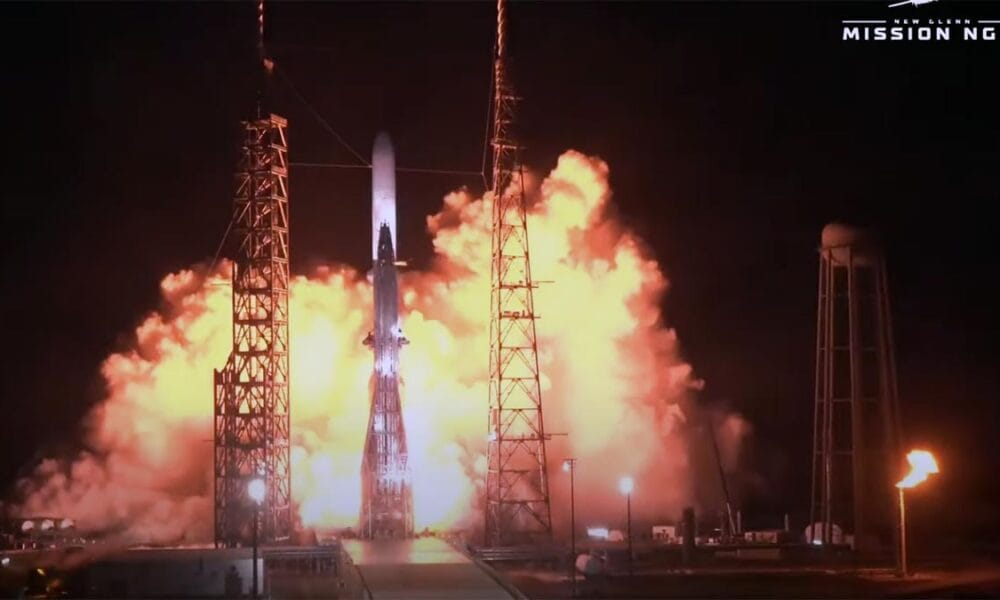
Blue Origin achieved a historic milestone on January 16, 2025, with the successful launch of its New Glenn rocket. A symbol of Jeff Bezos’ vision for redefining space exploration, the rocket lifted off from Cape Canaveral, Florida, at 2:03 a.m. ET, achieving orbit after a flawless second-stage burn. However, an explosion during the first stage’s attempted landing highlights the challenges of reusable rocket technology and the iterative nature of innovation in spaceflight.
CEO Dave Limp expressed both pride and determination, acknowledging the mixed results. “I’m incredibly proud New Glenn achieved orbit on its first attempt. Landing the booster was ambitious, and we’ll learn from this experience for our next launch this spring,” Limp said.
New Glenn, standing 320 feet tall and powered by seven BE-4 engines, marks a leap forward for Blue Origin. With contracts from NASA, the Space Force, and Amazon’s Project Kuiper, it is poised to revolutionize satellite deployment and contribute to NASA’s Artemis lunar missions.
However, New Glenn’s path to launch was not without hurdles. Initially scheduled for 2021, development delays, legal battles with SpaceX, and internal criticisms over safety standards slowed progress. These challenges highlight the intense scrutiny and competition within the commercial space sector. While SpaceX pursues a Mars-first strategy, Bezos envisions an industry with multiple successful players. .
As Blue Origin refines its reusable booster technology and prepares for up to eight launches this year, it faces the critical task of proving its ability to compete with SpaceX’s established dominance. Will this milestone propel Blue Origin into a leadership position, or will the space race remain a one-player show? This remains a defining question for the future of commercial space exploration.