
Quick Read
- Bolivia’s presidential election will go to a historic runoff on October 19.
- Centrist Rodrigo Paz leads with 32.8% of the vote, followed by right-wing Jorge Quiroga with 26.4%.
- The election marks the end of two decades of socialist dominance by the MAS party.
- Economic turmoil, including 25% inflation and resource shortages, dominated the campaign.
- The October runoff will determine Bolivia’s economic and geopolitical future.
Bolivia is on the cusp of historic political change after its presidential elections on August 17, 2025, set the stage for the nation’s first runoff since its return to democracy in 1982. The contest will pit centrist Senator Rodrigo Paz, who secured 32.8% of the vote, against right-wing $1 Jorge “Tuto” Quiroga, who garnered 26.4%. This election marks the end of two decades of socialist dominance under the Movement Toward Socialism (MAS) party, as voters seek new leadership to address Bolivia’s deep economic and political crises.
Centrist Rodrigo Paz Leads the Race
Rodrigo Paz, son of $1 Jaime Paz Zamora, emerged as an unexpected frontrunner in a crowded field of eight candidates. His campaign, marked by moderate rhetoric and a promise of renewal, resonated with voters weary of the MAS party’s mismanagement. Paz’s running mate, Edman Lara, a former police captain with evangelical support, added a layer of anti-corruption credibility to the ticket. Together, they secured 32.8% of the vote, leading the pack but falling short of the 50% threshold needed for an outright victory.
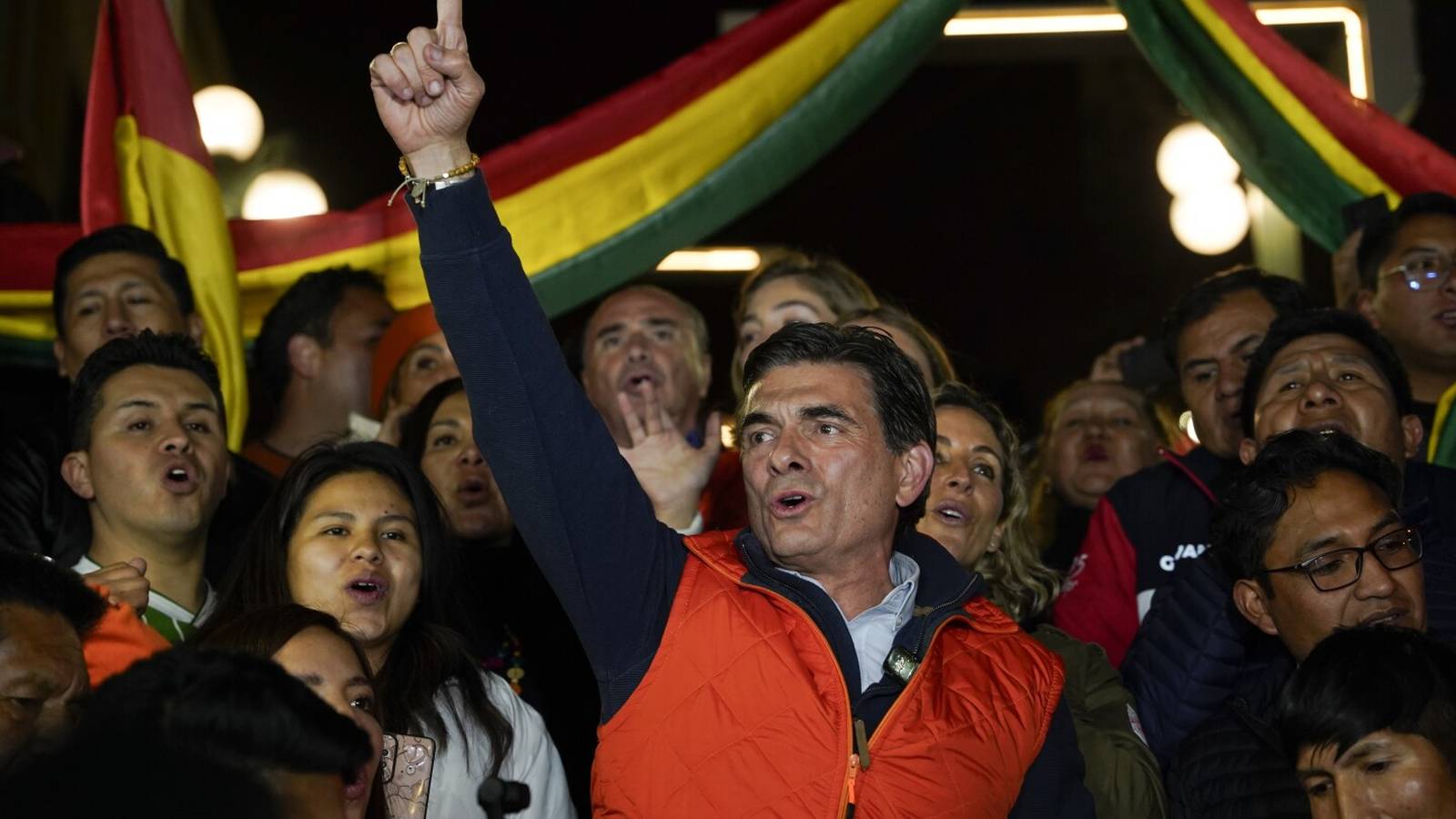
Paz’s ascent reflects a broader desire for change amidst Bolivia’s economic turmoil. Inflation has soared to 25%, and shortages of fuel, food, and U.S. dollars have crippled the economy. Paz has promised to balance fiscal responsibility with social equity, distancing himself from radical austerity measures proposed by his right-wing competitors. In his victory speech, Paz declared, “This economic model must change,” drawing cheers from supporters chanting for renewal.
Right-Wing Challenger Quiroga Aims for a Comeback
Jorge Quiroga, a seasoned politician and former interim president, secured 26.4% of the vote. Representing the Alianza Libre coalition, Quiroga appeals to conservative voters who favor market-friendly policies and closer ties with the United States. However, his association with Bolivia’s neoliberal past has drawn skepticism from younger voters. Quiroga congratulated Paz on his lead but vowed to fight hard in the October 19 runoff, stating, “Bolivia told the world that we want to live in a free nation.”
Quiroga’s platform includes privatizing Bolivia’s lucrative lithium reserves and seeking international loans to stabilize the economy. While these proposals attract business interests, they have also sparked concerns about repeating the mistakes of past neoliberal administrations that left many Bolivians behind.
The Collapse of the MAS Party
The election dealt a crushing blow to the MAS party, which has dominated Bolivian politics since 2005 under the leadership of $1 Evo Morales. MAS’s official candidate, Eduardo del Castillo, managed only 3.2% of the vote, while another leftist candidate, Andrónico Rodríguez, garnered 8%. The party’s fragmentation, coupled with Bolivia’s economic meltdown, alienated voters who once supported its populist policies.
Morales himself remains a polarizing figure. Barred from running due to term limits and facing allegations of misconduct, he urged his supporters to cast null ballots in protest. This strategy contributed to an unusually high rate of invalid votes, at 19%, reflecting the deep divisions within the left.
Economic Turmoil Fuels Discontent
Bolivia’s economic crisis has been a central issue in this election. Under the MAS government, gas revenues, once a cornerstone of Bolivia’s economy, plummeted from $6.1 billion in 2013 to $1.6 billion last year. The lack of investment in new gas projects and delays in tapping the country’s vast lithium reserves have exacerbated the situation. The resulting shortages and inflation have sparked widespread protests and eroded public trust in the ruling party.
Paz and Quiroga offer starkly different visions for addressing these challenges. While Paz advocates for gradual reforms and investment in social programs, Quiroga pushes for aggressive market liberalization. The October runoff will likely serve as a referendum on these competing approaches.
A Nation at a Crossroads
As Bolivia prepares for its first runoff in over four decades, the stakes could not be higher. The outcome will determine not only the country’s economic direction but also its geopolitical alignment. After years of close ties with China and Russia, Bolivia may pivot back toward the United States under a pro-market government. However, the deep divisions exposed by this election suggest that healing the nation’s political and social wounds will require more than just economic policies.
The October 19 runoff promises to be a defining moment for Bolivia, as voters choose between continuity and change in a nation yearning for stability and progress.