
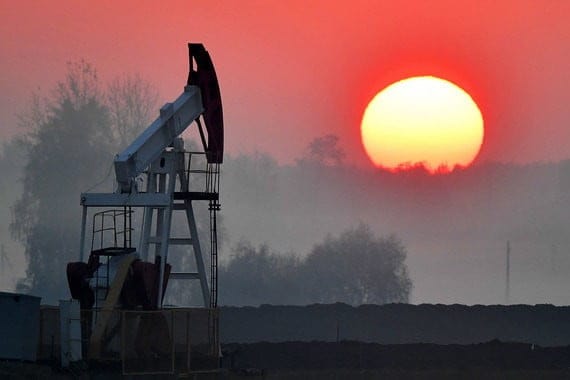
On Monday morning, the price of Brent crude oil continued its decline, hitting $73.63 per barrel for January futures on London’s ICE Futures exchange. This marked a $0.25 (0.34%) drop from Friday’s close, when Brent prices saw a more substantial decrease of $1.76 (2.3%) per barrel, settling at $73.87. The ongoing dip reflects investor caution amid global economic uncertainties and demand-supply imbalances impacting the energy sector.
Similarly, U.S.-based WTI (West Texas Intermediate) crude experienced a decrease in electronic trading on the New York Mercantile Exchange (NYMEX), where December futures declined by $0.31 (0.44%) to $70.07 per barrel. This follows a $1.98 (2.7%) drop in the previous trading session, closing at $70.38 per barrel.
Concerns over global economic health, with fears of slowed growth in major economies, have weighed heavily on energy demand forecasts. Sluggish growth expectations in China, a leading oil consumer, and continuing inflation concerns globally have contributed to weakened demand projections.
Fluctuations in production from major oil-producing nations, especially recent adjustments in OPEC+ output policies, have led to increased volatility. When combined with higher-than-expected stockpiles in the U.S., the global oil supply surplus is adding downward pressure on prices.
Oil prices are often sensitive to investor sentiment and speculative activities. With current uncertainties, traders have been moving cautiously, resulting in lower activity levels and price corrections across futures markets.
The decline in Brent and WTI futures highlights the potential for continued price volatility in the short term as markets respond to economic and geopolitical developments. Traders will be watching closely for upcoming announcements from OPEC+ on potential production adjustments as well as any economic policy shifts that could impact demand in major consumer markets.
This downward trend may continue if economic uncertainties persist, potentially putting further pressure on energy prices and impacting global market stability.