
Quick Read
- Sunderland came from 2-0 down to beat Bournemouth 3-2 in the Premier League.
- Brian Brobbey scored the decisive winning header, preserving Sunderland’s unbeaten home record.
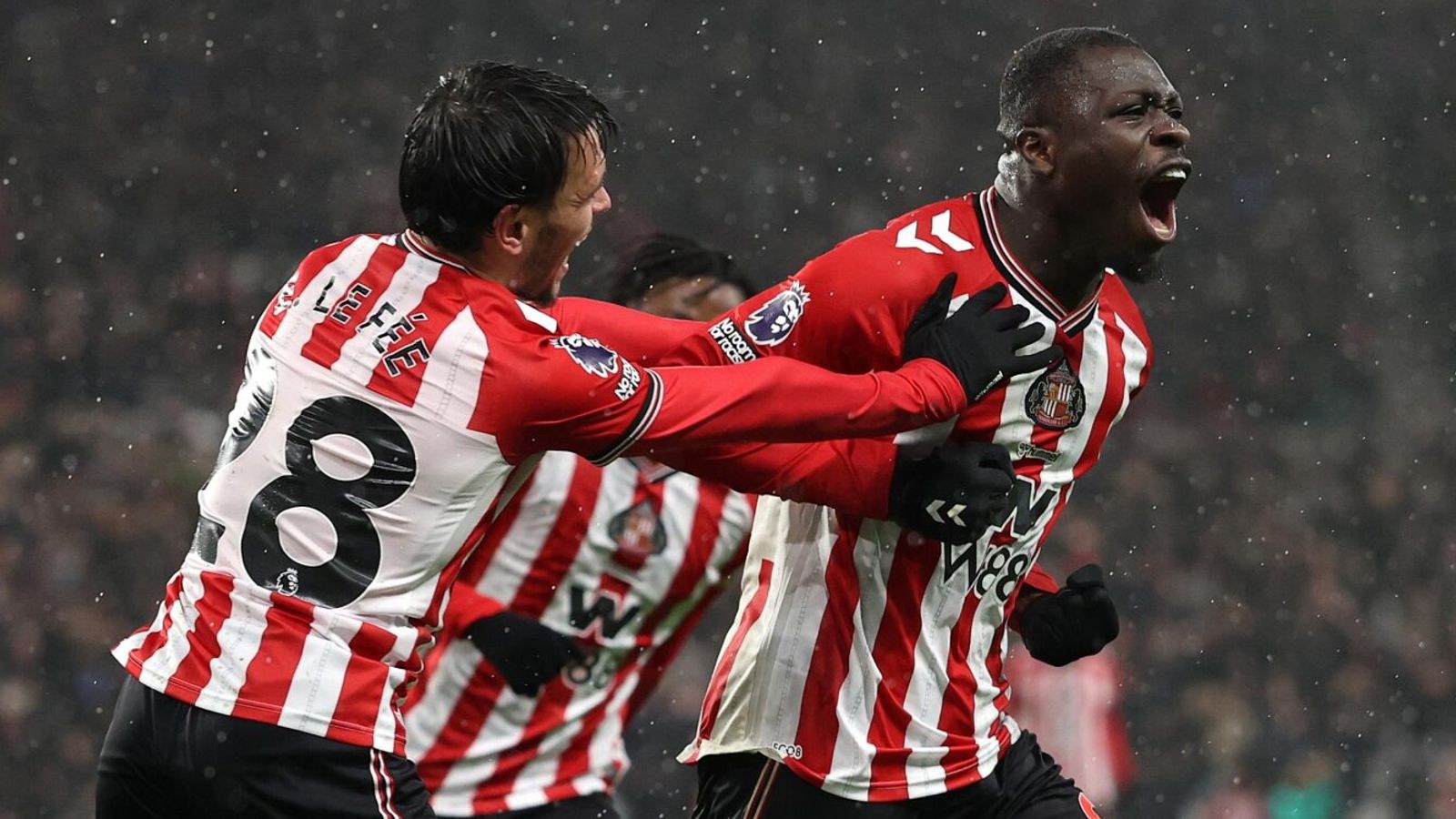
- Enzo Le Fée’s penalty and Bertrand Traoré’s first Sunderland goal fueled the comeback.
- Bournemouth finished with ten men after Lewis Cook’s late red card in a match with 11 yellow cards.
- Sunderland moved into the top four; Bournemouth slipped to ninth and ended November winless.
Brobbey’s Late Winner Caps Sunderland’s Resilient Home Run
There are matches that test the mettle of a football club, and then there are matches that redefine it. On a rain-soaked Saturday at the Stadium of Light, Sunderland’s “Til The End” motto was more than a slogan—it became a lived reality. Falling behind 2-0 to a sharp Bournemouth side inside the first fifteen minutes, the Black Cats looked on the ropes. Yet, as the evening wore on, it was Brian Brobbey’s emphatic header that ignited celebration, sealing a 3-2 comeback and preserving Sunderland’s unbeaten home record in the Premier League.
Early Bournemouth Dominance and Sunderland’s Sudden Deficit
Bournemouth, driven by the pace of Antoine Semenyo and the opportunism of Amine Adli, made their intentions clear from the outset. Semenyo’s low cross set up Evanilson, whose shot ricocheted off the post before Adli pounced on the rebound. Seven minutes gone, Sunderland were already trailing. The setback deepened when Tyler Adams, on his 50th club appearance, unleashed a spectacular lob from just inside the center circle—spotting Sunderland’s keeper off his line and finding the back of the net with a goal worthy of any highlight reel.
With Bournemouth two goals to the good and the Stadium of Light subdued, the narrative seemed set. Yet, as so often this season, Sunderland refused to be cowed.
Le Fée Sparks Revival: Penalty Drama and Tactical Shifts
The turning point arrived on the half-hour mark. Sunderland’s Reinildo, displaying a veteran’s cunning, drew a foul from Alex Scott in the area. The referee, Tim Robinson, immediately pointed to the spot—a decision that survived a lengthy VAR review, despite Bournemouth coach Andoni Iraola’s protestations that Robinson had “lost control of the match.” Enzo Le Fée stepped up, dispatching a high, precise penalty into the top corner past Djordje Petrovic. The stadium roared to life, momentum shifted, and hope flickered anew for the home side.
Regis Le Bris, Sunderland’s head coach, had deployed Le Fée in a fluid central role, and the Frenchman’s vision began to unravel Bournemouth’s defense. Le Bris later praised his squad’s resilience, underscoring how “many teams would have given up, but it shows my players have strong character.”
Traoré Levels, Brobbey Decides: Sunderland’s Tactical Execution
Just moments into the second half, the comeback gathered pace. A patient buildup orchestrated by Granit Xhaka—whose leadership has become the backbone of Sunderland’s resurgence—ended with a disguised pass to Bertrand Traoré. Traoré’s low, near-post shot snuck through a crowd, leveling the match and sending the home support into raptures.
Bournemouth, stunned but not beaten, nearly restored their lead when Evanilson netted after a slick Semenyo maneuver, only to see the effort chalked off for offside. The reprieve proved crucial. Sunderland pressed, and from a corner delivered by Le Fée, Brian Brobbey—fresh off the bench—rose highest, nodding home the decisive goal. The Black Cats had completed their turnaround.
The final minutes brought further drama. Bournemouth’s Marcus Tavernier struck the woodwork from distance, but frustration boiled over as Lewis Cook was shown a straight red card for elbowing Noah Sadiki. In total, the contest saw eleven yellow cards and one red, testament to its relentless intensity.
Aftermath: Sunderland’s Character and Bournemouth’s Disarray
With this result, Sunderland climbed to fourth in the Premier League standings. Bournemouth, meanwhile, slid to ninth, ending November without a win despite a promising start to the season. Iraola lamented both his team’s defensive lapses and the officiating, pointing to the trio of suspensions his side now faces. For Sunderland, Le Bris highlighted the role of the fans and the “energy in this stadium,” crediting their support with helping to shift the game’s dynamic.
Granit Xhaka’s influence drew special mention: “He gives us his knowledge but also this willingness to change the game, to be proactive, to take risks.” Such leadership, paired with the tactical flexibility shown by Le Bris and the relentless drive of players like Le Fée, Traoré, and Brobbey, has made Sunderland’s home ground a fortress and their season a narrative of resilience.
Brobbey’s Moment and the Broader Significance
For Brian Brobbey, the winning goal was more than a statistic—it was a testament to timing, instinct, and the value of impactful substitutions. His arrival on the pitch injected fresh energy, and his header embodied Sunderland’s refusal to settle for anything less than victory. In a league where momentum can shift in an instant, Brobbey’s intervention will linger in the memory as a defining moment.
The wider story, however, is about Sunderland’s collective resolve. They have built a reputation for recovering from adversity, for fighting “til the end,” and for transforming setbacks into opportunities. As the Premier League season unfolds, their ability to conjure comebacks and harness the energy of their home crowd will be pivotal.
In assessing this dramatic encounter, Sunderland’s comeback stands as a powerful illustration of psychological resilience and tactical adaptability. The interplay between individual brilliance—Brobbey’s finishing, Le Fée’s vision—and collective character has turned the Stadium of Light into a proving ground for ambition and belief. For Bournemouth, the challenge now lies in regrouping and rediscovering the discipline that once underpinned their early season promise.