
Quick Read
- BRINC could dominate the U.S. drone market if DJI is banned after December 23, 2025.
- The company has raised $157 million and is valued at $480 million, serving over 700 law enforcement customers.
- BRINC’s flagship Responder drone is designed for rapid emergency response and has been deployed in hundreds of real-world police missions.
- Competition remains fierce, with Skydio and other American manufacturers vying for market share.
Deadline Approaches: BRINC Ready to Step In
With only days left until the December 23, 2025 federal deadline, the American drone manufacturer BRINC finds itself at the center of the most dramatic shift in public safety technology in recent memory. The U.S. government is weighing whether to ban new sales of Chinese-made DJI drones, citing security concerns and the need for domestically controlled critical infrastructure. If federal agencies do not certify DJI’s safety before the deadline, DJI—whose products account for roughly 70 percent of the global drone market—will be barred from selling new drones in the United States (UAV Coach, Forbes).
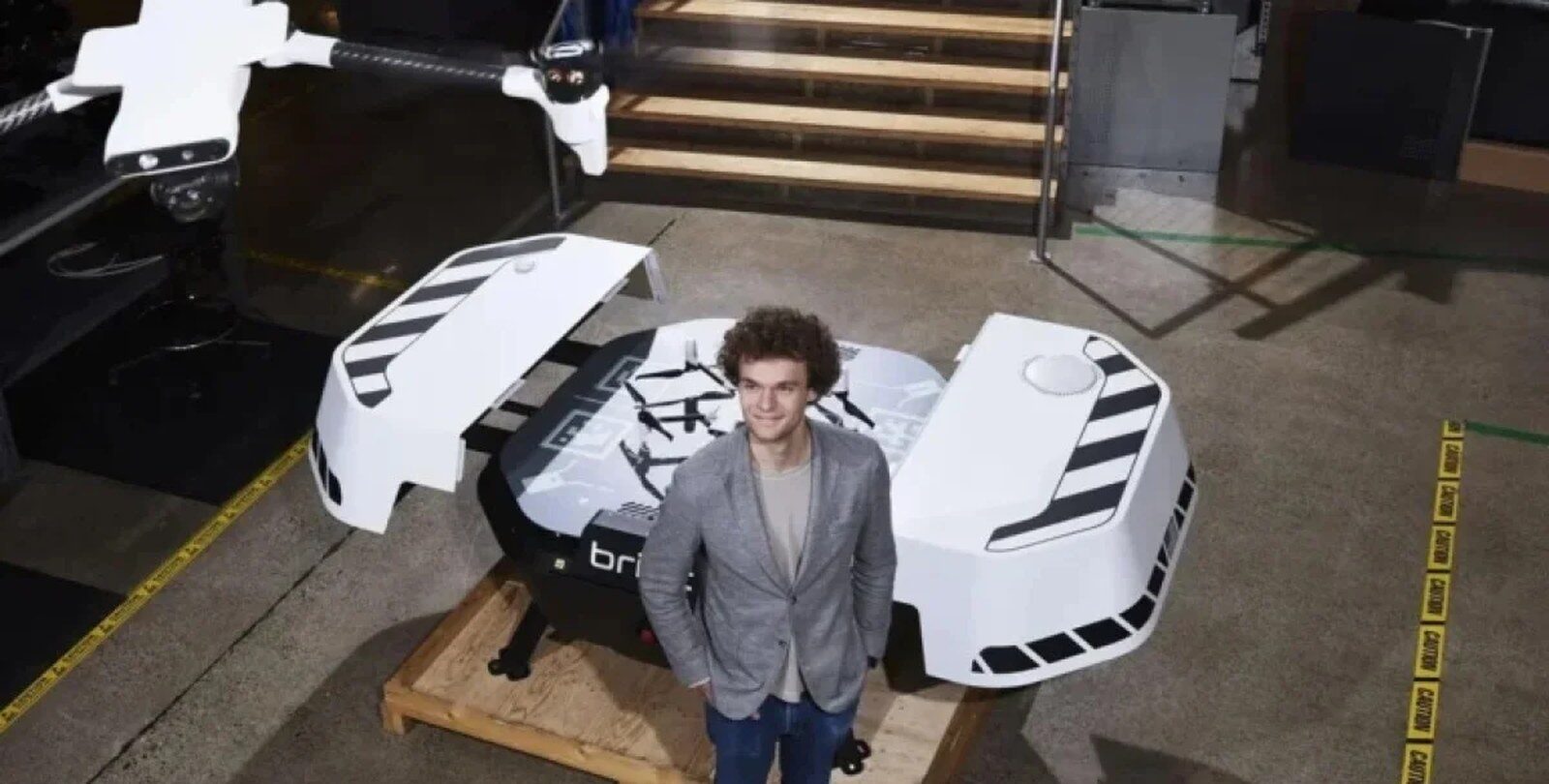
For BRINC, founded by the 25-year-old Blake Resnick, this moment represents both a challenge and a once-in-a-generation opportunity. With a valuation of $480 million, $157 million in funding, and a client list including the New York Police Department and Immigration and Customs Enforcement, BRINC is positioned to become a key supplier if agencies must rapidly pivot away from Chinese technology.
Born from Tragedy, Built for Emergency Response
Resnick’s journey began in the aftermath of the 2017 Las Vegas mass shooting. At just 17, he was frustrated by the lack of technological tools available to police for locating active threats. His persistence led to a partnership with Las Vegas Metro SWAT, where he developed the Lemur drone—capable of indoor operations and self-righting flight. This first product became the cornerstone of BRINC, officially incorporated in 2018 (Forbes).
Resnick’s vision was clear: American law enforcement needed reliable, domestically produced drones not only for tactical operations but also for rapid emergency response. The Responder, launched in 2024 at a $20,000 base price, can reach a scene within a two-mile radius in 70 seconds, operate for 42 minutes, and recharge in just 35. Such capabilities address the unique demands of U.S. police and emergency services—especially as concerns over foreign surveillance and data security intensify (SSBCrack News).
Funding, Growth, and Strategic Alliances
BRINC’s expansion has been fueled by a series of high-profile investments. Early support came from Peter Thiel’s Fellowship and Sam Altman, who personally invested $2 million after hearing Resnick’s pitch. Subsequent rounds led by Index Ventures and Motorola Solutions brought BRINC’s total funding to $157 million by April 2025. These strategic alliances gave BRINC credibility and the resources needed to scale production and refine its technology (BRINC Official).
Lobbying efforts have also played a role: BRINC spent $660,000 over three years advocating for stricter regulation of Chinese drones. The stakes are clear—over 80 percent of American public safety organizations currently use DJI equipment, making the coming ban a potential windfall for U.S. manufacturers.
The DJI Ban: A Market in Flux
Industry analysts estimate the global drone market at $18.6 billion as of 2024. DJI’s dominance is especially pronounced in law enforcement, where its Matrice M30T is considered the gold standard at $15,000. BRINC, meanwhile, has captured about 7 percent of the public safety drone market, selling $15 million worth of drones this year and serving approximately 700 customers worldwide (el-balad.com).
But the competitive landscape is far from settled. Skydio, another American manufacturer, has raised over $730 million and maintains a strong presence in public safety agencies, including the NYPD and ICE. For instance, NYPD’s current drone fleet includes 41 Skydio drones, 40 DJI units, and only 6 BRINC devices. Some experts remain skeptical about BRINC’s technical capabilities, especially regarding range and reliability in extreme conditions.
Real-World Impact and User Experience
BRINC’s technology is already proving itself in the field. In Queen Creek, Arizona, police deployed a Responder drone over 450 missions in less than six months, including burglaries, sexual assaults, suicide prevention, and shots-fired calls. In one notable incident, the drone confirmed a suspect was unarmed, allowing officers to safely proceed. In 35 cases, the drone handled the situation entirely without officer presence, illustrating the growing role of autonomous technology in policing (SSBCrack News).
BRINC’s product line also includes the Lemur for indoor SWAT operations ($10,000 base price) and the BRINC Ball ($2,500-and-up), a device designed for scenarios where direct police contact is risky, such as hostage negotiations or disaster response.
Geopolitical Tensions and the Future of U.S. Drone Tech
The impending ban is more than a business opportunity—it’s a geopolitical flashpoint. China responded to BRINC’s lobbying with sanctions against the company and Resnick himself in December 2024. Resnick, undeterred, displays a framed copy of the sanctions in his office, symbolizing both the risks and the stakes of competing in this global market.
BRINC’s ambitions extend beyond domestic policing. The company has supplied drones for humanitarian missions in Ukraine, providing search-and-rescue capabilities amid conflict. These experiences help BRINC refine its technology for challenging environments and bolster its reputation in both public safety and defense sectors.
What’s Next for BRINC?
The final outcome hinges on whether federal agencies certify DJI’s safety before December 23. If they do, BRINC’s rapid growth could slow, leaving it as a niche competitor. If the ban proceeds, however, BRINC could see exponential demand as agencies scramble to replace their DJI fleets. Chief Randy Brice of Queen Creek has already expressed the desire to invest in American-made technology immune to geopolitical shocks.
Resnick’s long-term goal is ambitious: “The end stage here is that we’re the DJI of the West.” The next 17 days will determine whether BRINC becomes the new standard-bearer for U.S. drone technology—or whether it must continue the uphill battle for market share in a crowded, competitive field.
Assessment: BRINC’s story is one of innovation born from tragedy, strategic growth, and a willingness to confront global power dynamics head-on. The December 23 ban deadline marks a crucial crossroads—not only for BRINC but for the future of American control over critical public safety technology. Whether BRINC achieves lasting dominance will depend not just on its products, but on the outcome of a regulatory moment that could reshape the industry for years to come.