
Quick Read
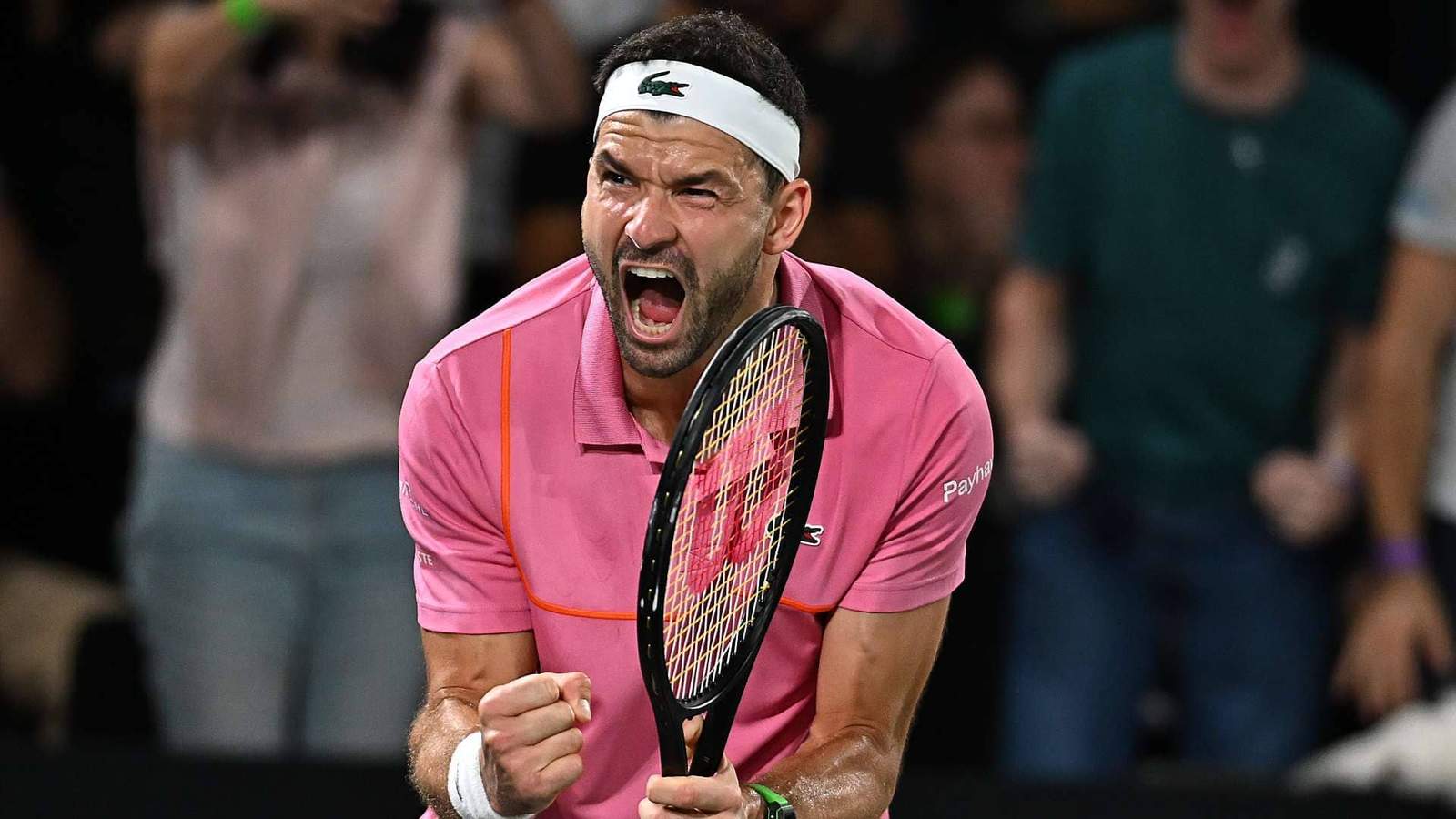
- A technical issue with automatic line-calling audio disrupted Grigor Dimitrov’s second-round match at the Brisbane International.
- British umpire James Keothavong had to verbally call ‘out’ based on his tablet’s visual cue, as players and crowd couldn’t hear the automated call.
- Dimitrov was playing Belgian qualifier Raphael Collignon on Pat Rafter Arena.
- Collignon won the first set 7-6(1) despite the interruption.
- Grigor Dimitrov is making a comeback after suffering a pectoral injury at Wimbledon 2025 and withdrawing from the Paris Masters.
The hum of anticipation at the Pat Rafter Arena in Brisbane was abruptly replaced by a moment of bewildered silence, then a flurry of confusion. It was Thursday at the Brisbane International, and two-time former champion Grigor Dimitrov, a man making a determined return to the court, found his second-round clash against Belgian qualifier Raphael Collignon plunged into unexpected disarray by a technical malfunction. The incident not only disrupted the flow of a crucial match but also cast a spotlight on the evolving, sometimes fragile, relationship between human judgment and advanced technology in elite sports.
When Technology Fails: The Umpire’s Crucial Intervention
Just two games into the match, as the players were settling into their rhythm, a critical piece of the modern tennis infrastructure faltered: the automatic line-calling audio. Collignon appeared to send a ball long, and while a very faint, almost imperceptible ‘out’ call was reportedly heard on the broadcast, neither player seemed to register it. They played on, momentarily oblivious to the unseen decision. This is precisely when British umpire James Keothavong, a figure typically relegated to a more supervisory role since the widespread adoption of automated line calls at all ATP events last year, had to step into the breach.
Keothavong, reacting swiftly to the unfolding ‘chaos’ as described by Express.co.uk, verbally called the ball out a few seconds after the play continued. The sight of the umpire making a manual call left both players visibly baffled. Collignon, in particular, looked perplexed, prompting Keothavong to explain the unprecedented situation. “Raphael, the audio is not working, but it gave me the red light,” the umpire clarified, indicating his reliance on the visual cue from the system, even as its auditory output had failed.
Navigating the Glitch: Umpire as the Human Interface
The incident underscored a fascinating paradox in contemporary tennis: while technology aims to minimize human error, its occasional failures necessitate an even more assertive and adaptable human presence. Keothavong, armed with his tablet and walkie-talkie, became the sole reliable conduit for crucial information. Commentator Arvind Parmar, observing the scene, noted the faint audio, suggesting the volume needed adjustment, but on court, the silence was deafening.
Keothavong quickly radioed officials, who confirmed the ball was indeed out, but reiterated the audio issue on the main court. Turning back to Collignon, he reiterated the situation: “They confirmed the ball is out but the audio is not working. I have the red light so I will make the calls if there is no audio.” This decisive declaration established a temporary protocol, ensuring the match could proceed with clarity, even if the method was unconventional. Dimitrov, still at the baseline, was initially unaware of the unfolding drama, waiting for clarity. “The ball was out, Grigor, but there is no audio. I have the light, I will make the calls now, in or out, I will let you know. That was out, so your point,” the chair official explained, bringing the Bulgarian star up to speed.
To ensure transparency and manage crowd expectations, Keothavong then addressed the spectators, explaining that he would be relaying the calls until the technical issue was resolved. “Ladies and gentlemen, unfortunately the audio on Centre Court is not working, but Bolt6 have confirmed the call on the right baseline was out. 0-15,” he announced, ensuring everyone understood the temporary manual system.
Dimitrov’s Broader Battle: A Comeback Marked by Resilience
Dimitrov was ultimately awarded the point, but the interruption, however brief, added an unexpected layer of psychological friction to the early stages of the match. Despite the hiccup, Collignon held his serve to level the score at 1-1, and surprisingly, the qualifier went on to win the first set 7-6(1). This outcome, following the technical drama, set a compelling tone for the rest of the encounter.
For Dimitrov, this match at the Brisbane International represents more than just a contest; it’s a significant milestone in his journey back to peak performance. The former world No. 3 has been grappling with a challenging period marked by injuries. Last year, at Wimbledon, he faced a particularly heartbreaking moment. Leading Jannik Sinner by two sets to love, Dimitrov suffered a pectoral injury that forced him to retire from the match in tears. It was a cruel blow for a player known for his elegant style and fighting spirit, especially during a Grand Slam where he was performing exceptionally well.
His return to competition has been carefully managed. He made a short-lived comeback at the Paris Masters in late October, securing one victory before withdrawing from the tournament, likely still feeling the repercussions of his previous injury. The 2026 season, therefore, began with a cautious optimism. His speedy win over Pablo Carreno Busta in the first round of the Brisbane International was a testament to his dedication and recovery efforts. After that victory, Dimitrov openly expressed his gratitude to the crowd, stating he was “just grateful to be competing again.” This sentiment encapsulates the essence of his current professional chapter: a veteran player, once touted as a future Grand Slam champion, now finding renewed joy and purpose in simply being on court, regardless of the challenges.
The technical issue at Brisbane, while a minor blip in the grand scheme of a tennis season, serves as a poignant reminder of the unpredictable nature of sport. It highlighted the human element’s enduring importance, even as technology increasingly shapes the game. For players like Grigor Dimitrov, whose careers are defined by overcoming physical and mental hurdles, adapting to unexpected on-court disruptions, be they technological or competitive, is just another facet of the relentless pursuit of excellence.
The incident at the Brisbane International, where an umpire’s decisive action salvaged a match from technological failure, powerfully illustrates the resilience required not just from athletes, but from the entire ecosystem of professional sports, demonstrating that human adaptability remains paramount even in the most automated environments.