
Quick Read
- Pete Buttigieg’s spokesperson referred to an NPR interview on transgender issues, acknowledging “serious fairness issues” in sports while calling for compassion.
- Buttigieg stated “I don’t know” when asked about a 2028 presidential run, calling it a “family decision.”
- He recently discussed AI, academic freedom, and pragmatic policy solutions at Notre Dame and UConn.
- Buttigieg holds 11% support among surveyed Democrats for a potential 2028 bid, trailing Gavin Newsom (24%) and Kamala Harris (21%).
- California Governor Gavin Newsom’s nuanced stance on transgender issues has drawn criticism from progressives.
WASHINGTON (Azat TV) – Former U.S. Transportation Secretary Pete Buttigieg is navigating a complex political landscape, engaging in public discussions on critical national issues while maintaining a nuanced stance on sensitive social topics, fueling speculation about a potential 2028 presidential bid. His recent appearances at universities and his carefully articulated position on transgender issues highlight a strategic approach as the Democratic Party considers its future leadership.
Buttigieg’s Deliberate Stance on Transgender Debates
In a recent survey by Axios, which questioned nearly 20 potential 2028 Democratic presidential hopefuls on transgender issues, Buttigieg’s response stood out for its measured tone. When asked about issues such as transgender girls’ participation in sports, the use of puberty blockers for minors, and the fundamental question, ‘Can a man become a woman?’, many prominent Democrats, including former Vice President Kamala Harris and New York Representative Alexandria Ocasio-Cortez, largely avoided direct answers.
Buttigieg’s spokesperson referred Axios to an NPR interview he gave last year, where he acknowledged ‘serious fairness issues’ in the debate surrounding transgender athletes in sports, while also calling for compassion for transgender individuals. This position contrasts with former Chicago Mayor Rahm Emanuel, who was the only surveyed Democrat to definitively state that a man cannot become a woman and that biological boys should not play in girls’ sports. Pennsylvania Governor Josh Shapiro also weighed in, suggesting local officials should determine trans athlete participation but personally believing trans youths should not have an ‘unfair advantage.’
California Governor Gavin Newsom, another widely discussed potential candidate, also faced scrutiny for his comments on the topic. During a recent podcast discussion with conservative commentator Ben Shapiro, Newsom appeared to stumble when pressed on whether boys can become girls, eventually citing the small number of people struggling with gender identity and the prevalence of ‘hate and bigotry.’ Newsom had previously stated that it was ‘deeply unfair’ for transgender females to compete in girls’ sports, a stance that has drawn criticism from progressives within his own state.
Engaging on Future Leadership and Pragmatic Solutions
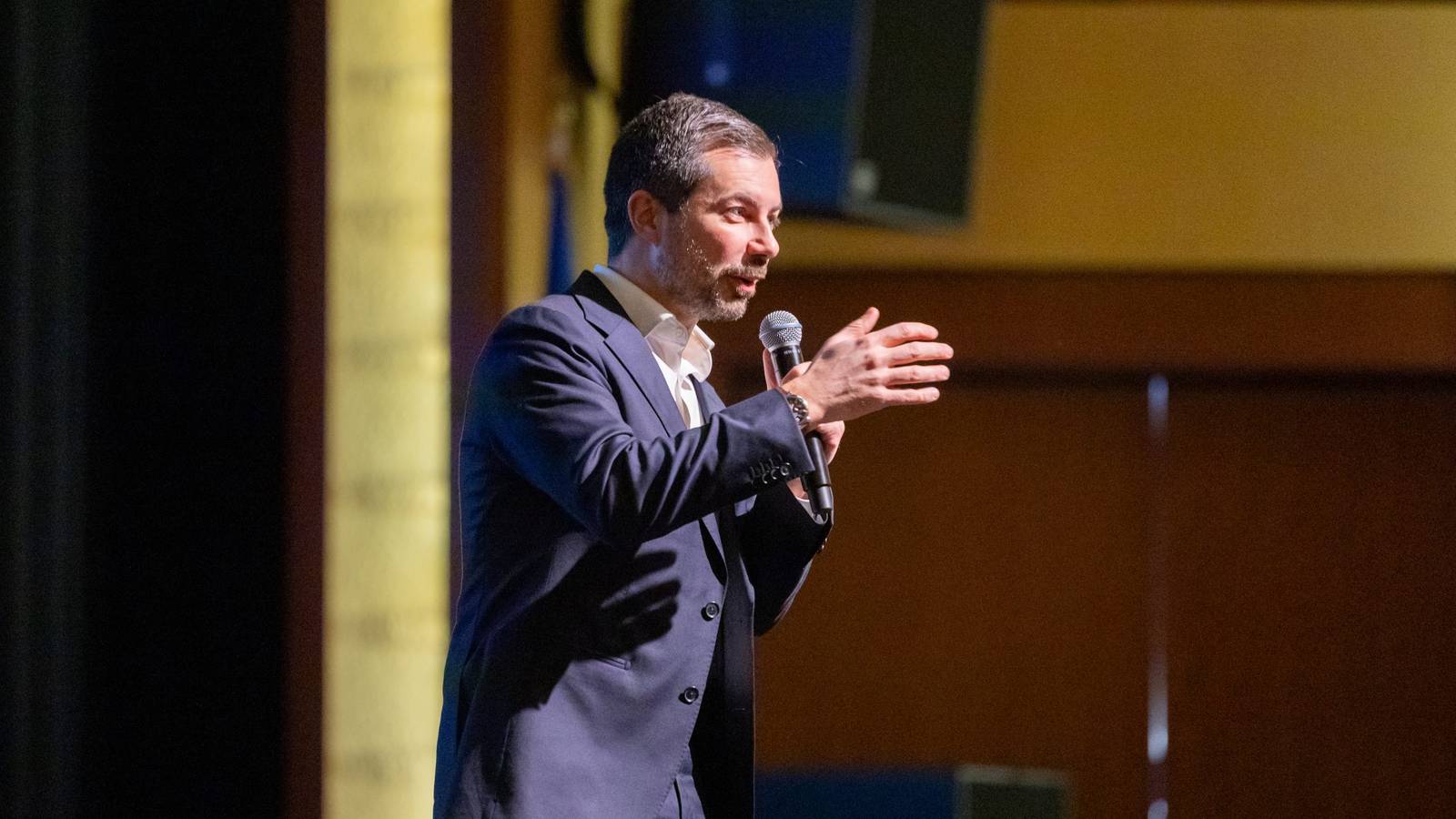
Beyond specific policy stances, Buttigieg has been actively engaging on broader themes of leadership and innovation. He recently returned to South Bend, Indiana, for a fireside chat at the University of Notre Dame’s DeBartolo Performing Arts Center. Titled “Leadership, Innovation, and the Next Generation,” the discussion covered the rising prevalence of artificial intelligence (AI) and its impact on education, as well as the importance of academic freedom.
During the Notre Dame event, Buttigieg praised current South Bend Mayor James Mueller for continuing the city’s revitalization efforts, attributing his own past success as mayor to a focus on pragmatic policy solutions that benefited everyday people. He also outlined three major ways government should operate to ensure the well-being of Americans: providing basic services, constraining those who would undermine freedom, and building new frameworks to respond to an ever-changing world, especially in a climate where international laws are often disregarded by world leaders.
Just days later, Buttigieg spoke at the University of Connecticut, where he directly addressed the question of a 2028 presidential run with a concise ‘I don’t know.’ He clarified that any such decision would be a ‘family decision’ and emphasized the need for the next president to ‘rebuild from scratch – and do it smartly.’ He also touched upon the state of Congress, arguing that issues like gerrymandering and the monetization of anger through small donations contribute to a political environment where ‘elected outliers with radical ideas’ can gain undue influence. Despite these challenges, Buttigieg expressed optimism, noting that the country has ‘been through worse eras.’
The 2028 Democratic Primary Landscape
As the 2028 election cycle begins to take shape, Buttigieg remains a notable figure in early polling. According to a report citing President Donald Trump, Buttigieg currently holds 11% support among Democrats, trailing Gavin Newsom at 24% and Kamala Harris at 21%. This places him among the top contenders in a potentially crowded field, where candidates will need to carefully balance progressive ideals with broader electability concerns.
Newsom, for instance, faces a challenge in winning over progressives despite being seen as a front-runner. His efforts to position himself as a centrist, including hosting conservative commentators on his podcast, have drawn criticism from California progressives, who view such ‘political choices’ as legitimizing right-wing positions and a ‘tough swallow.’ Issues ranging from workers’ rights to housing deregulation and environmental policy have also generated friction with his progressive base.
In this evolving context, Buttigieg’s approach of acknowledging ‘fairness issues’ while advocating for compassion could be interpreted as an attempt to occupy a more centrist lane within the Democratic Party. This strategy may aim to appeal to a broader swath of primary voters who are seeking electability and pragmatic governance over ideological purity, especially given the perceived volatility of the current political climate.
Buttigieg’s careful articulation of his positions, particularly on divisive social issues, alongside his emphasis on pragmatic governance and institutional reform, suggests a deliberate strategy to position himself as a unifying yet thoughtful leader capable of navigating the Democratic Party’s internal tensions and appealing to a diverse electorate in a future presidential contest.