
Quick Read
- Four additional homes in Buxton, North Carolina, collapsed into the ocean after a recent snowstorm.
- A total of 31 homes have fallen into the ocean in Buxton since 2020 due to coastal erosion.
- North Carolina Insurance Commissioner Mike Causey and Governor Josh Stein advocate for H.R. 3161, the Preventing Environmental Hazards Act of 2025.
- The proposed bill would allow the National Flood Insurance Program to offer pre-collapse coverage for demolition or relocation.
- The crisis poses significant environmental risks from debris and chemicals, and threatens the Outer Banks’ multi-billion dollar tourism economy.
RALEIGH (Azat TV) – A severe snowstorm recently battered North Carolina’s coastal region, including the Outer Banks, leading to the collapse of four additional homes in Buxton into the ocean. This latest incident has intensified concerns among state officials and residents, bringing the total number of oceanfront homes lost in the area since 2020 to 31, according to North Carolina Insurance Commissioner Mike Causey.
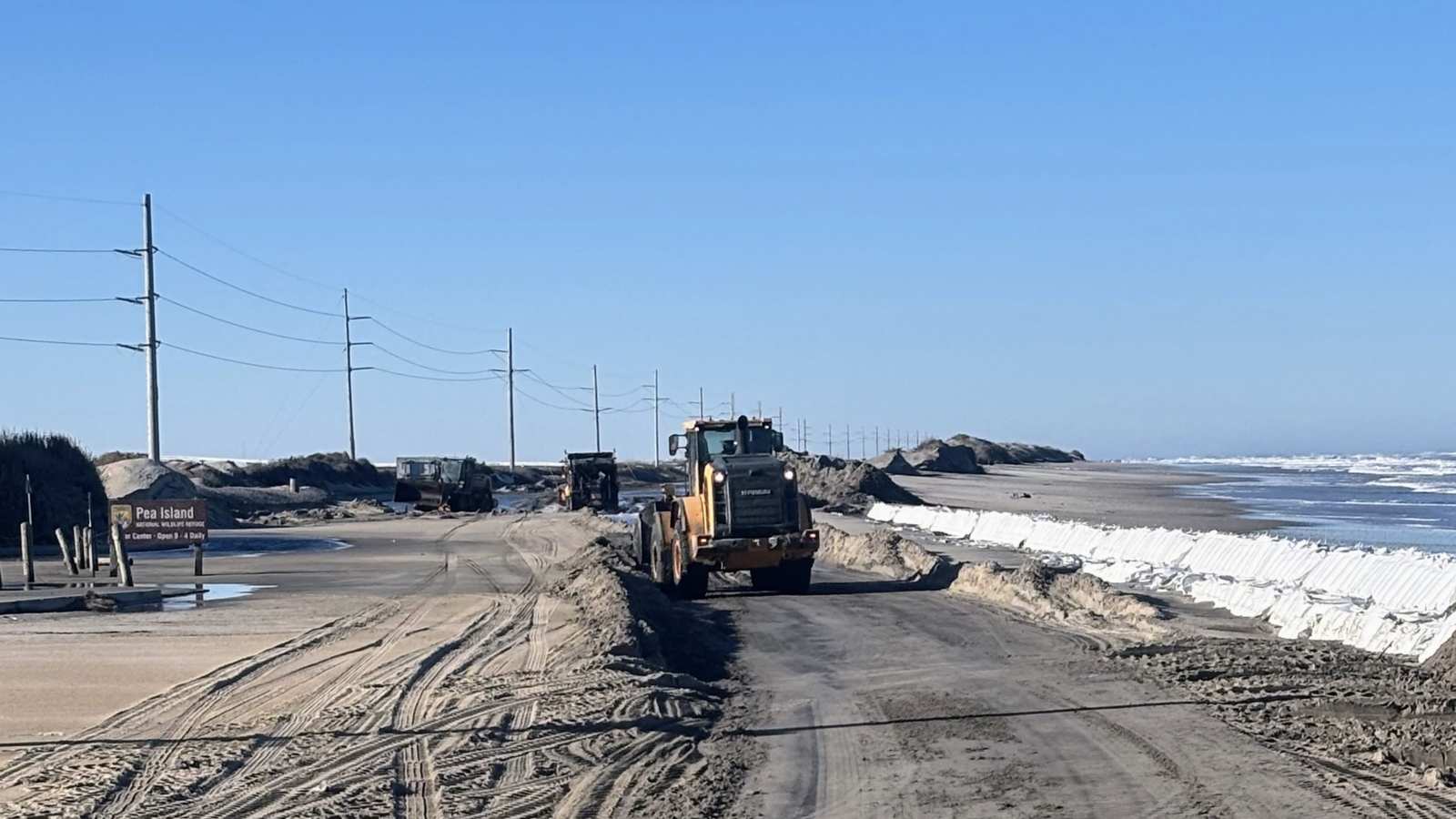
The historic snowfall, coupled with gusty winds and high tides, has exacerbated an ongoing crisis that Causey described as both an economic and environmental nightmare. The closures of Highway 12, a vital artery for the Outer Banks, further underscore the urgency of addressing the rapid coastal erosion and its devastating impact on local communities and the state’s significant tourism economy.
Buxton’s Ongoing Erosion and Recent Collapses
The recent storm’s impact on Buxton has brought the long-standing issue of coastal erosion into sharp focus. Commissioner Causey, speaking to Council of State members at a Tuesday meeting in Raleigh, highlighted the frustration among long-time residents and business owners. He recounted a conversation with a local business owner who expressed deep anger over the situation, citing the recent four collapses within 24-36 hours.
Since 2020, 31 homes in Buxton have succumbed to the relentless advance of the ocean. This consistent loss of property, combined with the frequent overwash and closures of Highway 12, severely disrupts daily life, affecting everything from school attendance to access for local businesses. Causey noted the widespread sentiment that there has been ‘too much finger pointing’ among the various agencies, governmental bodies, state park systems, and environmental groups involved, without a clear solution emerging.
Legislative Push for Proactive Coastal Management
In response to the escalating crisis, Commissioner Causey and Governor Josh Stein have actively advocated for federal legislative action. In November, they jointly urged Congress to pass H.R. 3161, the Preventing Environmental Hazards Act of 2025. This bipartisan bill, co-introduced by U.S. Rep. Greg Murphy (R-NC3), aims to shift the state’s approach from reactive cleanup to proactive mitigation.
H.R. 3161 would authorize the National Flood Insurance Program (NFIP) to provide pre-collapse coverage, enabling homeowners to demolish or relocate threatened structures before they collapse into the ocean. In a joint statement, Governor Stein, a Democrat, and Commissioner Causey, a Republican, emphasized that collapsing houses are not merely a homeowner’s tragedy but also pose significant risks to public safety and environmental integrity, spreading debris for miles along the coast. They urged the House Financial Services Committee to advance the bill, signaling the state’s readiness to collaborate on protecting coastal communities, taxpayers, and the invaluable Outer Banks.
Environmental and Economic Stakes for the Outer Banks
The environmental consequences of the collapsing homes are severe and far-reaching. When structures fall into the ocean, they release a hazardous mix of waste and chemicals from septic systems, air conditioning units, carpeting, lumber, and other construction materials. This debris not only pollutes the marine environment but also poses risks to beachgoers and wildlife.
Beyond the immediate environmental threat, the economic impact on the Outer Banks, particularly Dare County and Hatteras Island, is substantial. Commissioner Causey underscored that the region is a top tourist destination, contributing billions of dollars to North Carolina’s economy. The ongoing instability, property loss, and infrastructure disruptions directly threaten this vital economic engine. A joint report by the National Park Service (NPS) and the North Carolina Department of Environmental Quality (NCDEQ) in August 2024 also highlighted the need for such proactive measures, aligning with the intent of H.R. 3161.
Local Voices and Suggested Solutions
Residents and business owners, deeply rooted in the Outer Banks, have voiced a range of suggestions for addressing the crisis. Causey reported that their top requests include official acknowledgment of the problem, emergency measures to ‘stop the bleeding,’ and the installation of artificial reefs to help stabilize the oceanfront. Additionally, there were calls for the creation of two new inlets, one between Avon and Buxton and another between Frisco and Hatteras, each with a bridge, reminiscent of the ‘Lego Bridge’ built after a hurricane created a small inlet.
Some locals also expressed concerns that existing protective measures, such as dunes built in front of Highway 12, might paradoxically be exacerbating erosion by increasing sand loss rather than preventing overwash. While climate change and sea-level rise are often cited as primary drivers, some residents believe that historical man-made interventions, such as the installation of jetties decades ago, have also contributed to the current erosion patterns.
The ongoing struggle in Buxton illustrates the complex and escalating challenges faced by coastal communities globally, where the interplay of natural forces, human development, and policy inertia creates a compounding crisis that demands integrated, forward-looking solutions beyond piecemeal reactions.