
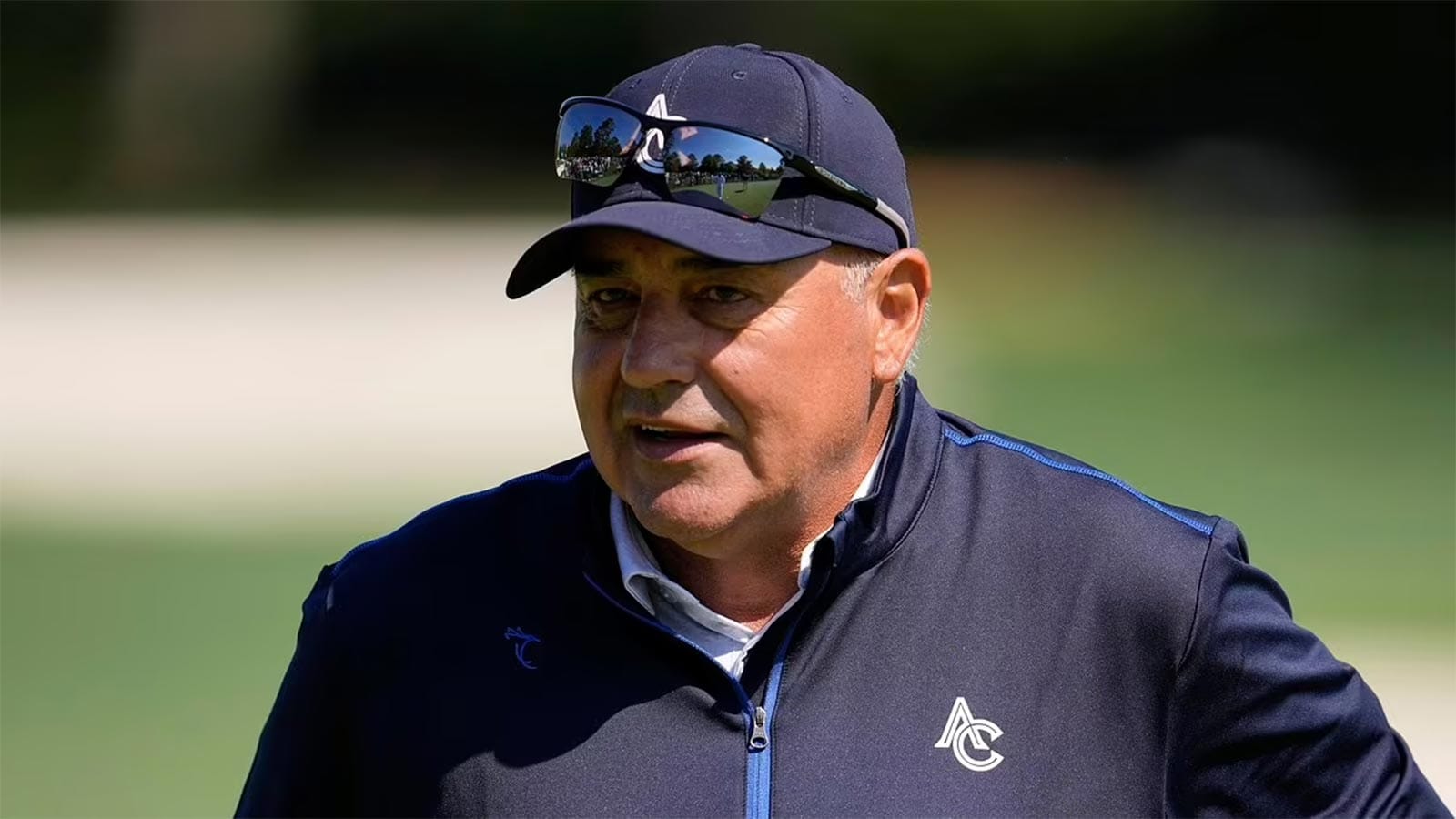
- Angel Cabrera, 2009 Masters champion, returns to Augusta after serving over two years in prison for domestic violence.
- Augusta National Chairman Fred Ridley defended the decision, citing Cabrera’s past champion status and completion of his sentence.
- Cabrera expressed gratitude for his second chance and pledged to ‘do things right’ moving forward.
- Critics argue that allowing Cabrera to compete normalizes violence against women and sends a harmful message.
- Cabrera recently won a PGA Tour Champions event, marking his first victory since his release.
Angel Cabrera’s Controversial Return to The Masters
Angel Cabrera, the 2009 Masters champion, has returned to Augusta National after serving over two years in prison for domestic violence charges. The decision to allow Cabrera to compete has sparked widespread debate, with Augusta National Chairman Fred Ridley defending the move while critics question the message it sends about accountability and violence against women.
Fred Ridley Defends the Decision
During his pre-tournament press conference, Fred Ridley, Chairman of Augusta National, addressed the controversy surrounding Cabrera’s return. “We certainly abhor domestic violence of any type,” Ridley stated. “As it relates to Ángel, Ángel has served the sentence that was prescribed by the Argentine courts. He is a past champion, and so he was invited.” Ridley emphasized that Cabrera’s lifetime invitation to The Masters as a former champion remains intact, and the club chose to honor that tradition.
Ridley’s defense aligns with Augusta National’s historical precedent of allowing past champions to compete regardless of external circumstances. However, his remarks were brief, and he declined to elaborate further on the matter.
Cabrera’s Journey: From Prison to Augusta
Cabrera, a native of Córdoba, Argentina, was convicted in 2021 on multiple charges, including assault, theft, and illegal intimidation against former girlfriends. He served two-and-a-half years in a minimum-security prison before being released on parole in 2023. Upon his release, Cabrera expressed remorse for his actions and a desire to rebuild his life and career.
“Life has given me another opportunity,” Cabrera said during a press conference at Augusta. “I got to take advantage of that, and I want to do the right things in this second opportunity.” He acknowledged his past mistakes, stating, “There was a stage in my life of four, five years, that I wasn’t doing the right things I should have done. Before that, I was okay, so I just have to keep doing what I know I can do right.”
Criticism and Concerns
Despite Cabrera’s contrition, his return to The Masters has drawn sharp criticism from women’s rights advocates and others. Jamie Klingler, co-founder of the Reclaim These Streets campaign group, remarked, “It seems as long as male athletes can excel at hitting a ball, we excuse those same men hitting women.” Critics argue that allowing Cabrera to compete normalizes violence against women and undermines efforts to hold public figures accountable for their actions.
The Jazzy Golfer, a prominent social media influencer, echoed these sentiments, stating, “When we allow men with histories of abuse back into high-profile roles without question, do we risk normalizing their actions? Sports are more than just games; they shape cultural attitudes. So if The Masters welcomes him back without scrutiny, what message might that send to victims of domestic violence?”
Cabrera’s Perspective
Cabrera has maintained that he respects the opinions of those who oppose his participation. “Everybody has their own opinion, and I respect that,” he said. “I won the Masters; why not [play]?” Cabrera also expressed gratitude for the support he has received from the golf community, stating, “I’m very grateful, and obviously the people of the golf world are very great with me. I just appreciated the way they treated me.”
A Second Chance
Since his release, Cabrera has worked to rebuild his career, recently securing a victory at the PGA Tour Champions’ James Hardie Pro Football Hall of Fame Invitational in Boca Raton, Florida. The win marked his first major success since his release and served as a warm-up for his return to Augusta.
His coach, Charlie Epps, noted that Cabrera has embraced his second chance with determination. “He is full of joy; he is so mentally strong,” Epps said. “That’s one reason why he won, you know, and his record there [at Augusta] is pretty darn good.”
The debate over Cabrera’s return highlights broader questions about accountability, redemption, and the role of sports in shaping societal values. While some argue that Cabrera has served his time and deserves a second chance, others contend that his return undermines efforts to combat domestic violence and sends a harmful message to survivors. As Cabrera tees off at Augusta, the controversy surrounding his participation serves as a reminder of the complex interplay between personal redemption and public accountability in the world of professional sports.
Sources: The Guardian, INKL