
Quick Read
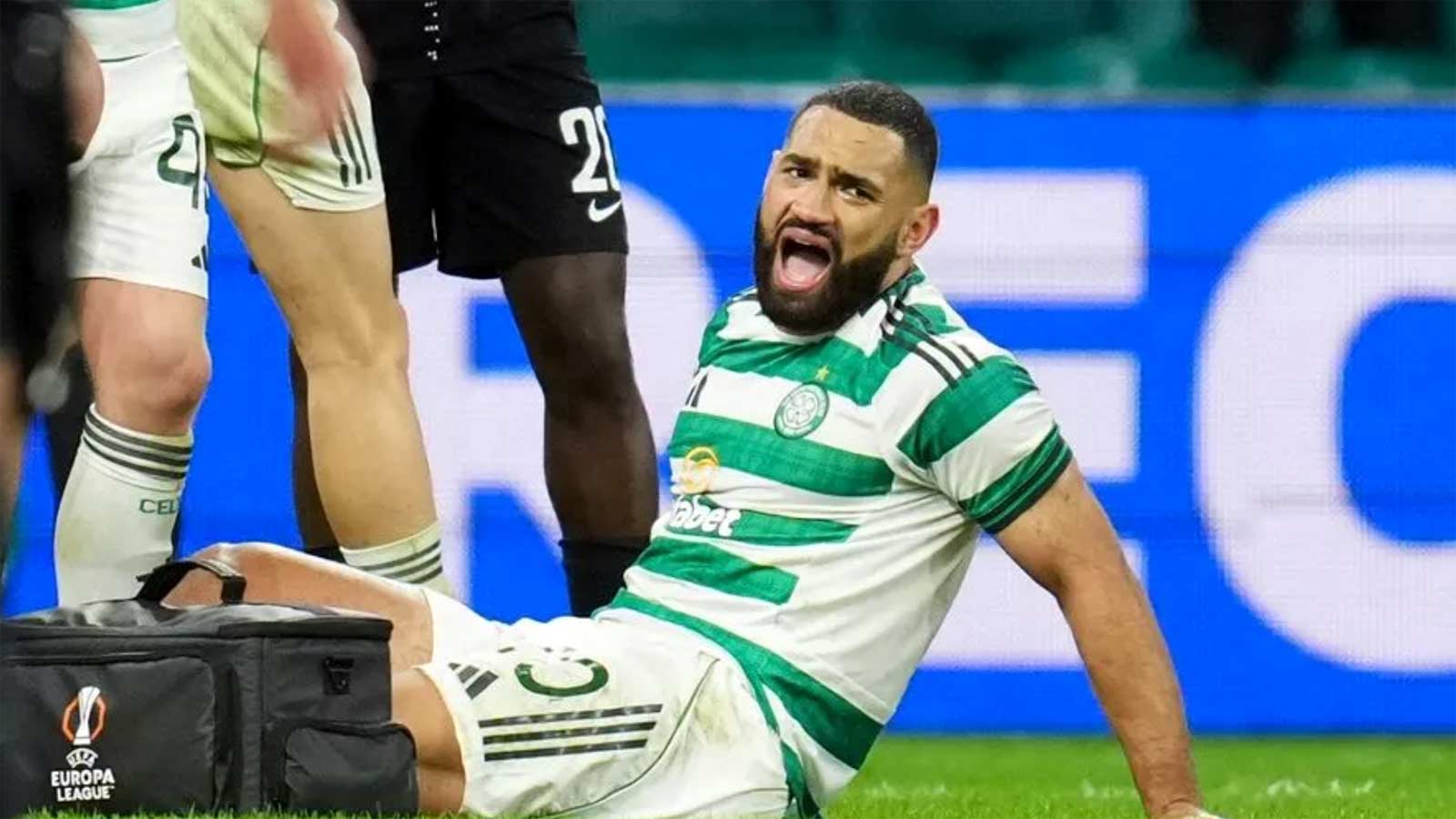
- Cameron Carter-Vickers will miss up to five months after suffering an Achilles injury during Celtic’s 2-1 win over Sturm Graz.
- Manager Brendan Rodgers confirmed the injury ahead of a crucial match against league leaders Hearts.
- Carter-Vickers has made 172 appearances for Celtic since joining in 2021 and is seen as a leader in the squad.
- Liam Scales and other defenders, including Auston Trusty and Dane Murray, are expected to fill the gap.
- Celtic trails Hearts by five points in the Scottish Premiership and faces a challenging run of fixtures.
Brendan Rodgers Confirms Carter-Vickers Faces Long Spell Out
There are moments in football when a single injury reshapes the trajectory of a season. For Celtic, Cameron Carter-Vickers’ Achilles injury has delivered just such a jolt. The American centre-back, a pillar in Brendan Rodgers’ defensive setup, faces up to five months on the sidelines. The timing, just days before a crucial clash with league leaders Hearts, leaves the club scrambling for answers.
As Rodgers told Sky Sports, “He looks like he’s done his Achilles, which can be anywhere between three and five months. We’re just awaiting confirmation of that, but it’s not great news.” The uncertainty lingers, but the reality is already sinking in for Celtic supporters. Carter-Vickers limped off after the 2-1 Europa League victory over Sturm Graz, having played the full 90 minutes despite discomfort late on. His absence now stretches across a packed fixture list, both domestically and in Europe.
Carter-Vickers: A Defensive Mainstay Lost at a Critical Juncture
Since joining Celtic in 2021, first on loan from Tottenham Hotspur before making the move permanent, Carter-Vickers has accumulated 172 appearances. His consistency, leadership, and composure have anchored a defense that has powered the club through title runs and European nights. Rodgers’ praise is unequivocal: “Cam’s been a very important member of the squad, of course, and been a great centre-half for the club.”
For fans, Carter-Vickers is more than just a name on the team sheet. He’s a symbol of reliability—a player whose quiet authority and physical presence give the team confidence in the most intense moments. His injury, then, isn’t just a tactical loss; it’s a psychological blow.
Who Steps Up? Liam Scales and Defensive Depth Tested
Football rarely pauses for adversity. As Rodgers emphasized, the setback for Carter-Vickers is also a door opening for others. Liam Scales, who has already impressed this season, notably scoring the equalizer against Sturm Graz, is set to take on an expanded role. “That opportunity came to Liam Scales and he’s been brilliant in my time here,” Rodgers said.
But the manager’s challenge now goes beyond plugging a gap. With Auston Trusty, Dane Murray, Jahmai Simpson-Pusey, and Hayato Inamura among the squad’s defensive options, the coming months will be a test of Celtic’s depth and adaptability. Scales will need a new partner at the heart of defense, and the competition for that spot could shape the team’s fortunes.
For players on the fringes, Carter-Vickers’ injury is an unexpected audition—a chance to prove themselves in high-stakes matches. Rodgers remains optimistic, urging the squad to show resilience and unity. “It opens the door and gives an opportunity to someone else… it’ll open the door for someone else to come in and look to perform,” he reiterated.
Timing and Context: Celtic’s Rocky Start and Fan Frustration
If the injury itself is bad news, its timing makes it worse. Celtic have endured a stuttering start to the season, trailing Hearts by five points in the Scottish Premiership. Tensions simmer between supporters and the board, fueled by comparisons to Old Firm rivals Rangers, who spent nearly double in the recent transfer window but have only managed one win from eight league games.
Yet, Celtic haven’t capitalized on their rivals’ misfortunes. The loss of Carter-Vickers threatens to deepen the club’s defensive vulnerabilities just as they enter a run of pivotal matches. Sunday’s trip to Tynecastle Park could set the tone for how the team responds to adversity. The squad’s ability to adapt—both tactically and mentally—will be scrutinized in the weeks ahead.
Leadership, Mentality, and the Road Ahead
Football seasons are rarely defined by smooth sailing. Rodgers has been quick to remind his players of the club’s history of overcoming challenges. “We arrive in a better place,” he told reporters, signaling a belief that adversity can galvanize a group.
For Celtic, the coming months will be about more than results. It’s a test of leadership in the dressing room, of mental strength on the pitch, and of the club’s ability to extract performances from every corner of the squad. Carter-Vickers’ injury is a setback, but it’s also an inflection point.
Will Celtic’s defense hold firm, or will cracks begin to show? Can Scales, Trusty, and the rest rise to the occasion, or will Rodgers need to reconsider his tactical approach? The answers will unfold with every match, every challenge, every moment of pressure.
What This Means for Carter-Vickers and Celtic’s Season
For Carter-Vickers himself, the road to recovery will be long and demanding. Achilles injuries are notoriously tricky, requiring patience, rigorous rehab, and mental toughness. Celtic’s medical staff will be working overtime, but the timeline—potentially stretching until March—means the club must plan for life without their defensive anchor.
Meanwhile, the squad must adapt quickly. With a packed schedule, little room for error, and fan expectations riding high, the coming months will test Celtic’s resolve. If they can rally, find new leaders, and maintain focus, they might yet turn adversity into opportunity. If not, Carter-Vickers’ absence could become the defining storyline of a turbulent campaign.
While injuries are an inevitable part of football, the blow dealt to Celtic by Carter-Vickers’ absence is significant. It strips the squad of a proven leader at a time when stability is most needed, yet it also offers a rare chance for others to step up and redefine their roles. How Celtic respond—whether by resilience, tactical ingenuity, or sheer determination—will shape not just the season’s outcome, but the club’s character moving forward.