
Quick Read
- Vancouver’s Canada Line experienced significant delays on January 14, 2026, due to a ‘track issue.’
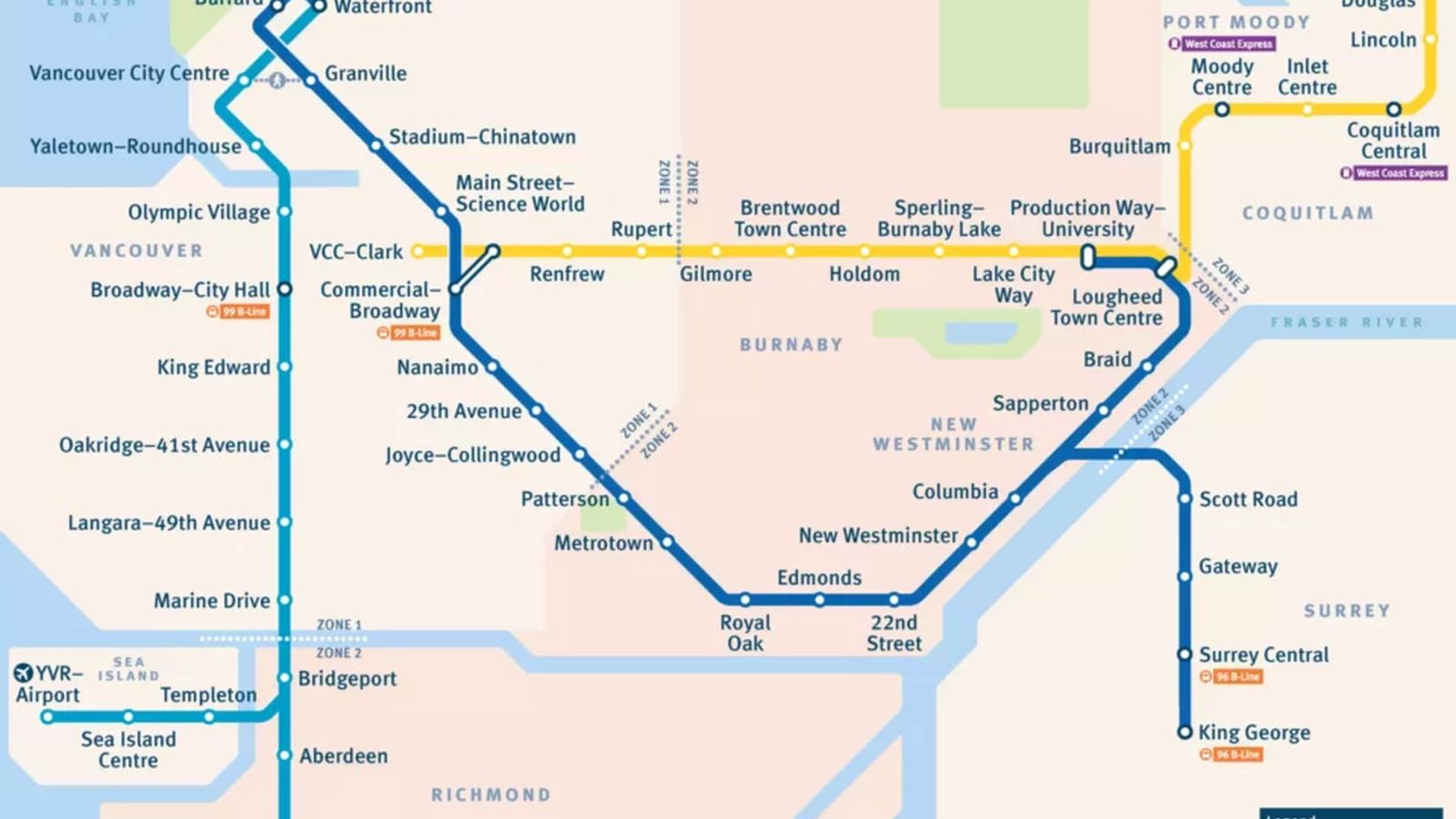
- Service was impacted between Marine Drive and Langara–49th Avenue stations.
- Commuters required shuttle trains for transfers, with extra bus service and staff deployed.
- TransLink advised using its Trip Planner and social media for real-time updates.
- Other transit lines, Expo and Millennium, operated normally.
Vancouver’s bustling Canada Line, a vital artery for thousands of daily commuters, faced significant disruptions on Wednesday, January 14, 2026. A ‘track issue’ brought parts of the line to a crawl, specifically affecting the segment between Marine Drive and Langara–49th Avenue stations. This unforeseen obstacle transformed routine morning commutes into a logistical puzzle, forcing passengers to adapt on the fly and highlighting the delicate balance of urban public transit.
Imagine the scene: a typical Wednesday morning, passengers boarding trains, perhaps scrolling through news, sipping coffee, or preparing for their workday. Then comes the announcement – delays, transfers, shuttle buses. For many, the Canada Line isn’t just a convenience; it’s a lifeline connecting homes to workplaces, schools, and essential services. A delay, even a seemingly minor one, can ripple through an entire day, leading to missed appointments, late arrivals, and increased stress levels. The frustration is palpable, a shared experience among those who rely on the rhythm and predictability of urban transit.
In response to the disruption, TransLink, the authority overseeing Vancouver’s public transit network, swiftly implemented contingency measures. “Extra bus service and staff are in place between Bridgeport and King Edward stations to support customers,” stated TransLink in a release reported by Vancouver Is Awesome. This deployment of additional resources underscores the immediate challenge of rerouting thousands of passengers efficiently. Shuttle trains were introduced to bridge the affected gap, requiring commuters to disembark, transfer, and re-board, adding unexpected layers to their journeys. Such operational pivots, while essential, inevitably consume precious time and test the patience of even the most seasoned commuters.
While the exact nature of the ‘track issue’ was not immediately detailed, such incidents can range from minor signal malfunctions to more significant structural or electrical faults. Tracks, much like any complex infrastructure, are subject to wear and tear, environmental factors, and unforeseen mechanical failures. Regular maintenance schedules are designed to mitigate these risks, but the sheer volume of daily usage on a line like the Canada Line means that occasional disruptions are an unavoidable reality. The swift identification and resolution of these issues are paramount, not only for immediate service restoration but also for maintaining public trust in the reliability of the transit system.
The incident on the Canada Line serves as a stark reminder of the delicate balance involved in running a modern urban transit system. Cities worldwide grapple with the challenge of providing efficient, reliable, and sustainable public transportation. Investment in infrastructure, continuous maintenance, and robust contingency planning are cornerstones of a resilient network. When one component falters, the entire system feels the strain, highlighting the interconnectedness of urban life. The Expo Line and Millennium Line, operating normally, offered a measure of relief, preventing a city-wide transit paralysis, yet the Canada Line’s specific impact was undeniable for its users.
TransLink’s communication strategy played a crucial role in managing expectations and guiding commuters. Advising customers to use the online TransLink Trip Planner and to “Exclude SkyTrain” under advanced search settings provided practical alternatives. Updates via social media platforms like X (@TransLink) and a dedicated customer information line, available in over 300 languages, demonstrated an effort to reach a diverse ridership with timely information. In an era where real-time information is expected, these channels become indispensable tools for commuters navigating unexpected changes.
Beyond the statistics and operational details, these delays resonate deeply with the human experience of urban living. For some, it might mean missing a critical job interview; for others, being late to pick up children from daycare. The cumulative effect of such disruptions, even if infrequent, can erode confidence and add to the daily grind. It underscores the profound psychological and economic impact that a seemingly technical ‘track issue’ can have on a community, turning a simple commute into an unexpected odyssey.
The Canada Line, opened in 2009, has become an integral part of Metro Vancouver’s transit landscape, connecting the city center with Richmond and Vancouver International Airport (YVR). Its efficiency and speed are often taken for granted, making any deviation from its usual smooth operation particularly noticeable. The incident serves as a momentary pause, prompting reflection on the vast, intricate network that underpins urban mobility and the constant, often unseen, efforts required to keep it running.
Maintaining public transport infrastructure in a rapidly growing metropolitan area like Vancouver is a continuous challenge. As cities expand and populations increase, the demand on existing transit systems intensifies. This pressure necessitates ongoing investment not just in expansion, but critically, in the upkeep and modernization of current lines. The ‘track issue’ on the Canada Line, while resolved, acts as a litmus test for the system’s ability to recover swiftly and for the city’s preparedness to support its commuters through unforeseen circumstances. It’s a reminder that reliability is earned through constant vigilance and proactive maintenance, not merely through initial construction.
The Canada Line’s recent ‘track issue’ is more than just a momentary inconvenience; it’s a critical stress test for Vancouver’s urban resilience and its commitment to public infrastructure. While TransLink’s immediate response to mitigate the impact was commendable, the incident highlights the perpetual challenge faced by rapidly growing cities: how to ensure that vital transit arteries remain robust, adaptable, and consistently reliable in the face of constant demand and the inevitable wear and tear of a bustling metropolis. The long-term health of any city’s public transit system hinges on proactive investment and transparent communication, ensuring that daily disruptions remain exceptions, not the norm, for the millions who depend on them.