
Quick Read
- Canada scored two early tries to lead 12-0 against New Zealand in the Women’s Rugby World Cup semi-final.
- Justine Pelletier and Asia Hogan-Rochester were the try scorers for Canada.
- New Zealand struggled with errors and missed opportunities throughout the first half.
- The winner will face England or France in the final at Twickenham.
- Canada’s powerful start challenges New Zealand’s decade-long World Cup dominance.
Canada’s Blazing Start Leaves New Zealand Stunned
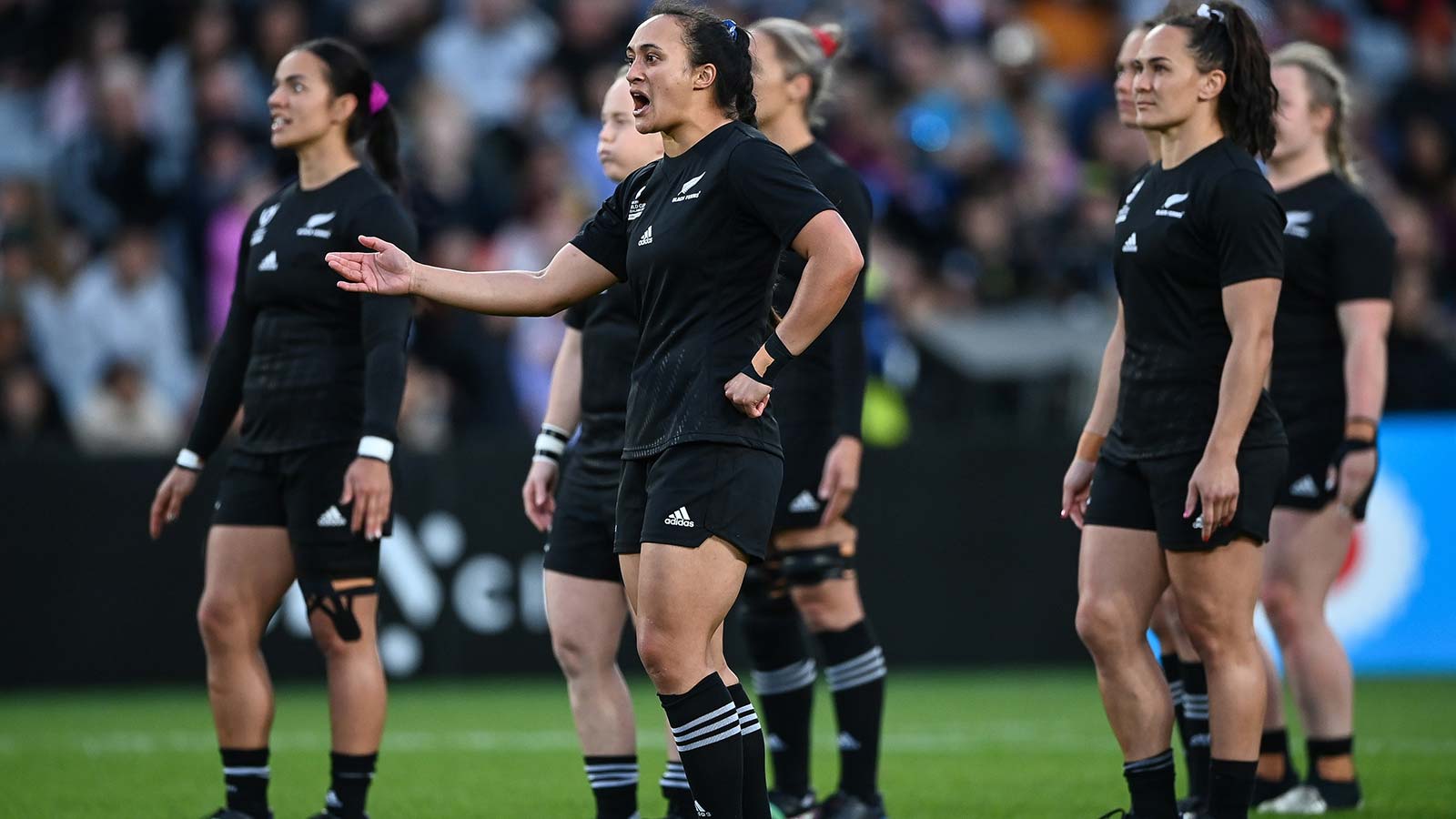
Under the floodlights of Ashton Gate, Bristol, anticipation hung thick in the air. The reigning world champions, New Zealand’s Black Ferns, marched onto the pitch with the confidence of six previous World Cup victories. Their haka, thunderous and primal, set the tone for a night that promised drama. Yet, as the whistle blew, it was Canada who seized the narrative and ignited the semi-final with ferocity.
Within the first ten minutes, Canada’s intent was unmistakable. Their forwards battered the New Zealand defense with relentless pick-and-go drives. Scrum-half Justine Pelletier, sharp and hungry, exploited every inch of space. After a clever offload from Alysha Corrigan, Pelletier dummied the last defender and crossed the line for the opening try. Sophie de Goede, Canada’s rare goal-kicking lock, coolly slotted the conversion for a 7-0 lead. The Black Ferns, so accustomed to dictating tempo, found themselves on the back foot.
Asia Hogan-Rochester Doubles Canada’s Advantage
The crowd, a sea of anticipation and disbelief, watched as Canada sustained their onslaught. Minutes later, another penalty gave Canada territory, and a sweeping move from right to left found wing Asia Hogan-Rochester in space. With a powerful fend and dazzling footwork, she outpaced Braxton Sorensen-McGee and dove for the corner. The scoreboard flashed 12-0, and the neutrals at Ashton Gate erupted — their cheers echoing the surprise sweeping rugby circles worldwide. De Goede’s conversion attempt drifted wide, but the momentum was undeniable.
BBC Sport’s coverage captured the mood: “Massive cheers as Asia Hogan-Rochester dusted Braxton Sorensen-McGee in the battle of the double barrels.” The Guardian described it as a start that New Zealand “will have expected, but perhaps not to this extent.” The Black Ferns, tested in ways they hadn’t been all tournament, worked nine phases in response, but Julia Schell’s counterattack for Canada showcased the visitors’ confidence and defensive resolve.
New Zealand Struggles Against Canada’s Pressure
For the Black Ferns, every opportunity seemed to slip away. Kaipo Olsen-Baker intercepted a pass and surged through the Canadian line, but support was missing out wide. The errors mounted — handling mistakes, penalties at the breakdown, and a botched clearance from full-back Renee Holmes. Canada capitalized on every misstep, their discipline and organization a stark contrast to New Zealand’s frustration.
The tactical battle at the scrum was compelling. Canada’s loosehead prop McKinley Hunt, recently converted from lock, faced the might of New Zealand’s Tanya Kalounivale. Both packs grappled for dominance, but Canada held their own, using Hunt’s size and ball-carrying ability to disrupt the rhythm of the Black Ferns.
As the first half wore on, the defending champions, missing dynamic flanker Jorja Miller, struggled to find their trademark fluency. The usually electric Portia Woodman-Wickliffe and Stacey Waaka were contained by Canada’s defensive wall, led by captain Alex Tessier and the ever-present Fabiola Forteza, whose tackles rang out across the stadium.
Historical Context and the Stakes
This semi-final was more than a clash of titans; it was a collision of histories and aspirations. New Zealand had not lost a World Cup match since 2014, their reign seemingly unassailable. Canada, meanwhile, carried the memory of heartbreak — runners-up in 2014, and still searching for their first title. Yet, their victory over New Zealand in the Pacific Four Series last year hinted at a changing tide.
As Reuters reported, Canada arrived at this World Cup under the radar, their confidence quietly building with each dominant pool performance and a statement win over Australia in the quarter-finals. Head coach Kevin Rouet embraced their underdog status: “We’re Canada, nobody knows about us, and we’re happy with that.” But as the scoreboard ticked upward, anonymity was no longer an option.
The Black Ferns’ head coach Allan Bunting acknowledged the challenge: “Set-pieces and the breakdown are going to be key. We believe in our game, and we’re really looking forward to the challenge today.” But belief alone could not stem the Canadian tide.
Fans, Atmosphere, and the Promise of the Final
From Queenstown to Ottawa, fans tuned in, their nerves frayed and hopes soaring. The tournament had delivered high drama, but this semi-final was something else. The neutrals in Bristol turned into Maple Leaf supporters, swept up by Canada’s audacious play. The BBC’s Anna Caplice, herself a former Ireland international, summed it up: “Twinkle toes they call her! Two tries. I don’t know who’d have called this, but they’re smiling now, the Canadians.”
With every minute, the tension grew. The winner would earn a coveted spot in the final at Twickenham, facing either England or France. The script had suggested an inevitable New Zealand-England rematch. Now, Canada’s challenge rewrote the narrative, reminding rugby fans that on the biggest stage, nothing is guaranteed.
As the half-time whistle approached, New Zealand worked desperately to close the gap. But Canada’s discipline, tactical intelligence, and raw belief held firm. The final act awaited, but the tone was set: this was Canada’s night to seize.
Team Line-Ups and Key Players
The Black Ferns fielded a formidable XV: Holmes, Sorensen-McGee, Waaka, Brunt, Woodman-Wickliffe, Demant (co-captain), Pouri-Lane; Viliko, Ponsonby, Kalounivale, Roos, A Bremner, Mikaele-Tu’u, Tukuafu (co-captain), Olsen-Baker. Their bench bristled with depth, but the absence of Jorja Miller was felt.
Canada’s starting squad — Schell, Corrigan, Symonds, Tessier (captain), Hogan-Rochester, Perry, Pelletier; Hunt, Tuttosi, Menin, De Goede, O’Donnell, Crossley, Paquin, Forteza — blended experience and athleticism. Sophie de Goede’s leadership, Pelletier’s game-breaking runs, and Hogan-Rochester’s finishing power gave Canada a cutting edge.
In the stands, former international referees and players added color to the broadcast, marveling at the intensity and the spectacle. The Women’s Rugby World Cup, long overshadowed, was having its moment in the sun — and Canada was at its heart.
Canada’s early dominance and New Zealand’s struggles signal a seismic shift in women’s rugby. Whether or not Canada can sustain their momentum into the final, their performance in Bristol has shattered expectations and opened the door for new contenders at the top. The Black Ferns, for the first time in a decade, face a reckoning — proof that the women’s game is evolving, and the era of predictable champions may be coming to an end.