
Quick Read
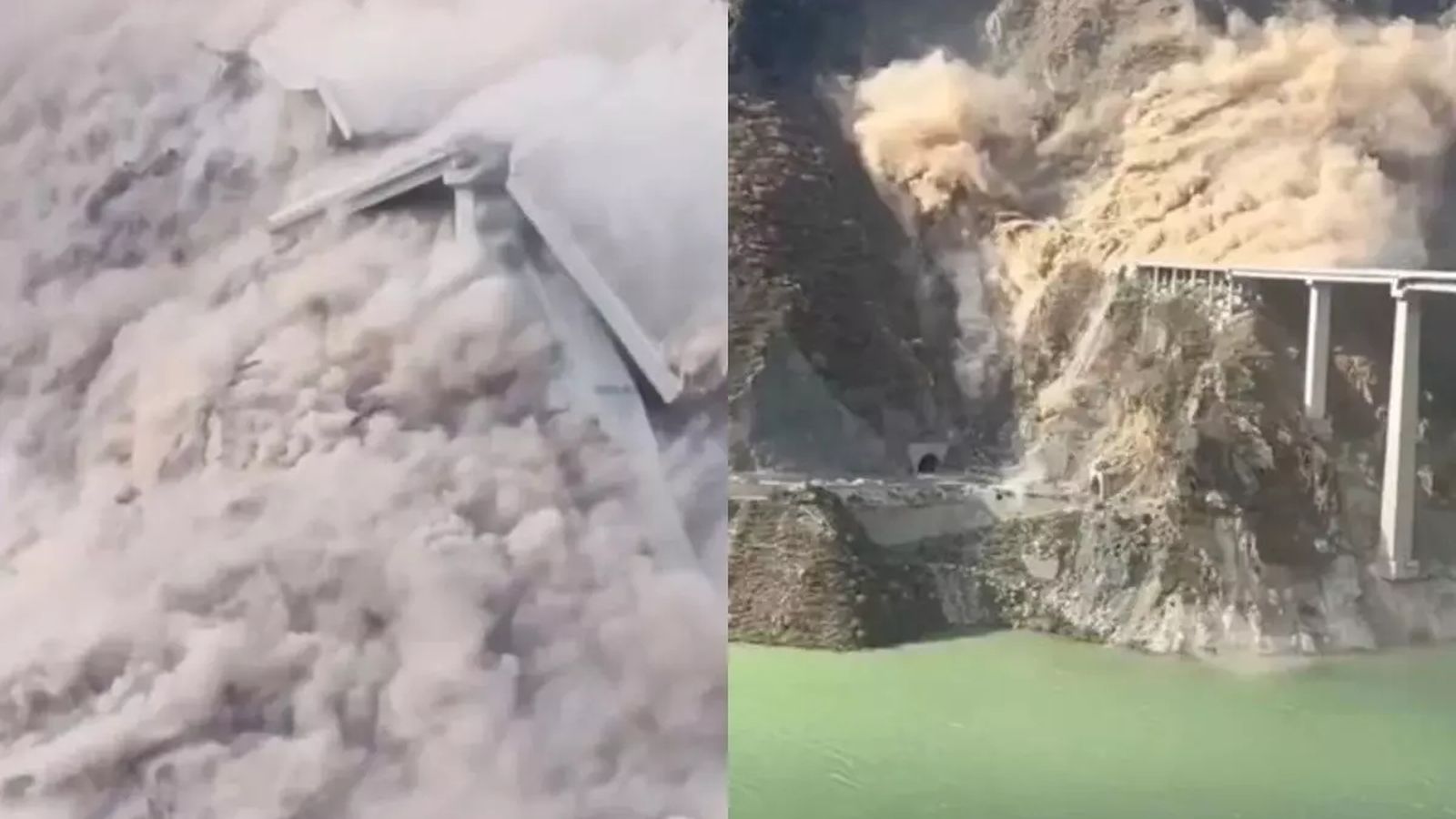
- A 758-meter bridge in Sichuan province, China, collapsed less than a year after opening.
- No casualties were reported; police had closed the bridge the day before due to terrain cracks.
- Authorities attribute the collapse to a landslide caused by unstable mountainous terrain.
- The incident has sparked public debate over construction quality and infrastructure oversight.
- Investigations are ongoing; reopening date is undetermined.
Bridge Collapse Stuns China, Raises Infrastructure Concerns
On a quiet afternoon in Sichuan province, the Hongqi Bridge—a 758-meter stretch of concrete and steel connecting Tibet with China’s heartland—suddenly gave way. The collapse, which occurred around 4 p.m. local time near Barkam, sent shockwaves not only through the rugged landscape but also through the national conversation about safety, oversight, and the pace of infrastructure development.
The bridge, completed earlier this year and opened to traffic just months ago, was a critical link for local residents and businesses. Its abrupt failure has raised uncomfortable questions: How could such a massive, newly built structure crumble so quickly? Was the cause nature, negligence, or a combination of both?
Precautionary Closure Preceded Disaster
According to reports from Xinhua News Agency and Reuters, local police closed the bridge to all traffic the day before the collapse. Their decision followed the detection of cracks on the hillsides and roads surrounding the bridge, as well as visible signs of terrain deformation. These early warning signs prompted authorities to act swiftly, preventing what could have been a catastrophic loss of life.
No casualties have been reported—a testament to the vigilance of the local emergency teams and police. Videos quickly surfaced on social media platforms such as Weibo and X, showing the harrowing moments as the bridge’s support columns buckled and the structure plunged into the river below. Thick clouds of dust, tumbling rocks, and the roar of crumbling concrete captured the gravity of the situation.
Landslide Blamed, But Public Demands Answers
Initial investigations point to a landslide as the immediate trigger. The mountainous terrain surrounding the bridge is notoriously unstable, and recent shifts in the earth appear to have undermined the structure’s foundation. The Barkam Emergency Management Bureau confirmed that leaders and technical experts arrived on-site soon after the collapse, vowing to provide updates as more information emerges.
But for many Chinese citizens, official explanations are not enough. Social media lit up with pointed questions and skepticism. Comments ranged from “The cause of the collapse must be thoroughly explained to the public,” to “How could such a massive bridge collapse so easily?” and “Was this poor construction?” The anxiety is heightened by memories of another disaster: a railway bridge collapse in Qinghai province just months earlier, which killed 12 people and left 4 missing.
Scrutiny on Construction Standards and Oversight
The Sichuan Road and Bridge Group, responsible for building the Hongqi Bridge, has yet to announce when the road will reopen. Their statement, delivered through Sichuan Daily, emphasized that investigations are ongoing and that public safety remains the top priority.
China’s rapid infrastructure expansion over the past two decades has been a source of national pride and economic growth. High-speed rail lines, expressways, and monumental bridges have transformed mobility and commerce. Yet, incidents like this highlight the tension between speed and safety, and the challenges of building in geologically complex regions.
The collapse has reignited calls for stricter oversight, more transparent investigations, and accountability at every stage—from design and materials to construction and maintenance. The public’s demand for answers is not just about this bridge; it’s a broader plea for confidence in the systems meant to protect them.
Impact on Local Communities and National Reputation
For residents of Barkam and travelers dependent on the Hongqi Bridge, the collapse has immediate consequences. The route was a vital artery for goods, medical supplies, and daily commutes. With the bridge now unusable, detours and delays are inevitable, and local businesses face uncertainty.
Nationally, the incident has become a flashpoint in debates about infrastructure quality. International observers, including media outlets like Reuters, note that the collapse may affect perceptions of China’s engineering prowess and its ambitious Belt and Road Initiative, which aims to export Chinese infrastructure expertise worldwide.
As the investigation unfolds, engineers and officials will need to address not only the technical causes but also the broader questions of accountability and trust. Was this a one-off tragedy, or does it signal deeper issues in the rush to build?
Looking Ahead: Lessons and Accountability
While the precise cause of the Hongqi Bridge collapse remains under investigation, one fact is clear: public safety must never be compromised for speed or convenience. The disaster is a stark reminder that infrastructure, no matter how impressive, is only as strong as its weakest link—be it in design, materials, or oversight.
Authorities have promised full transparency as the inquiry continues. Meanwhile, local communities, engineers, and policymakers are left to reckon with the aftermath—and to ask hard questions about the future of China’s infrastructure development.
The collapse of the Hongqi Bridge so soon after its opening serves as a sobering lesson about the perils of underestimating nature and the risks of insufficient oversight. As investigations proceed, the incident challenges China to balance its ambitions with a renewed commitment to safety and transparency—ensuring that progress does not come at the cost of public trust.