
Quick Read
- Choi Kang-rok, a returning contestant, won ‘Culinary Class Wars’ Season 2, which aired on January 13, 2026.
- He secured the title and 300 million won (approx. $203,000) with a soup featuring sesame tofu and soju.
- The final challenge theme was ‘Just One Dish For Myself,’ a concept both finalists found difficult.
- Choi’s victory was unanimous, with judges praising his ‘honest dish’ that reflected his personal journey.
- He previously won ‘MasterChef Korea’ Season 2 in 2013 and has hosted Netflix’s ‘The Blank Menu For You’.
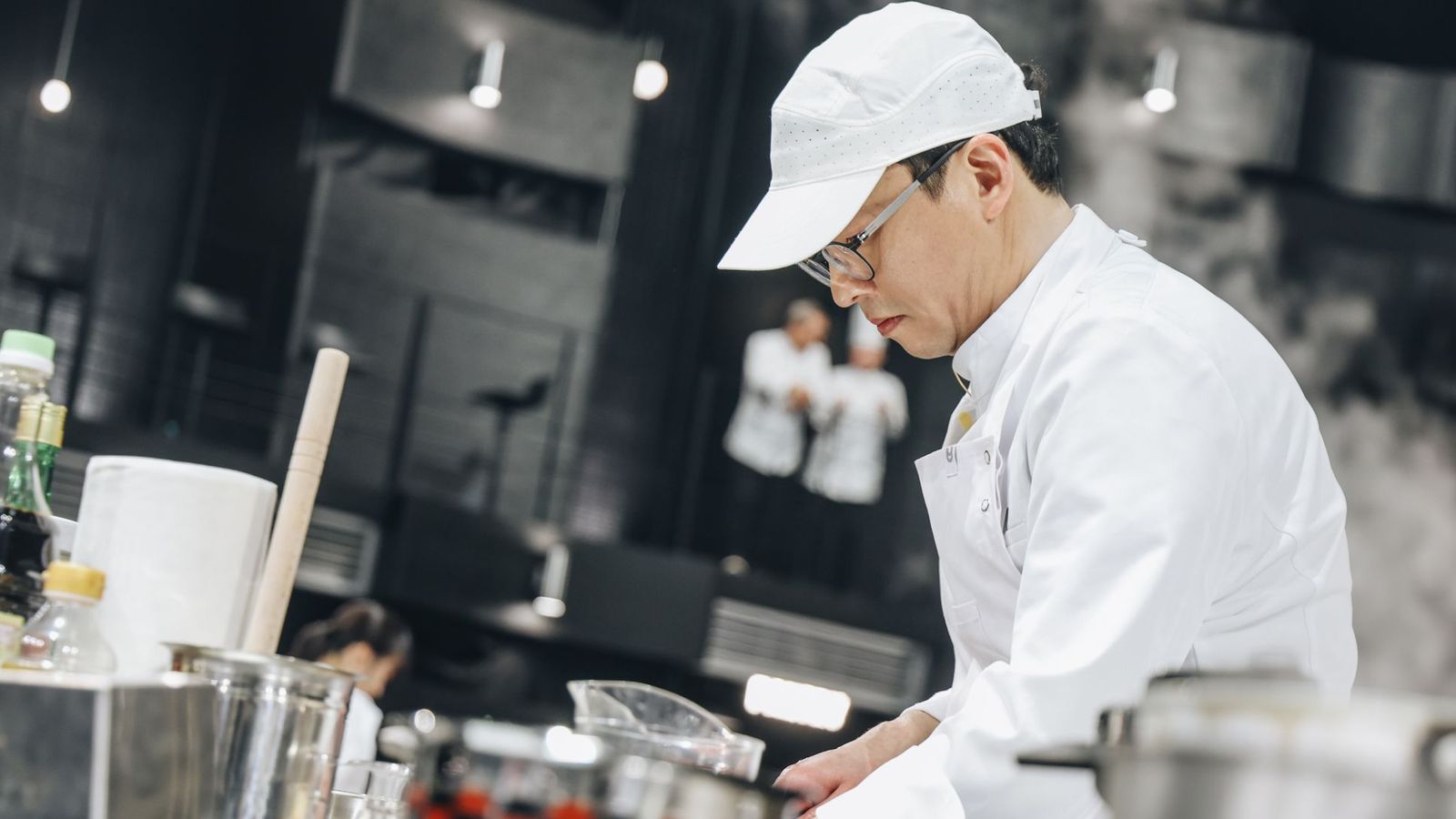
In a compelling culmination that resonated deeply with viewers and judges alike, Choi Kang-rok, the Seoul-based Japanese chef and a unique returning contestant, has been crowned the champion of Netflix’s ‘Culinary Class Wars’ Season 2. The finale, which aired on January 13, 2026, saw Choi triumph in a surprising turn of events, securing the prestigious title and a staggering 300 million won (approximately $203,000) in prize money. His victory was not just a win in a cooking competition; it was a powerful affirmation of authenticity and the quiet dedication of countless unsung chefs.
The season’s final showdown centered on the theme “Just One Dish For Myself,” a challenge that proved profoundly difficult for both finalists, Choi and his formidable opponent, Black Spoon chef Lee Ha-sung, known as the “Culinary Monster.” Both chefs, accustomed to crafting meals for others, struggled to turn their focus inward. Yet, it was Choi’s deeply personal and reflective dish — a soup with sesame tofu, served alongside a bottle of soju — that ultimately captivated the judges and sealed his fate. Judge Ahn Sung-jae lauded Choi’s creation as “a really honest dish,” leading to a unanimous vote alongside Judge Paik Jong-won, solidifying Choi’s well-deserved win.
The Unlikely Path to Culinary Stardom
Choi Kang-rok’s journey to culinary prominence is anything but conventional. At 47, his initial aspirations lay in music; he dreamt of becoming a drummer, viewing kitchen jobs merely as a means to fund his musical pursuits. However, a pivotal encounter with ‘Mr. Sushi King,’ a manga depicting a teenage boy’s path to becoming a sushi chef, ignited a different flame within him. This inspiration led him to Japan’s esteemed Tsuji Culinary Institute, marking the true beginning of his culinary career.
Despite this formal training, the road was not smooth. Choi faced early setbacks, including two failed sushi ventures and accumulating significant debt. His public recognition in Korea truly began in 2013 when he won the second season of ‘MasterChef Korea.’ This triumph, reportedly spurred by a commercial seen during a night of drinking, transformed him from an office-bound tuna trader into a national culinary figure. His resilience in the face of adversity, from financial struggles to failed businesses, has become a hallmark of his inspiring story, resonating with many who face similar professional challenges.
A Return to the Fray: The “Hidden White Spoon” Narrative
What made Choi’s Season 2 victory particularly compelling was his status as the only returning contestant from the previous season. In ‘Culinary Class Wars’ Season 1, Choi, competing as a White Spoon chef, was eliminated in the third round. His attempt to save himself in the Consolation Round with a hot peppery saury made from convenience store items fell short. This early exit could have been the end of his story on the show, but Choi, embodying a spirit of relentless pursuit, returned as one of two “Hidden White Spoon” contestants in Season 2.
This new game mechanic offered a shot at redemption for previously eliminated White Spoon chefs. During the opening “Black Spoon Elimination Challenge,” Choi secured his spot with a braised eel and vegetables dish that earned both judges’ approval. His determination was encapsulated in his own words: “They say if you do nothing, nothing will happen. And it did seem like nothing would happen, so I decided to come back.” This narrative of a seasoned chef returning to prove his mettle, not just for a title but for personal vindication, added a powerful layer to the season’s drama.
The Emotional Finale: Cooking for Oneself
The theme “Just One Dish For Myself” pushed both finalists into a deeply introspective culinary exercise. While Lee Ha-sung presented a fine-dining interpretation of sundaeguk, a blood sausage soup reminiscent of childhood bathhouse visits with his father, Choi Kang-rok chose a dish that reflected his present self—a soup with sesame tofu. Many viewers and even some judges initially predicted Lee’s victory due to the visually striking nature of his dish, as noted by Chosun.com.
However, Choi’s dish, described as “a soup filled with ingredients I love. It might not align with the judges’ tastes,” struck a chord with its raw honesty. He confessed, “A life lived pretending, I didn’t want to braise even in cooking for myself.” This candid admission touched audiences, particularly his peers, who understood the pressures of a chef’s life. He humorously alluded to his past ‘MasterChef Korea’ win, where his prowess in braising earned him nicknames like ‘Braising Human’ and ‘Serial Braising Mama,’ a persona he admitted to having “pretended to excel at.” His simple soup, paired with a bottle of “Red Cap” soju, was a toast to his past self, a moment of profound self-comfort and a symbolic rejection of pretense. Judge Ahn Sung-jae’s comment, “Every chef faces a ‘pretending’ phase. I’m guilty too. This dish feels honest,” underscored the emotional resonance of Choi’s approach.
Beyond the Competition: A Chef’s Evolving Vision
Choi Kang-rok’s influence extends far beyond competition kitchens. He is a celebrated figure in Korean media, with a robust television resume that includes appearances on ‘What Shall We Eat Today – Delivery’ and ‘Please Take Care of My Refrigerator.’ Most recently, he hosted ‘The Blank Menu For You,’ a Netflix cooking show where he crafted meals for celebrities like Jung Hae-in, BLACKPINK’s Jisoo, and SHINee’s Key based on their open-ended requests. His literary contributions include ‘Choi Kang-rok’s Cooking Notes’ (2023) and the 2025 essay collection ‘Cooking For Life,’ where he shares the “small, everyday things from the life of an ordinary working person,” as reported by Marie Claire.
In early 2025, Choi closed his Japanese restaurant, Neo, in Seoul, despite its popularity. This decision seems to have cleared the path for new ventures. He is currently starring in ‘Food Otaku,’ a YouTube travel series exploring Japan’s best ingredients, and has contributed to the historical dishes in the Netflix K-drama ‘Bon Appétit, Your Majesty.’ As he approaches his 50s, Choi envisions a future that marries his passion for cooking with his love for literature, dreaming of a library/kitchen space that houses his vast cookbook collection. He speaks of preparing for “a kind of cooking that evolves with these changes,” signaling a mature and reflective approach to his craft.
Meanwhile, Judge Paik Jong-won, whose differing criteria with Judge Ahn Sung-jae created much tension throughout the season, has already transitioned to his next project. He is set to appear in tvN’s ‘World Food Business Challenge: The Genius Paik 3,’ filmed in Lyon, France, and slated for a February 2026 broadcast. This move from a critical judging role to an on-site player highlights the dynamic nature of culinary entertainment.
Choi Kang-rok’s triumph in ‘Culinary Class Wars’ Season 2 is more than just a victory for an individual chef; it’s a profound statement on the power of authenticity and the often-unseen struggles of those who dedicate their lives to food. His journey, marked by perseverance, self-reflection, and a deep respect for the craft, serves as an inspiring narrative for anyone striving to find their true voice, both in and out of the kitchen. By choosing to cook a dish for himself, free from pretense, Choi not only won a competition but also captured the hearts of many, cementing his legacy as a champion for the ‘invisible chefs’ he so humbly represents.