
Quick Read
- CIA intelligence assessed Iran’s Revolutionary Guard would likely seize power if Supreme Leader Khamenei died.
- The analysis was compiled before recent U.S.-Israeli military operations targeting Iran.
- The report examined potential regime change scenarios, a stated objective of the U.S. administration.
- Analysts did not definitively predict any single outcome for Iran’s future leadership.
- U.S. President Donald Trump publicly called for the overthrow of the Iranian government.
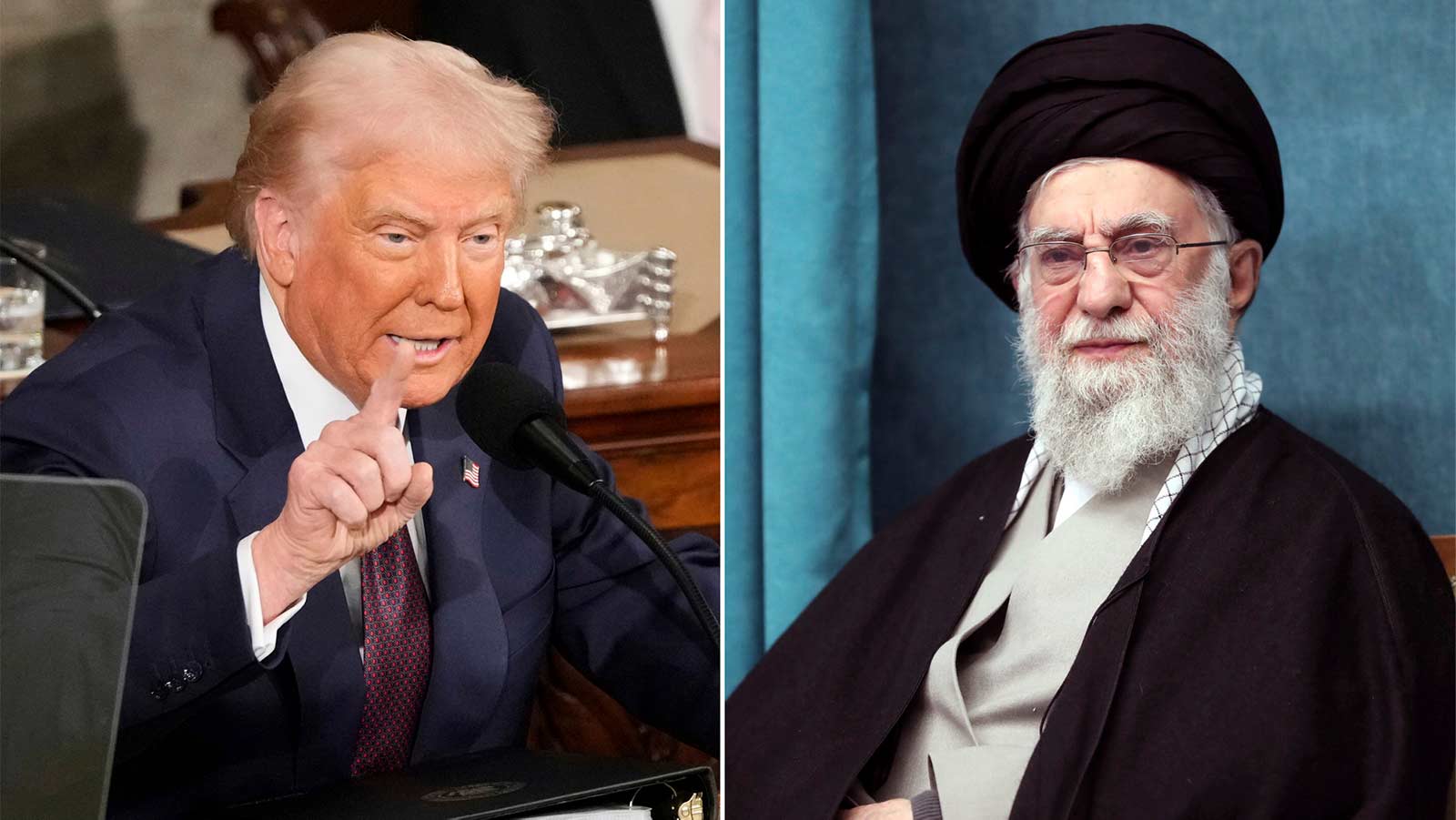
WASHINGTON (Azat TV) – A classified intelligence assessment by the Central Intelligence Agency (CIA), conducted prior to recent U.S.-Israeli military operations against Iran, concluded that Iran’s hardline Revolutionary Guard would most likely assume power if Supreme Leader Ayatollah Ali Khamenei were to die. The analysis examined various potential scenarios for regime change in Iran, a key stated objective for the current U.S. administration.
The CIA’s findings, compiled over two weeks leading up to the Saturday strikes, explored potential outcomes following American military intervention and whether such actions could successfully topple Iran’s current government. Sources familiar with the intelligence reports, who spoke on condition of anonymity due to the sensitive nature of the information, emphasized that analysts did not definitively predict any single outcome for the future of Iranian leadership.
CIA Assessment on Khamenei Succession
The intelligence evaluations indicated that the Islamic Revolutionary Guard Corps (IRGC), an elite military organization fiercely dedicated to preserving Shi’ite Muslim clerical authority in Iran, would be the most probable entity to fill any power vacuum created by Khamenei’s demise. This assessment underscores the deep institutional strength of the IRGC within Iran’s political and military landscape, suggesting a continuity of hardline rule rather than a swift transition to a more moderate government. The CIA notably declined to comment on these intelligence evaluations.
U.S.-Israeli Operations and Regime Change Goals
The combined U.S.-Israeli assault on Iran followed extensive internal government discussions regarding potential targets after deadly demonstrations rocked Iran in December. President Donald Trump had publicly expressed interest in seeing Iran’s government overthrown for several weeks leading up to the operations, although he had not specified Washington’s preferred replacement leadership. In a video statement on the Saturday of the strikes, President Trump labeled Tehran a “terrorist regime” and called upon Iranian citizens to overthrow their government, asserting that the military actions would create conditions conducive to a popular revolt. This rhetoric highlights the administration’s strategic focus on destabilizing the current Iranian regime.
The Role of Iran’s Revolutionary Guard Corps
The Islamic Revolutionary Guard Corps is not merely a military branch; it is a powerful socio-political and economic force integral to the Iranian state. Its primary mission is to protect Iran’s Islamic system, and it wields significant influence over many aspects of Iranian society, including intelligence, media, and key industries. The CIA’s assessment that the IRGC would assume control upon Khamenei’s death suggests that any external attempt at regime change might primarily result in a consolidation of power by this already entrenched hardline faction, rather than ushering in a more democratic or Western-aligned leadership. This scenario presents a complex challenge for U.S. policy objectives, as a powerful IRGC-led government could prove even more resistant to external pressure.
Failed Diplomacy Preceded Military Action
Prior to the military operations, American diplomats had attempted to negotiate a nuclear agreement with Tehran as a means to prevent armed conflict. However, these efforts, including Geneva negotiations, ultimately failed to produce an accord. Secretary of State Marco Rubio informed the Gang of Eight congressional leadership during briefings last week that military operations were likely to proceed, though he noted President Trump might reconsider if nuclear talks succeeded. On Friday evening, just hours before the strikes, Rubio again alerted the Gang of Eight that Iranian strikes were imminent, while still indicating the president retained the option to reverse course, according to two informed sources. The failure of diplomatic channels paved the way for the military intervention and the subsequent release of these intelligence assessments, as reported by Finedayradio and Reuters.
The CIA’s assessment, indicating the likely succession of the Islamic Revolutionary Guard Corps, provides critical insight into the potential complexities of any regime change in Iran, suggesting that a power vacuum might lead to a more entrenched hardline authority rather than a desired democratic transition.