
Quick Read
- Police fired on a U-Haul truck reversing toward officers during protests at Alameda’s Coast Guard base.
- The base was set to be a staging area for Border Patrol agents as part of a planned immigration enforcement surge.
- President Trump announced the San Francisco enforcement surge was canceled, but protests persisted.
- Witnesses reported the truck struck two bystanders; no confirmed injuries or arrests.
- Community leaders urged peaceful protest, citing fear and uncertainty among immigrant families.
Protesters Confront Immigration Enforcement Plans at Coast Guard Island
The quiet waters around Alameda’s Coast Guard Island were anything but peaceful on Thursday, as hundreds of protesters gathered to challenge a looming federal immigration crackdown in the San Francisco Bay Area. What began as a demonstration marked by chants and banners soon escalated, exposing deep anxieties and divisions in the community.
Federal plans to stage Border Patrol agents at the Coast Guard base had sparked widespread concern among activists, immigrant families, and local leaders. The Trump administration, citing a nationwide initiative to target undocumented immigrants accused of serious crimes, had designated the base as a staging ground for agents preparing to operate in San Francisco and surrounding cities. News of the operation spread quickly, and by sunrise, demonstrators had already begun to gather at the island’s entrance, determined to make their voices heard.
Standoff Turns Violent: Police Fire on Truck Amid Protest
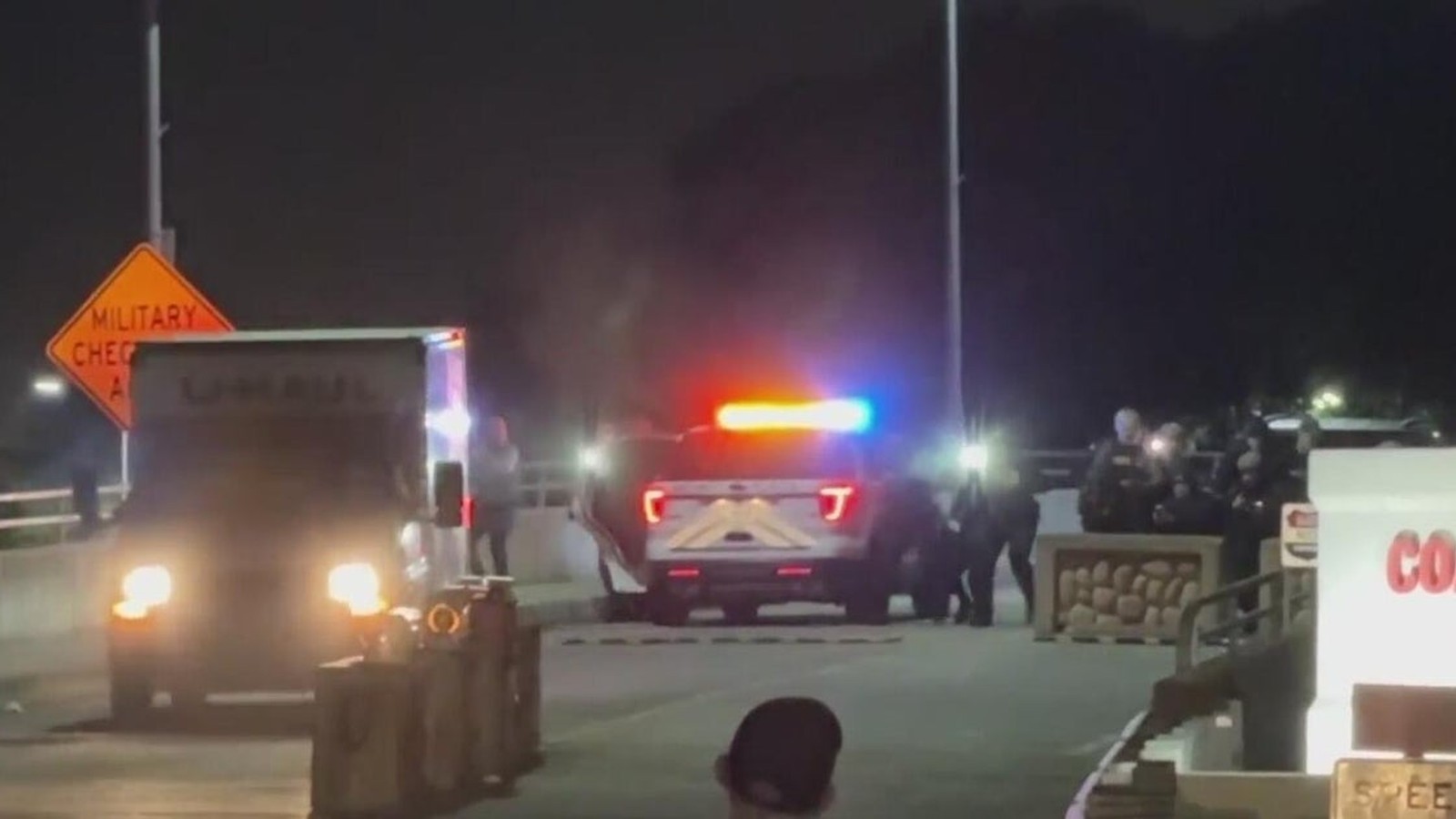
By late afternoon, the protest had grown from a handful of early risers to a crowd of 100 to 200 people, many arriving from a rally in Oakland’s Fruitvale District. Tensions mounted as law enforcement, including California Highway Patrol officers in riot gear, formed a barricade at the base’s gate. Protesters tried to block vehicles, while officers deployed smoke grenades and flash bang devices in an effort to disperse the crowd.
The situation reached a breaking point when a U-Haul truck, parked outside the base for most of the day, suddenly reversed toward the police line. According to Rick Villaroman, a KPIX photographer on the scene, the driver “hit the gas and sped towards them.” Officers responded by firing an estimated 20 to 30 rounds at the vehicle. The driver fled the scene, circled back, and eventually abandoned the truck a short distance away. Witnesses said the vehicle struck two bystanders during the chaos, though authorities did not immediately confirm any injuries or arrests. Villaroman inspected the truck and found multiple bullet holes but no evidence of blood in the cabin.
The shooting sent shockwaves through the crowd, prompting most protesters to disperse rapidly. “They stopped at the crowd, and then got out and said they were going to drive through us if we didn’t move,” recalled one Alameda resident. “They ran over one gentleman’s foot, another person got pushed off.” The rapid escalation left many shaken, with some community leaders questioning the police response and calling for greater accountability.
Immigration Enforcement Plans Spark Outrage and Fear
The Coast Guard base had been selected as a staging area for a planned surge of Border Patrol agents, part of the administration’s broader efforts to increase immigration enforcement in sanctuary cities. A Department of Homeland Security spokesperson explained that the operation was targeting individuals accused of violent crimes, including murder and gang activity. Yet, for many in the Bay Area’s immigrant community, the announcement triggered fresh waves of fear and uncertainty.
Local organizations scrambled to support residents. Bill Hing, Professor of Law and Migration Studies at the University of San Francisco, described a climate of anxiety: “Many of my students are going to neighborhoods and handing out information, we’ve done know-your-rights presentations at car washes and schools.” Community groups urged residents to stay home and avoid confrontation, while others emphasized the importance of peaceful protest. Gabriel Medina, Executive Director of La Raza Community Resource Center, noted, “We’ve been holding the line for power, not panic, but I think the threats and the messaging changed. We’re advising everyone to stay home tomorrow.”
Despite official assurances that the enforcement action in San Francisco was canceled following Mayor Daniel Lurie’s intervention, uncertainty lingered. Activists worried that other Bay Area cities could still see increased federal activity. “The way I would describe it is a combination of fear and hope,” Hing remarked. “But honestly, I think things are going to get worse in the Bay Area before it gets better.”
Community Voices: Calls for Peace, Accountability, and Protection
Amid the turmoil, local faith leaders and activists tried to keep the focus on solidarity and compassion. Jorge Bautista, an Oakland pastor who was part of an interfaith delegation, was reportedly hit by a projectile during the protest. “We came in peace, and he didn’t care,” Bautista told reporters. “It is our responsibility to express love and be on the side of peace and to make sure that no families are being harassed and threatened with their lives.”
Others echoed the call for nonviolent action, aware that any outbreak of violence could be used to justify further federal intervention. Huy Tran, executive director of SIREN, a South Bay nonprofit, cautioned, “Protest is most powerful when it stays peaceful. When violence breaks out, they are going to hyper focus on that one incident and they’re going to say this is the justification to now send in National Guard troops.”
Meanwhile, a man sporting a MAGA hat voiced his support for the federal operation, underscoring the political fault lines running through the region. “They have the right to come out here and walk around, (and) so do I,” he said, reflecting the competing narratives surrounding immigration policy.
Aftermath: Unanswered Questions and Community Unrest
As dusk fell, Coast Guard Island grew quiet once more, but the events of the day left a lasting imprint. The immediate future of federal immigration enforcement in the Bay Area remains uncertain, and both police and community leaders have yet to provide detailed accounts of the shooting incident. The abandoned U-Haul truck and scattered flash bang shells serve as stark reminders of the volatility that can erupt when policy, fear, and protest collide.
In the days ahead, activists and city officials will likely continue to press for transparency and reassurances. For families caught in the crosshairs of enforcement debates, the hope is for safety and dignity—not just for themselves, but for the broader community.
The Coast Guard Island protest exposed both the vulnerability and resilience of Bay Area communities facing federal immigration action. The episode underscores how quickly tensions can spiral when communication breaks down and trust is lacking. It also highlights the urgent need for open dialogue, measured responses, and community-centered solutions as the region grapples with the broader question: How should a diverse society balance security, justice, and compassion in the face of complex migration challenges?