
Quick Read
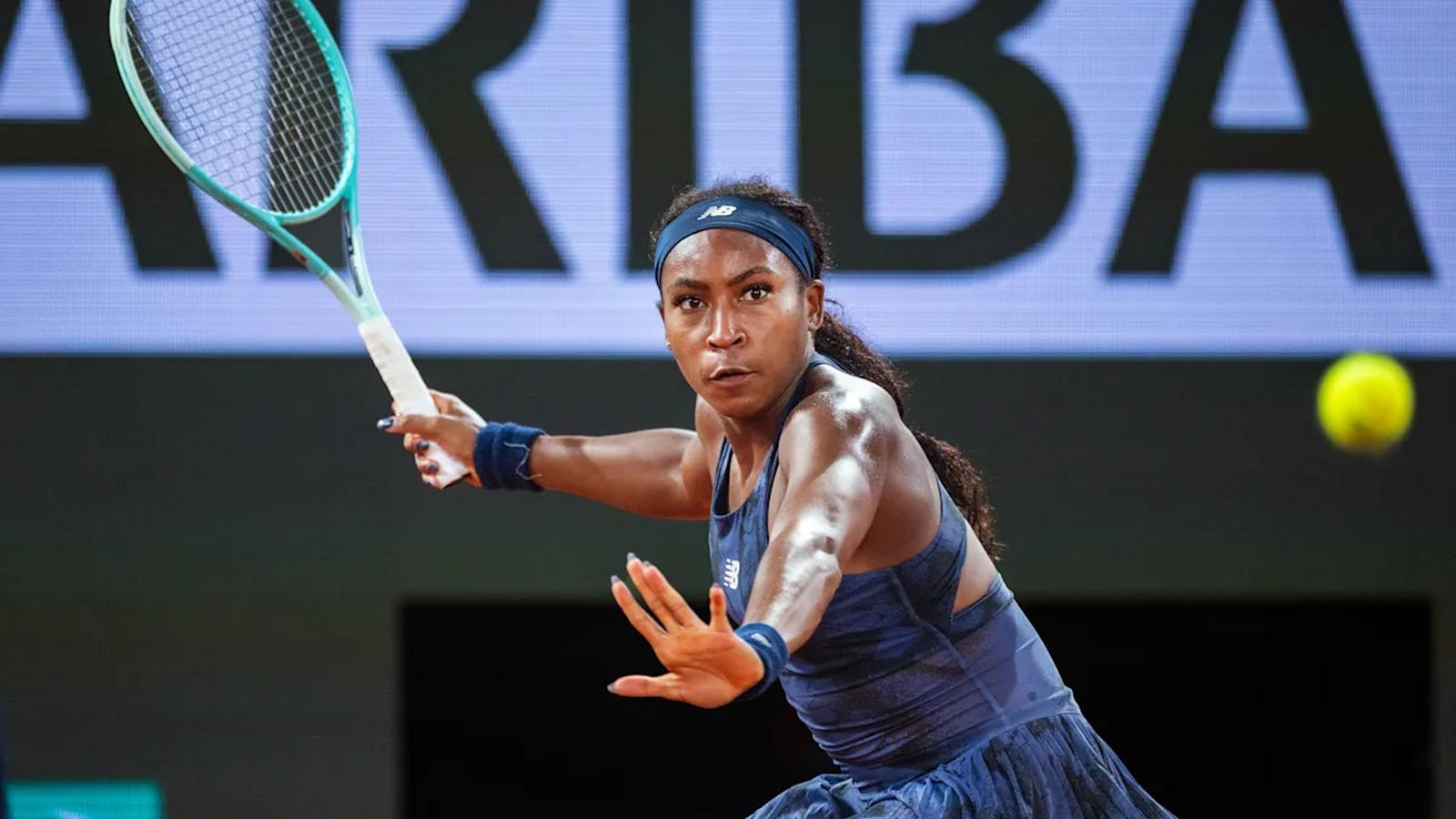
- Coco Gauff defeated Jasmine Paolini 6-3, 6-2 in a do-or-die WTA Finals group match.
- Gauff improved her serve dramatically, reducing double faults from 17 in her previous match to just 3.
- She won 67% of first serve points and 75% of second serve points, showing significant progress.
- Paolini struggled physically, and Gauff acknowledged her opponent’s condition after the match.
- Gauff remains in contention for the semi-finals, with her next match set to be decisive.
Coco Gauff Responds Under Pressure at WTA Finals
Every so often, tennis hands us a match where the stakes are crystal clear: win, or your journey ends. That was the reality for Coco Gauff and Jasmine Paolini in Riyadh’s King Saud University Indoor Arena, as both players entered the court knowing a loss meant the end of their semi-final hopes at the WTA Finals.
Gauff, the 21-year-old American prodigy and defending champion, arrived with her back against the wall. Her previous match against Jessica Pegula had exposed some technical flaws, most notably a worrying number of double faults. Critics and commentators zeroed in on her serve—specifically, the second serve, a persistent Achilles’ heel in an otherwise glittering young career.
Turning the Tide: Gauff’s Serve and Strategy
But Tuesday was a different story. From the first point, Gauff’s serve had a measured precision. She didn’t blast aces, but she made her deliveries count. Only three double faults—down from a staggering 17 in her last match—allowed her to control rallies and build confidence. In her post-match interview, Gauff said, “Definitely happiest with my serve. I thought I served smart, returns were good, happy overall.” The stats backed her up: she won 67% of first serve points and 75% of second serves, a marked improvement over her season average.
Her success wasn’t just about raw numbers. Gauff’s tactical approach shifted; she kept things simple and used her speed to maneuver Paolini around the court, focusing on placement over power. “I was just trying to play relaxed. I knew today was important to keep myself in the tournament,” Gauff reflected. The pressure, instead of overwhelming her, seemed to sharpen her game.
Clinical Execution: How the Match Played Out
The match opened with Paolini, the eighth seed from Italy, showing initial resilience. She took early points with crisp backhands and clever slices, even producing a lob that drew a rare smile from Gauff. Yet, Paolini’s momentum faded as the American found her rhythm. Gauff’s defensive skills—her peerless athleticism and two-handed backhand—came to the fore. She broke Paolini four times out of seven opportunities, while only surrendering her own serve once in five tries.
The first set, taken 6-3 by Gauff, showcased her adaptability. She won a remarkable 82% of second serve points, a testament to the hard work put in with tennis biomechanics expert Gavin MacMillan, hired specifically to address her serve woes. The second set followed a similar pattern. Paolini, visibly struggling after recent illness and the demands of both singles and doubles play, couldn’t keep pace. Gauff closed out the match 6-3, 6-2, her fighting spirit and improved serve keeping her tournament alive.
“I don’t think Jasmine was 100% today so I send her my well wishes. It isn’t easy playing singles and doubles,” Gauff added, acknowledging her opponent’s difficulties with sportsmanship.
Context: Rivalries, Redemption, and What’s Next
This win was more than just a tick in the victory column. Gauff had lost three of her last matches against Paolini before their meeting in Wuhan, where she reversed the trend and went on to claim her third WTA 1000 singles title. The head-to-head record was even at 3-3 before Riyadh, adding a personal layer to the contest.
The narrative of redemption extended beyond Gauff’s own struggles. Aryna Sabalenka, the world No 1, and Jessica Pegula were locked in their own dramatic duel, with Sabalenka eventually prevailing in three sets. The shifting fortunes of top players at the Finals underscore how, in this tournament format, a single bad day can threaten months of hard-earned progress.
For Gauff, the technical story is clear. Her defensive skills and court intelligence have always set her apart, but her serve—especially the second—remains the key variable. According to The Guardian, Gauff leads the tour in return games won, with 46.8% this year, and ranks twelfth in first-serve points among the top fifty. However, she’s sixth-worst on second-serve points won. If she can continue lowering her double faults, the ceiling on her career rises dramatically.
Beyond the Numbers: A Young Star’s Resilience
What’s striking about Gauff’s performance is not just the improvement, but the mental fortitude. After a tough loss to Pegula, she didn’t just tweak her technique; she recalibrated her mindset. She played “relaxed” but with intent, aware of the stakes but refusing to let them dictate her play.
Her journey this season has been a microcosm of the challenges facing young athletes in the spotlight. Every serve, every error, is scrutinized. Yet, Gauff continues to show a capacity for growth that sets her apart—not just as a tennis player, but as a competitor who learns, adapts, and persists.
As the tournament progresses, all eyes will be on her next matchup, potentially against Sabalenka, the last player she beat in a Grand Slam final. The battle for a semi-final spot remains open, but Gauff’s recalibrated serve and renewed focus have put her firmly back in contention.
Assessment: Coco Gauff’s victory over Jasmine Paolini was a masterclass in adaptation under pressure. By addressing her serve issues and demonstrating mental resilience, Gauff transformed a technical weakness into a tournament-saving strength. The win not only keeps her WTA Finals hopes alive, but also signals a promising trajectory for her development as one of tennis’s elite.