
Quick Read
- Coco Gauff defeated Jessica Pegula 6-4, 7-5 to win the Wuhan Open final.
- Gauff claimed her second title of 2025 and 11th career trophy.
- She used junk-ball tactics and defensive brilliance to disrupt Pegula’s rhythm.
- Gauff dropped only 25 games all tournament—the fewest since 2014.
- Both players are heading to the WTA Tour Finals in Riyadh next.
Coco Gauff’s Unique Approach Unseats Pegula in Wuhan
On a cool Sunday in Wuhan, Coco Gauff stepped onto the court determined to do more than just play good tennis. She was there to disrupt, to challenge, and ultimately, to conquer. Facing Jessica Pegula—a formidable opponent fresh from a stunning win over world No. 1 Aryna Sabalenka—Gauff brought a different kind of battle. Her victory, 6-4, 7-5, was not just about power or precision, but about tactical mastery. It was a junk-ball masterclass, where every shot seemed designed to unsettle Pegula’s rhythm and test her patience.
Junk-Ball Tactics and Relentless Defense: Gauff’s Winning Formula
From the very first set, Gauff’s strategy was clear. She alternated looping forehands with skidding slices, mixing in sudden bursts of acceleration and moments of deceleration. Pegula, renowned for her consistent baseline play, found herself grasping for answers. At one point in the second set, she shouted in frustration that Gauff’s ball “wasn’t going anywhere.” But that was precisely Gauff’s plan: to slow things down, to make Pegula work for every point, and to force errors through variety and unpredictability.
According to The New York Times, the cooler conditions during the semifinals and finals played into Gauff’s hands. The tournament had been plagued by heat and humidity, but with the temperature dropping, the pace of play slowed. Where Sabalenka’s raw power had challenged Pegula, Gauff’s reduced ball speed and tactical changes made it even harder for Pegula to hit through her opponent. Pegula’s usually metronomic game began to wobble. She struck her strings in frustration, unable to penetrate Gauff’s defenses.
Comebacks, Turning Points, and the Spin Cycle
The second set was a rollercoaster of momentum swings. Pegula surged to a 3-0 lead, capitalizing on a string of double faults from Gauff. But Gauff responded with renewed aggression, disrupting Pegula’s timing with heavy topspin and low slices. The match became a battle of wits: Pegula broke back for 5-3, only for Gauff to unleash her “spin cycle”—winning four consecutive games to close out the set and the match.
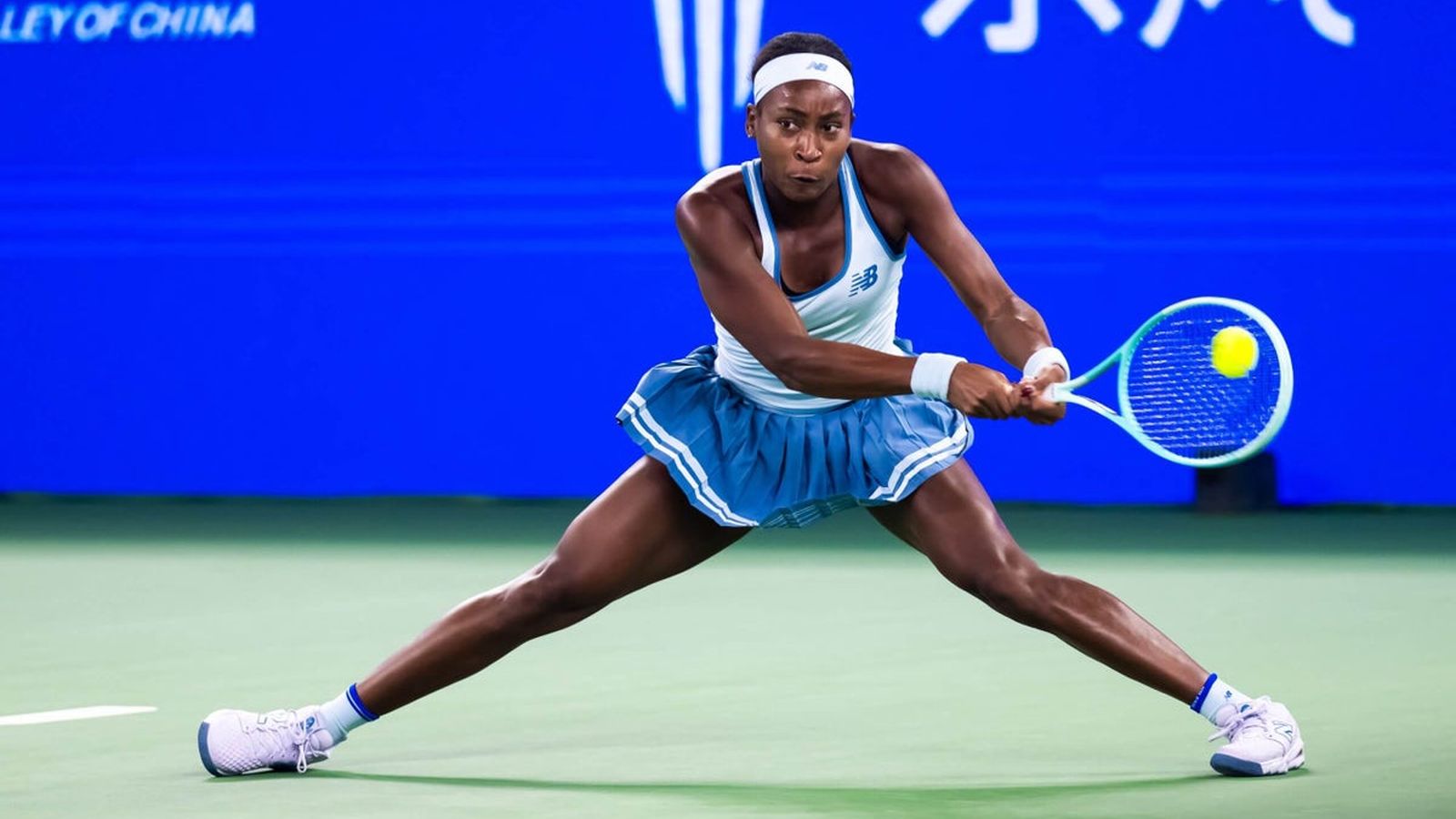
One rally in the final game encapsulated the contest’s spirit. Gauff sprinted across the court to chase down a brilliant backhand volley, forcing Pegula into a wide miss on the next shot. It was a moment that showcased Gauff’s grit, athleticism, and mental sharpness. She didn’t just defend; she counterpunched with purpose, turning defense into attack at the most crucial moments.
Context: The Journey to the Final and the Aftermath
The road to the Wuhan Open final highlighted the contrasting approaches of both players. Gauff dropped just 16 games en route, losing only 25 games across the entire tournament—the fewest since the event’s inception in 2014. Pegula, by contrast, survived four three-set battles, fighting through exhaustion and adversity. As Fox Sports reported, Pegula had played a marathon schedule, including four more three-set matches at the China Open the previous week.
The final itself was their seventh meeting—though their first in a final. Pegula still leads their head-to-head 4-3, but Gauff now boasts an impressive record in finals: 11 wins and only 3 losses. For Pegula, it was a missed opportunity to claim her 10th title. For Gauff, it marked her second tournament victory of the year (after the French Open) and her first WTA 1000 title of 2025. She also became only the second American to win in Wuhan, joining Venus Williams in the event’s history books.
Looking Ahead: WTA Tour Finals and Rivalry Renewed
The rivalry between Gauff and Pegula is far from over. Both players will soon head to Riyadh for the WTA Tour Finals, where Gauff enters as the defending champion. Pegula, forced to withdraw last year due to injury, will be eager for redemption. Their partnership extends beyond singles competition—they’ve won several WTA doubles titles together, and their mutual respect was evident during the trophy ceremony. Gauff affectionately dubbed Pegula the “three-set queen,” joking about her knack for marathon matches.
Gauff’s performance in Wuhan, however, sent a clear message: she’s more than just a powerful hitter or a relentless defender. She’s a thinker, a strategist, and a competitor who can adapt her game to any opponent or condition. For tennis fans, her evolution is thrilling to watch—and for her rivals, it’s a challenge they’ll need to solve.
Statistical Milestones and Historical Impact
Gauff’s win brings her career title count to 11, reinforcing her status as one of the sport’s brightest young stars. At just 21, she’s already claimed two major trophies in 2025, with the French Open and now Wuhan in her collection. Pegula, at 31, remains a force on tour, but the torch may be passing to a new generation. Gauff’s ability to blend athleticism, tactics, and composure is setting new standards for what it means to be a champion.
As reported by AP Tennis, the all-American final was a showcase of depth in U.S. women’s tennis, with both players demonstrating the resilience and skill that have become hallmarks of their careers. For Gauff, it’s another step forward in a journey that promises many more defining moments.
Gauff’s victory in Wuhan was not just a triumph of skill, but of strategic ingenuity and psychological strength. By mastering the art of disruption and adapting her tactics to both opponent and environment, she revealed a depth to her game that will keep her at the top of the sport for years to come.