
Quick Read
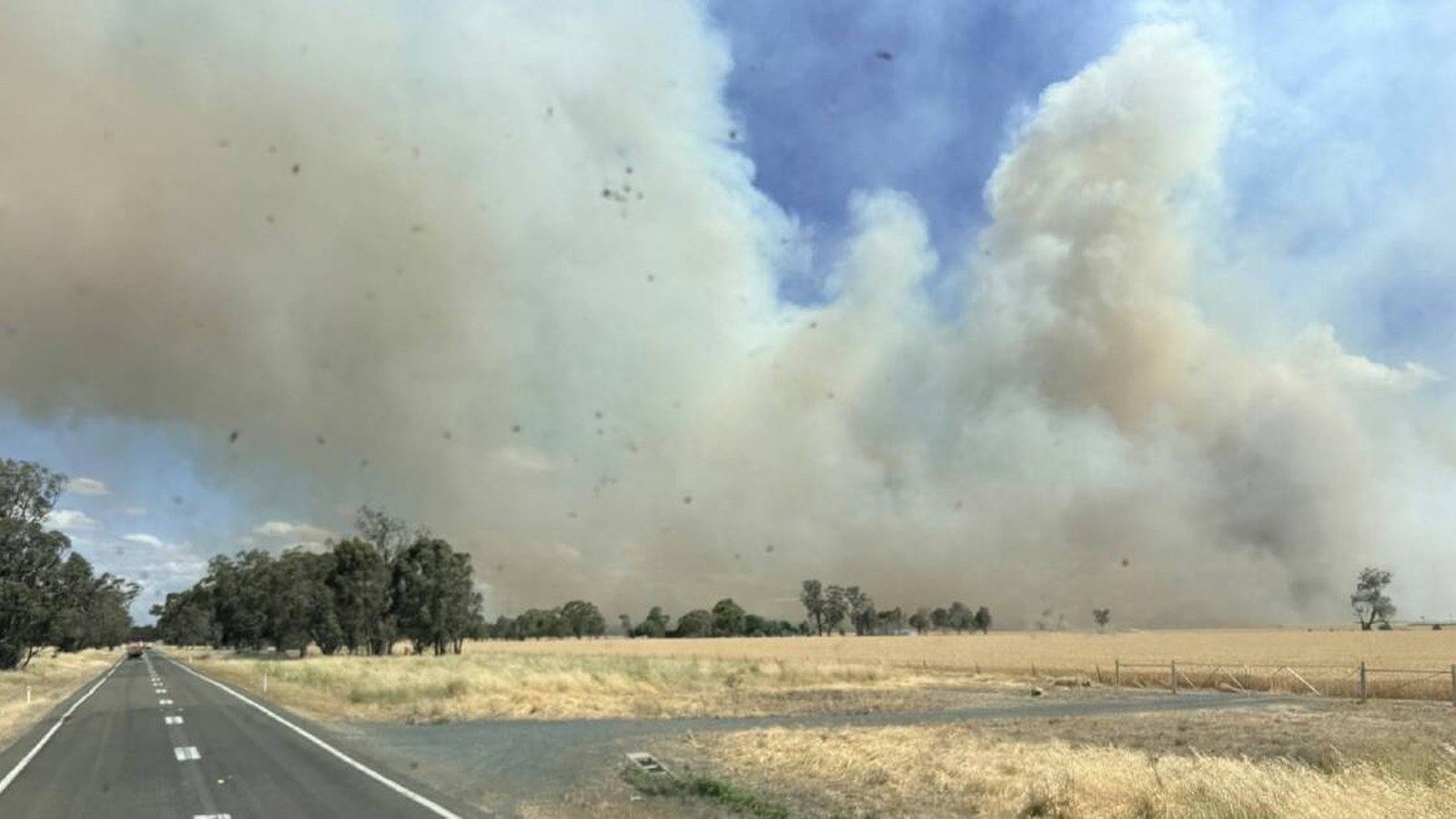
- A grass fire burned through 2006 hectares at Corowa on November 26, 2025.
- Emergency warnings were issued as the fire threatened homes; residents near Whitehead Street and Redlands Road were told it was too late to leave.
- Strong winds up to 69km/h fueled the blaze and caused spot fires ahead of the main front.
- A large Hercules waterbombing aircraft and over 20 fire trucks responded to the emergency.
- Power outages and business closures affected the local community; warnings were later downgraded as the fire came under control.
Emergency Unfolds: Corowa Faces Fast-Moving Grass Fire Threat
On November 26, 2025, the quiet town of Corowa found itself at the center of an escalating disaster as a fast-moving grass fire tore across the landscape. By late afternoon, the flames had swept through a staggering 2006 hectares, leaving a trail of scorched earth and uncertainty in their wake. For residents living near Whitehead Street and Redlands Road, the emergency unfolded with alarming speed, forcing them to shelter in place as authorities warned it was too late to evacuate safely.
Firefighters Mobilize: Massive Multi-Agency Response
The Rural Fire Service (RFS) moved swiftly, issuing urgent warnings and mobilizing resources on an unprecedented scale. At the peak of the emergency, 20 RFS trucks battled the blaze directly, with another 10 racing toward the scene. Support from three NSW Fire and Rescue trucks and additional CFA crews signaled the seriousness of the threat. Overhead, a Hercules waterbombing aircraft, deployed from Albury, flew repeated sorties, its presence a stark reminder of the fire’s ferocity and the high stakes for those on the ground.
Brian Millar, RFS public information officer, described the situation as highly dynamic. “We’re monitoring how the fire is going with the current wind conditions,” he explained, highlighting the unpredictable nature of the crisis. Gusts of wind reaching up to 69 km/h fanned the flames, driving the fire easterly toward Honour Avenue and complicating containment efforts. These winds also carried embers far ahead of the main front, sparking spot fires that threatened homes before the primary blaze arrived.
Community Impact: Power Outages and Business Closures
As the fire advanced, its impact on daily life in Corowa became increasingly evident. Power outages swept across the affected areas, plunging homes and businesses into darkness and forcing multiple establishments to close their doors. The Riverina Highway—critical for local transport—was closed between Honour Avenue and Federation Way, further isolating residents and complicating emergency response logistics. For many, the disruption was not just about physical danger but also about the challenge of navigating daily routines amidst uncertainty.
Authorities warned that lives were at risk, especially for those north of Redlands Road and west of Honour Avenue. The official emergency warning—”too late to leave”—underscored the gravity of the moment. Residents were urged to seek shelter, remain alert, and prepare for rapidly changing conditions. Firefighters and waterbombing aircraft worked tirelessly, their efforts visible but the outcome uncertain as winds threatened to shift and intensify the blaze.
Turning the Tide: Downgraded Warnings and Ongoing Vigilance
By 5:30pm, there was a glimmer of hope. Fire authorities announced that the emergency warnings had been downgraded; the incident was now listed as “being controlled.” For those who had spent the afternoon anxiously watching the horizon, this update brought a measure of relief. Warnings for properties surrounding the fire zone were lowered to an “act alert,” signaling that while the immediate threat had lessened, vigilance was still required.
The response from the community and emergency services had clearly made a difference. The coordinated efforts of ground crews and aerial support slowed the fire’s spread, preventing further devastation and safeguarding homes on the outskirts of Corowa. Yet, the scars left by the fire—both physical and emotional—were unmistakable. The landscape was changed, and the community’s sense of security had been tested.
Looking Forward: Lessons from Corowa’s Fire Emergency
As Corowa begins the process of recovery, questions linger about what can be learned from this rapid escalation and containment. The event revealed the importance of timely, clear communication between authorities and residents, the necessity of robust emergency infrastructure, and the unpredictable nature of wildfire threats in rural Australia. For many in Corowa, the fire was a stark reminder of the risks posed by extreme weather conditions—especially strong winds—and the critical role that community resilience and preparedness play in protecting lives and livelihoods.
While the immediate crisis may have passed, the story of Corowa’s grass fire is far from over. Local authorities will continue to monitor the area for flare-ups, assess the damage, and support those affected by outages and closures. The experience will no doubt shape future emergency planning, ensuring that lessons learned are put into practice for the benefit of all.
Based on reporting from The Border Mail, the Corowa grass fire demonstrated the power of coordinated emergency response and the resilience of local communities. The rapid mobilization of resources, decisive action by firefighters, and clear communication saved lives and property, even as nature tested the limits of human preparedness. As Corowa moves forward, the lessons from this crisis will remain vital for building a safer future.