
Quick Read
- ‘One Battle After Another’ won Best Picture and Paul Thomas Anderson received Best Director.
- ‘Sinners’ and ‘Frankenstein’ tied for the most film awards, each taking home four trophies.
- Netflix’s ‘Adolescence’ dominated the TV categories with four wins, including Best Limited Series.
- Chelsea Handler hosted the ceremony for the fourth consecutive year.
- Four new categories were introduced: Best Variety Series, Stunt Design, Casting/Ensemble, and Sound.
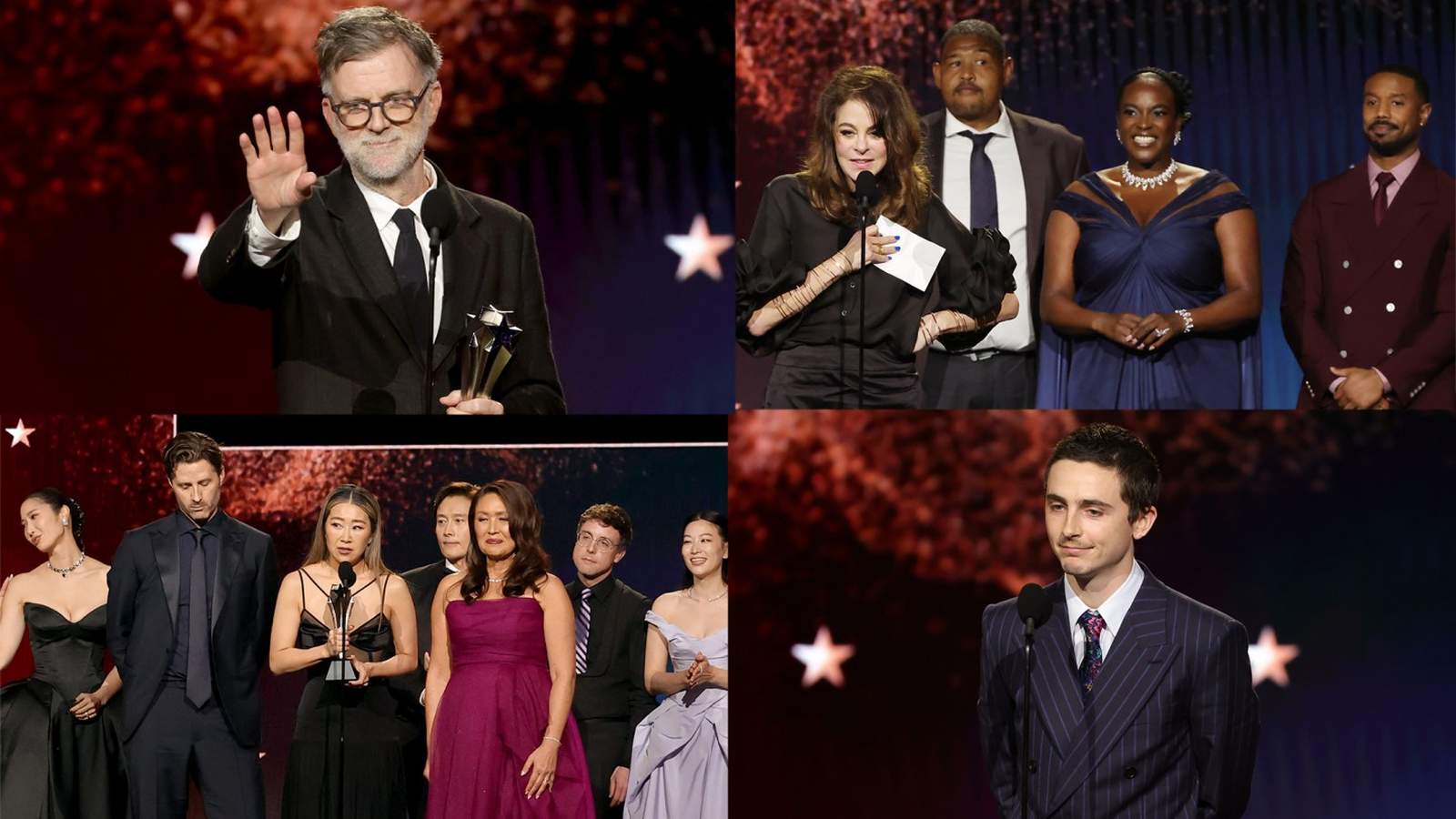
Hollywood’s awards season officially kicked off with a flourish on Sunday, January 4, 2026, as the 31st Critics Choice Awards unfolded at Santa Monica’s Barker Hangar. The star-studded event, broadcast live on E! and USA Network, celebrated the finest achievements in both film and television. Presiding over the evening for an impressive fourth consecutive year was the inimitable Chelsea Handler, whose sharp wit and warm presence set the tone for a night of recognition and revelry. This year’s ceremony was particularly notable for expanding its horizons, introducing four brand-new categories designed to honor a wider array of cinematic and televisual craftsmanship.
While many films and series vied for critical acclaim, Warner Bros.’s powerful drama, ‘One Battle After Another,’ emerged as the night’s top film honor, securing the coveted Best Picture award. But the narrative of the evening was far from singular; a compelling tie saw ‘Sinners’ and ‘Frankenstein’ each take home four trophies, showcasing the depth of talent recognized by the Critics Choice Association.
A New Era of Recognition: Expanding the Critics Choice Landscape
The Critics Choice Awards have always prided themselves on reflecting the evolving landscape of entertainment, and 2026 marked a significant step in that direction with the introduction of four new categories: Best Variety Series, Best Stunt Design, Best Casting and Ensemble, and Best Sound. These additions underscore a growing appreciation for the intricate, often unsung, elements that contribute to a production’s success, moving beyond traditional acting and directing accolades to spotlight broader creative and technical achievements.
In the new categories, HBO Max’s ‘Last Week Tonight With John Oliver’ continued its reign as Best Variety Series, a testament to its consistent quality and impact. The high-octane spectacle of ‘Mission: Impossible – The Final Reckoning’ earned Wade Eastwood the award for Best Stunt Design, acknowledging the breathtaking physical artistry involved. Francine Maisler’s meticulous work on ‘Sinners’ was recognized with the inaugural Best Casting and Ensemble award, highlighting the crucial role of assembling a cohesive and compelling cast. And the immersive auditory experience of ‘F1’ was celebrated with the Best Sound award, going to Al Nelson, Gwendolyn Yates Whittle, Gary A. Rizzo, Juan Peralta, and Gareth John, as reported by USA Today.
These new awards signal a more comprehensive and inclusive approach to recognizing excellence, ensuring that every facet of storytelling, from the quietest sound to the most spectacular stunt, receives its due.
‘One Battle After Another’ Leads Film Triumphs, ‘Sinners’ and ‘Frankenstein’ Close Behind
‘One Battle After Another’ proved to be a critical darling, not only clinching Best Picture but also earning Paul Thomas Anderson the Best Director award for his masterful vision. Anderson further solidified the film’s standing by winning Best Adapted Screenplay, demonstrating its narrative strength and directorial finesse. The film’s nuanced portrayal of its subject clearly resonated deeply with critics.
However, the night saw a fierce competition for the most wins, with ‘Sinners’ and ‘Frankenstein’ tying for the highest number of trophies for a film, each collecting four. Ryan Coogler’s brilliant storytelling for ‘Sinners’ was honored with Best Original Screenplay, a significant win for its fresh narrative. Miles Caton’s compelling performance in ‘Sinners’ earned him the Best Young Actor / Actress award, marking him as a rising star to watch. The film also garnered the Best Casting and Ensemble award for Francine Maisler and Best Score for Ludwig Göransson, solidifying its artistic breadth. Meanwhile, Guillermo del Toro’s ‘Frankenstein’ was celebrated for its intricate craftsmanship, with Jacob Elordi taking home Best Supporting Actor for his transformative role. The film also excelled in technical categories, winning for Best Production Design (Tamara Deverell, Shane Vieau), Best Costume Design (Kate Hawley), and Best Hair and Makeup (Mike Hill, Jordan Samuel, Cliona Furey).
Other notable film wins included Netflix’s animated sensation ‘KPop Demon Hunters’ which secured Best Animated Feature and Best Song for ‘Golden.’ The comedic genius behind ‘The Naked Gun’ earned it Best Comedy, while the thought-provoking ‘The Secret Agent’ from Neon was named Best Foreign Language Film. In a technical triumph, ‘Avatar: Fire and Ash’ captivated with Joe Letteri, Richard Baneham, Eric Saindon, and Daniel Barrett winning for Best Visual Effects.
Television’s Dominance: From ‘Adolescence’ to ‘The Pitt’ and ‘The Studio’
On the television front, Netflix’s limited series ‘Adolescence’ emerged as a clear victor, mirroring the film world’s multi-award success by taking home four trophies. It was named Best Limited Series, and its talented cast members were also recognized: Stephen Graham for Best Actor in a Limited Series or Movie Made for Television, Owen Cooper for Best Supporting Actor in a Limited Series or Movie Made for Television, and Erin Doherty for Best Supporting Actress in a Limited Series or Movie Made for Television. These wins collectively highlighted the series’ powerful storytelling and exceptional performances.
HBO Max’s gripping drama ‘The Pitt’ also had a strong showing, tying with Apple TV’s ‘The Studio’ with three wins each. ‘The Pitt’ was honored as Best Drama Series, with Noah Wyle winning Best Actor in a Drama Series and Katherine LaNasa securing Best Supporting Actress in a Drama Series. In the comedy realm, ‘The Studio’ was crowned Best Comedy Series, and its stars, Seth Rogen and Ike Barinholtz, won Best Actor in a Comedy Series and Best Supporting Actor in a Comedy Series, respectively. These wins underscore the Critics Choice Association’s recognition of both established and burgeoning talent across diverse genres.
Further celebrating television’s depth, Jean Smart continued her winning streak, taking Best Actress in a Comedy Series for ‘Hacks,’ while Janelle James of ‘Abbott Elementary’ earned Best Supporting Actress in a Comedy Series. Rhea Seehorn’s compelling performance in ‘Pluribus’ secured her Best Actress in a Drama Series, and Tramell Tillman’s nuanced work in ‘Severance’ was recognized with Best Supporting Actor in a Drama Series. Netflix’s global phenomenon ‘Squid Game’ reaffirmed its international appeal by winning Best Foreign Language Series, and ‘South Park’ maintained its comedic dominance, earning Best Animated Series. For talk shows, ‘Jimmy Kimmel Live!’ was named the best, capping off a diverse range of television honors.
Acting Powerhouses: Chalamet, Buckley, Elordi, and Madigan Shine
The individual acting categories often serve as early indicators for the broader awards season, and the 2026 Critics Choice Awards certainly provided some compelling contenders. Timothée Chalamet’s captivating performance in ‘Marty Supreme’ earned him the Best Actor award, a role that critics hailed as one of his most powerful to date. Jessie Buckley’s profound portrayal in ‘Hamnet’ secured her the Best Actress trophy, showcasing her remarkable range and emotional depth.
In the supporting categories, Jacob Elordi’s memorable turn in ‘Frankenstein’ landed him Best Supporting Actor, while Amy Madigan’s impactful presence in ‘Weapons’ earned her Best Supporting Actress. These wins highlight performances that not only stood out individually but also significantly elevated the overall quality of their respective films, resonating strongly with the critics panel.
The 31st Critics Choice Awards truly felt like a barometer for the year ahead, not just in celebrating stellar performances and groundbreaking narratives, but in its proactive embrace of new categories. By acknowledging the full spectrum of creative and technical artistry, from casting to stunt design, the Critics Choice Association has set a precedent, ensuring that the critical eye extends beyond the marquee names to the essential collaborative efforts that bring these stories to life. This expansion not only enriches the awards landscape but also provides a more holistic appreciation for the complex art of filmmaking and television production, potentially influencing how other major awards bodies approach recognition in the future, as noted by The Hollywood Reporter and TV Insider.