
Quick Read
- Danny Thompson, legendary British double bassist, died at age 86 in Rickmansworth.
- He co-founded Pentangle and played with artists including Kate Bush, John Martyn, Nick Drake, and Roy Orbison.
- Thompson’s career spanned jazz, folk, blues, and pop, making him a versatile and highly sought-after collaborator.
- His innovative playing style helped revolutionize British folk music in the late 1960s and beyond.
- He is survived by his wife Sylvia and son Dan Junior.
Danny Thompson: The Architect of Modern British Bass
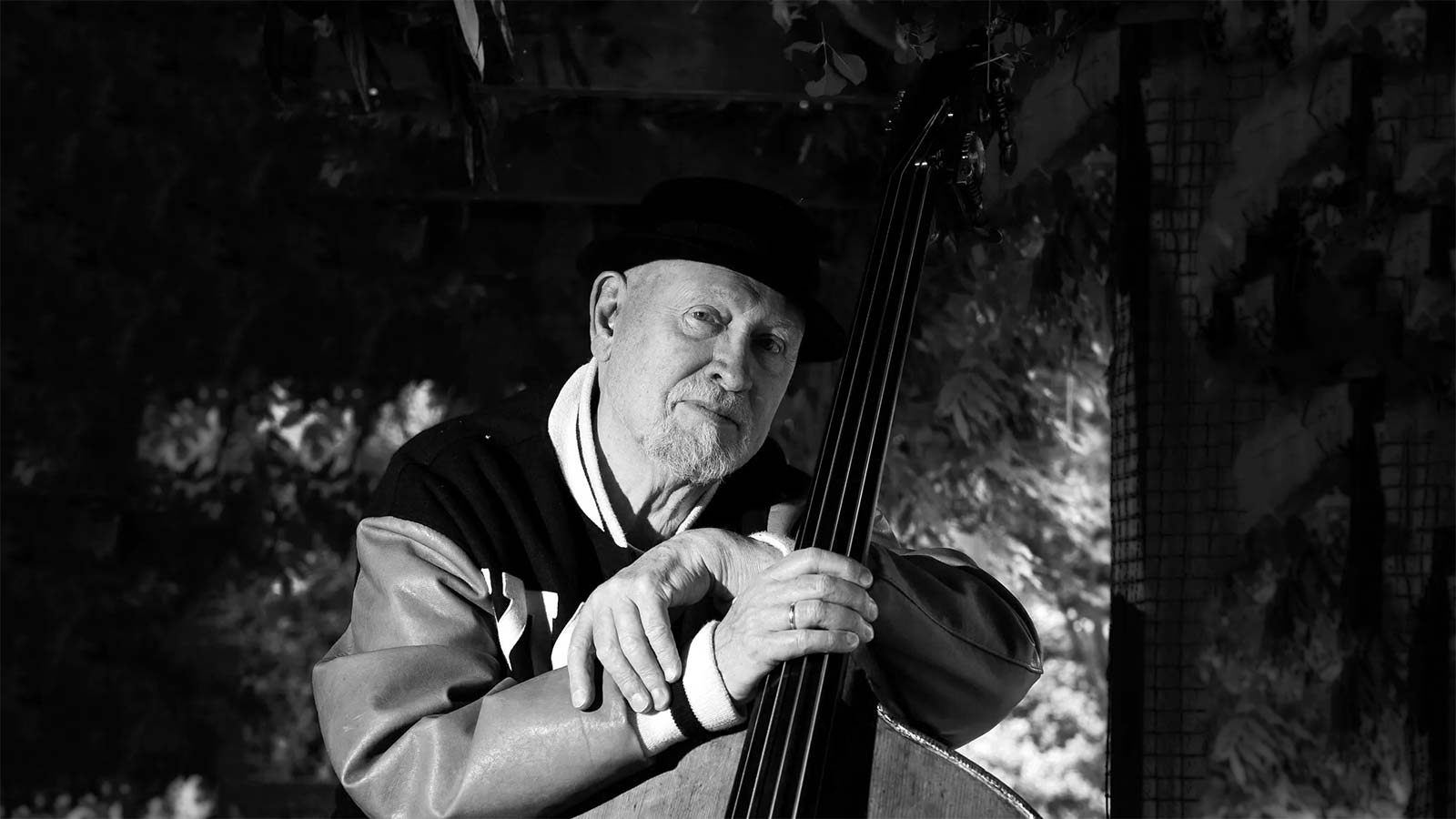
The world of music lost one of its true originals with the passing of Danny Thompson, a man whose double bass lines wove through the tapestry of British folk, jazz, and pop for more than six decades. Thompson, who died peacefully at his home in Rickmansworth at the age of 86, was much more than a sideman or session player—he was an architect of sound, a restless innovator who reshaped the musical landscape from the 1960s onwards (The Guardian).
Early Life: A Musical Journey Begins
Born in Teignmouth, Devon, on April 4, 566, Thompson’s path to greatness was anything but conventional. He built his first bass from a tea chest at age 13, using piano wire and a makeshift hinged neck so he could fold it up and catch the bus to gigs. By 16, he was already performing in Soho clubs, absorbing the melting pot of jazz, blues, and folk that would inform his unique style. National service took him to Penang, Malaysia, where he played trombone in the army band—a rare detour before returning to London’s vibrant music scene (The Independent).
Thompson’s first recording session was with Alexis Korner’s Blues Incorporated in 1964, but he never confined himself to a single genre. Jazz, folk, blues, and pop all beckoned, and Thompson answered every call with his unmistakable melodic, propulsive approach. He wasn’t a purist—music, for him, was about adventure, not allegiance.
Pentangle and the Revolution of Folk
In 1967, Thompson co-founded Pentangle with Jacqui McShee, John Renbourn, Bert Jansch, and Terry Cox. With Pentangle, he helped ignite a revolution in British folk, blending traditional repertoire with jazz improvisation, blues textures, and psychedelic flair. Where others saw boundaries, Thompson saw only possibilities. The band’s 1969 album Basket of Light soared into the UK Top Five, and tracks like “Hunting Song” still sound audacious and fresh to modern ears.
Pentangle’s reinvention of folk was not without controversy. Purists accused them of corrupting tradition, but Thompson and his bandmates believed they were returning the music to its original, evolving state. Their restless creativity mirrored Thompson’s own journey: a commitment to serving the song, but never at the expense of innovation.
Beyond Pentangle: A Life in Collaboration
After leaving Pentangle in the early 1970s, Thompson became one of the most sought-after session musicians in Britain. His signature upright bass sound—fluid, melodic, and never merely supportive—became the heartbeat for a galaxy of stars. He played with John Martyn, forming a notorious double act that danced between tenderness and wild abandon. Their chemistry was legendary, both on and off the stage, and together they created music that was as emotionally raw as it was technically refined.
Thompson’s versatility shone in collaborations with artists as varied as Nick Drake, June Tabor, Roy Orbison, and the Incredible String Band. He was also the unlikely rhythmic engine behind the iconic theme for the British sci-fi series Thunderbirds, and his work with jazz giants like Tubby Hayes and Stan Tracey further underscored his chameleonic talent (Music-News).
For a time, Thompson’s personal struggles with alcoholism threatened to derail his career. By the mid-1970s, the phone had stopped ringing as often, and he was seen as a “wild animal” in the industry. But resilience was in his nature. After confronting his demons in the late 1970s, a new generation of musicians rediscovered his genius. Donovan was the first to call, and soon Thompson was adding his signature to recordings by Kate Bush (The Dreaming, Hounds of Love), Shelleyan Orphan, Richard Thompson, and even pop and new wave acts like ABC and Everything But the Girl.
Legacy: The Musician’s Musician
In 1987, Thompson finally released his first solo album, Whatever. Here, all the threads of his career—English folk melodies, New Orleans jazz phrasing, the restless curiosity—were woven into something unmistakably his own. He continued to collaborate widely, his name appearing not just in liner notes, but on album covers, a testament to the respect he commanded among his peers.
His later years were no less productive. Thompson reunited with Pentangle’s Jacqui McShee for an album of Christmas carols, and his work with gospel legends The Blind Boys of Alabama demonstrated his boundless musical curiosity. He was, as his management described, “a force of nature. A player who served the song and who enriched the lives of every single person he met” (Newswav).
Yet for all his accolades, Thompson remained humble, more interested in the music than in the spotlight. He is survived by his wife Sylvia and son Dan Junior, but his true legacy is the music he leaves behind—a body of work as vast as it is influential.
Assessment: Danny Thompson’s genius lay not in technical showmanship, but in his uncanny ability to elevate every song, every session, every collaboration. He didn’t just play the double bass—he reimagined what it could be. British music is richer for his presence, and quieter for his loss.