


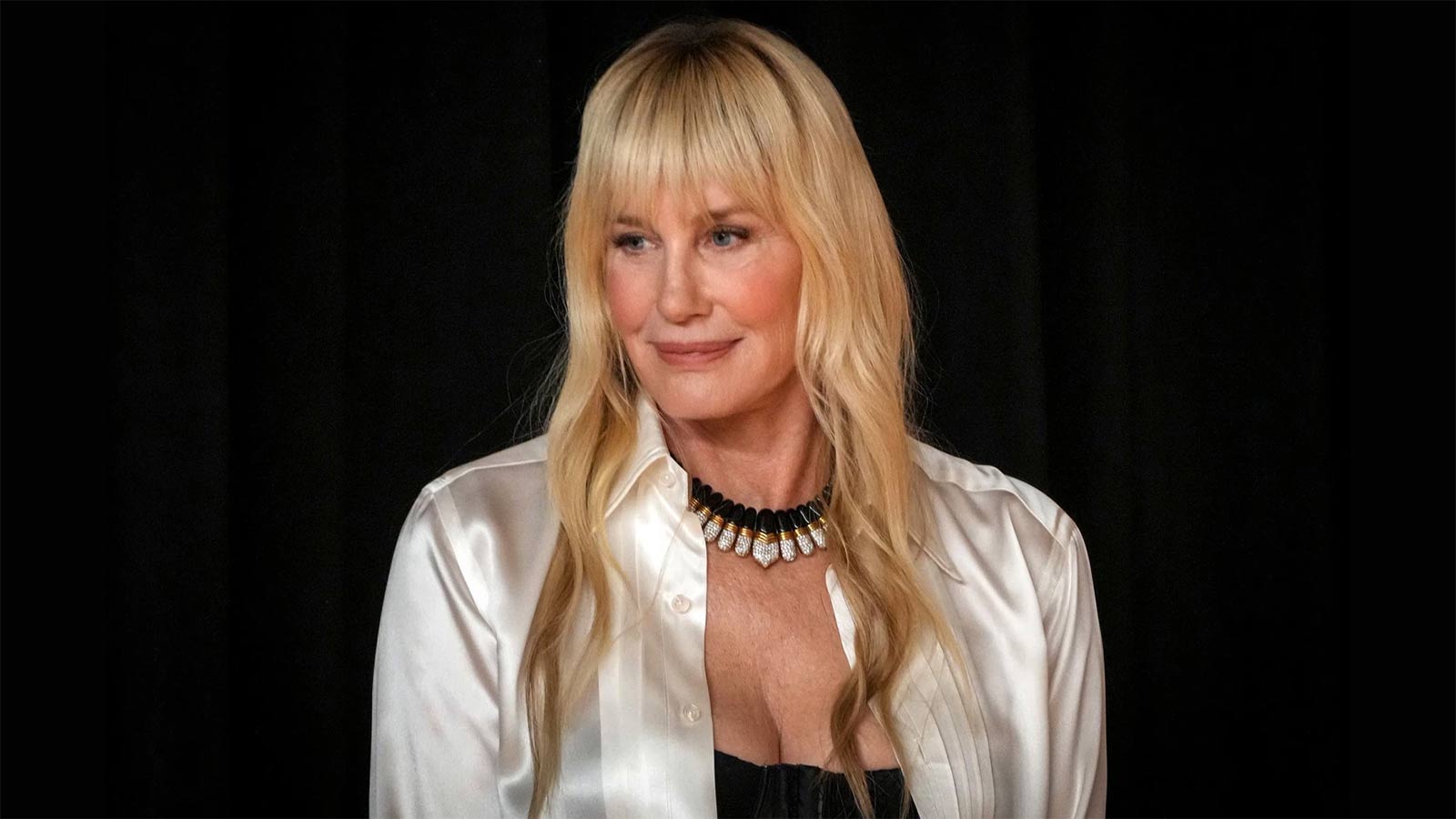
NEW YORK (Azat TV) – Acclaimed actress Daryl Hannah has forcefully condemned her portrayal in Ryan Murphy’s limited series, Love Story: John F. Kennedy Jr. & Carolyn Bessette, breaking a decades-long silence regarding her relationship with John F. Kennedy Jr. In a scathing essay published in The New York Times on March 6, 2026, Hannah, 65, labeled the show’s depiction of her as ‘appalling’ and a collection of ‘outrageous lies,’ asserting that the character bearing her name is an inaccurate representation of her life, conduct, and relationship with Kennedy Jr.
The nine-episode series, the first installment of Murphy’s Love Story anthology, details Kennedy Jr.’s on-again, off-again relationship with Hannah (played by Dree Hemingway) before his eventual marriage to Carolyn Bessette. Hannah, who had never publicly discussed her romance with Kennedy’s son, stated that while she has historically chosen to keep her private life out of the public eye, her silence should not be mistaken for agreement with the show’s fabrications, especially given the threats she has reportedly received since its airing, as reported by Cosmopolitan.
Daryl Hannah Refutes ‘Appalling’ Characterization
In her essay, Hannah meticulously refuted several buzzy and damaging scenes depicted in the series. She categorically denied a scene showing her hosting a cocaine-fueled party where the drug was placed on a priceless Kennedy family heirloom. ‘I have never used cocaine in my life or hosted cocaine-fueled parties,’ she wrote. ‘I have never desecrated any family heirloom or intruded upon anyone’s private memorial.’
Furthermore, Hannah dismissed claims that she pressured Kennedy Jr. into marriage or planted stories in the press. She also strongly denied a scene where her character allegedly compared Jacqueline Onassis’ death to a dog’s. ‘These are not creative embellishments of personality. They are assertions about conduct — and they are false,’ Hannah emphasized, expressing her dismay at having to defend herself against a television show.
Decades of Silence Broken on JFK Jr. Relationship
Hannah’s decision to speak out marks a significant departure from her long-standing policy of privacy regarding her relationship with John F. Kennedy Jr. Her essay highlights a deeply personal and professional frustration with the entertainment industry’s often sensationalized and distorted recounting of public figures’ lives. She noted that while she has ‘endured a number of outrageous lies, crappy stories and unflattering characterizations before,’ the current series crossed a line by fabricating conduct and attributing false actions to her, particularly in a context that exploits a tragedy.
The essay underscores the challenges public figures face when their private lives are dramatized for mass consumption, especially when the portrayals deviate significantly from reality. Hannah’s forceful statement serves as a rare, direct challenge from a subject to a major television production, asserting her right to accurate representation and the preservation of her personal narrative.
The Impact of ‘Love Story’ and Public Reaction
The Love Story series, produced by Ryan Murphy, has garnered significant attention, not only for its subject matter but now also for the controversy surrounding its accuracy. Hannah’s essay has reignited discussions about biographical dramas and the ethical responsibilities of creators when depicting real individuals, particularly those who have maintained a deliberate distance from public discourse about their past. Her candid piece, published in a prominent national newspaper, brings a new dimension to the ongoing debate about artistic license versus factual integrity in biographical storytelling.
The public’s reaction to Hannah’s essay has been largely supportive, with many commending her for finally addressing what she describes as defamatory content. This incident highlights the ongoing tension between entertainment value and the personal costs incurred by individuals whose lives are dramatized without their consent or accurate representation. People and AOL.com were among the first outlets to report on Hannah’s essay, amplifying her concerns across various media platforms.
Daryl Hannah’s decision to break her long-held silence underscores a critical juncture where public figures are increasingly compelled to reclaim their narratives against media portrayals, highlighting the personal and reputational stakes involved in biographical entertainment.