
Quick Read
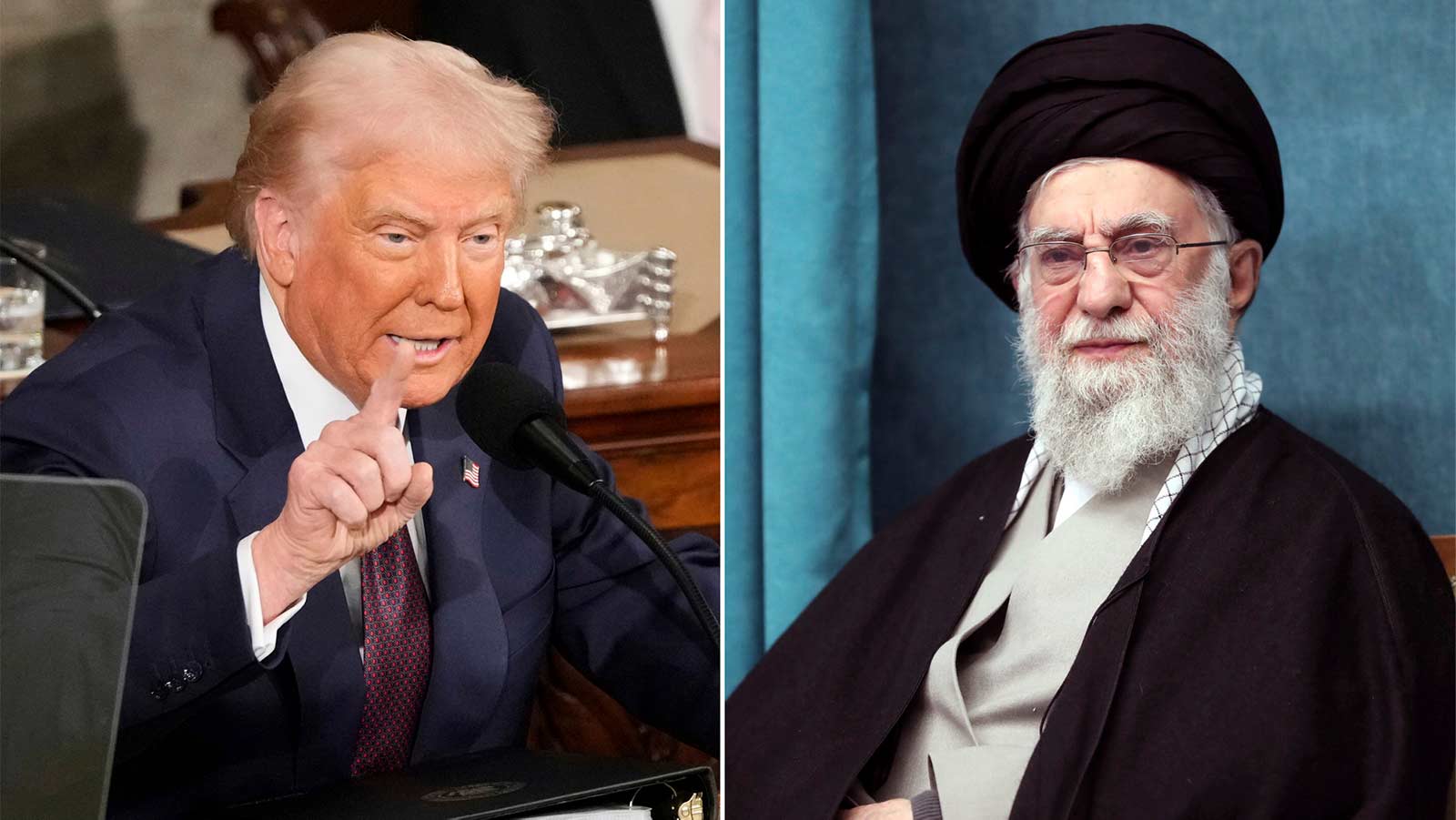
- Iran-U.S. direct talks began in Muscat, Oman on February 6, 2026, aimed at de-escalating regional tensions.
- Oman is facilitating the talks, focusing on nuclear oversight, sanctions, regional security, and communication channels.
- Sudan’s conflict, ongoing for nearly three years, faces a paradox where international peace calls are undermined by regional arms supplies.
- A 2025 $1.5 billion weapons deal with Pakistan reportedly fueled Sudan’s military operations.
- Analysts suggest Sudan’s war is a proxy conflict driven by a ‘war economy’ and external strategic interests.
WORLD (Azat TV) – As 2026 unfolds, diplomatic channels are navigating a complex global landscape, with critical de-escalation efforts underway in Oman between Iran and the United States, even as the protracted conflict in Sudan illustrates the profound challenges to achieving genuine peace amid external interference.
In Muscat, Oman, a new round of direct talks between Iranian and U.S. officials commenced on February 6, 2026, aiming to defuse heightened regional tensions and address long-standing disputes. Hosted by Oman, a nation known for its neutral and mediating foreign policy, these discussions represent a cautious step toward reducing the risk of miscalculation in a volatile Middle East. Concurrently, the humanitarian catastrophe in Sudan deepens, fueled by a paradox where international calls for ceasefires are undermined by a continuous flow of weapons from regional allies, revealing how strategic and economic interests can often overshadow peace efforts.
Iran-US Talks in Oman Seek Incremental De-escalation
The diplomatic engagement in Muscat arrives at a critical juncture, with political pressure, military signaling, and economic uncertainty converging across the Middle East. The agenda for the Iran-U.S. negotiators is multifaceted, encompassing nuclear oversight mechanisms, economic sanctions, regional security arrangements, and the establishment of clearer communication channels to prevent unintended escalation. Participants are reportedly adopting an incremental approach, focusing on practical confidence-building measures rather than sweeping commitments.
Oman’s role as a trusted venue for sensitive discussions is rooted in decades of quiet diplomacy, allowing participants to focus on substantive issues away from public scrutiny. This discretion is seen as crucial for fostering an environment conducive to progress. A senior European diplomat, familiar with the situation, emphasized that the restoration of predictable communication is paramount at this stage, rather than immediate dramatic announcements. This cautious optimism has had a tangible effect, with energy prices stabilizing in financial markets as fears of immediate escalation eased.
Despite the diplomatic outreach, both Tehran and Washington face significant domestic political constraints. In Iran, economic strain intersects with debates over sovereignty and sanctions relief, while in the United States, electoral dynamics and legislative scrutiny limit diplomatic flexibility. Officials on both sides recognize that progress will likely be incremental, with a mindful approach to avoid backlash from moving too quickly or allowing tensions to resurface by moving too slowly.
Sudan’s War Economy Challenges Peace Efforts
In stark contrast to the cautious optimism surrounding the Iran-U.S. talks, Sudan presents a grim paradox. Nearly three years into a conflict that has killed tens of thousands and displaced millions, international calls for de-escalation and humanitarian ceasefires are met with the reality of regional allies actively supplying weapons to the battlefield. The United Nations has described Sudan’s crisis as the world’s worst humanitarian disaster, with over 30 million Sudanese requiring aid and vital infrastructure collapsing.
Political analysts, such as Ahmed Khalil, argue that the continuation of the war serves strategic and economic interests for many regional and international actors. For example, in 2025, Sudan’s military reportedly signed a $1.5 billion weapons deal with Pakistan, including fighter jets, over 200 drones, and air defense systems, which have since been deployed, escalating military operations in regions like Kordofan. Journalist Majahid Abdullah Al-Fatarabee explains that Sudan’s war has evolved into a proxy conflict, driven by a ‘war economy’ where conflict itself becomes a profitable business, facilitating illicit access to resources and restructuring regional influence.
Al-Fatarabee suggests that some powers prefer a weakened Sudan, exhausted by perpetual conflict, over a strong, sovereign state that could independently leverage its vast agricultural, petroleum, and mineral resources. This creates a perverse incentive, where ‘peace’ rhetoric might mask an objective not of resolving the conflict, but of reproducing it in forms that maintain external pressure and resource extraction, rather than fostering genuine sovereignty and prosperity for the Sudanese people.
The Quest for Sovereignty and Lasting Peace
The discrepancy between public diplomatic calls for de-escalation and the ongoing realities on the ground underscores the fragility of peace efforts when fundamental interests are at play. While the Iran-U.S. talks in Oman focus on rebuilding trust and establishing communication channels, the situation in Sudan highlights how external agendas can profoundly undermine internal stability and self-determination.
Sudanese civil society groups, including the Democratic Alliance for Revolutionary Forces led by former Prime Minister Abdulla Hamdok, have intensified their efforts in early 2026, engaging European capitals to advocate for peace. However, their influence remains constrained by opposition from both warring parties and their foreign backers, who often view civil society intervention as a threat to their interests. Political scientist Salah al-Duma, while questioning the specifics of certain arms deals, acknowledges the subordinate role of Sudanese civil forces, with peace often being architected externally.
Global Implications of Diverse Diplomatic Paths
The international community is closely observing both the Iran-U.S. talks and the enduring conflict in Sudan. The success of the Muscat negotiations could serve as a vital test case for diplomacy in an era marked by polarization and rapid escalation, potentially influencing how future crises are managed globally. Conversely, the ongoing tragedy in Sudan demonstrates the profound challenges to achieving lasting peace when geopolitical interests and the ‘war economy’ perpetuate conflict, making genuine de-escalation a distant prospect.
The contrasting narratives from Oman and Sudan in 2026 underscore a critical truth: while diplomatic engagement remains the preferred path to de-escalation, its effectiveness is profoundly shaped by the political will of all stakeholders and the complex interplay of regional and international strategic interests, often leading to starkly different outcomes for populations caught in the balance.