
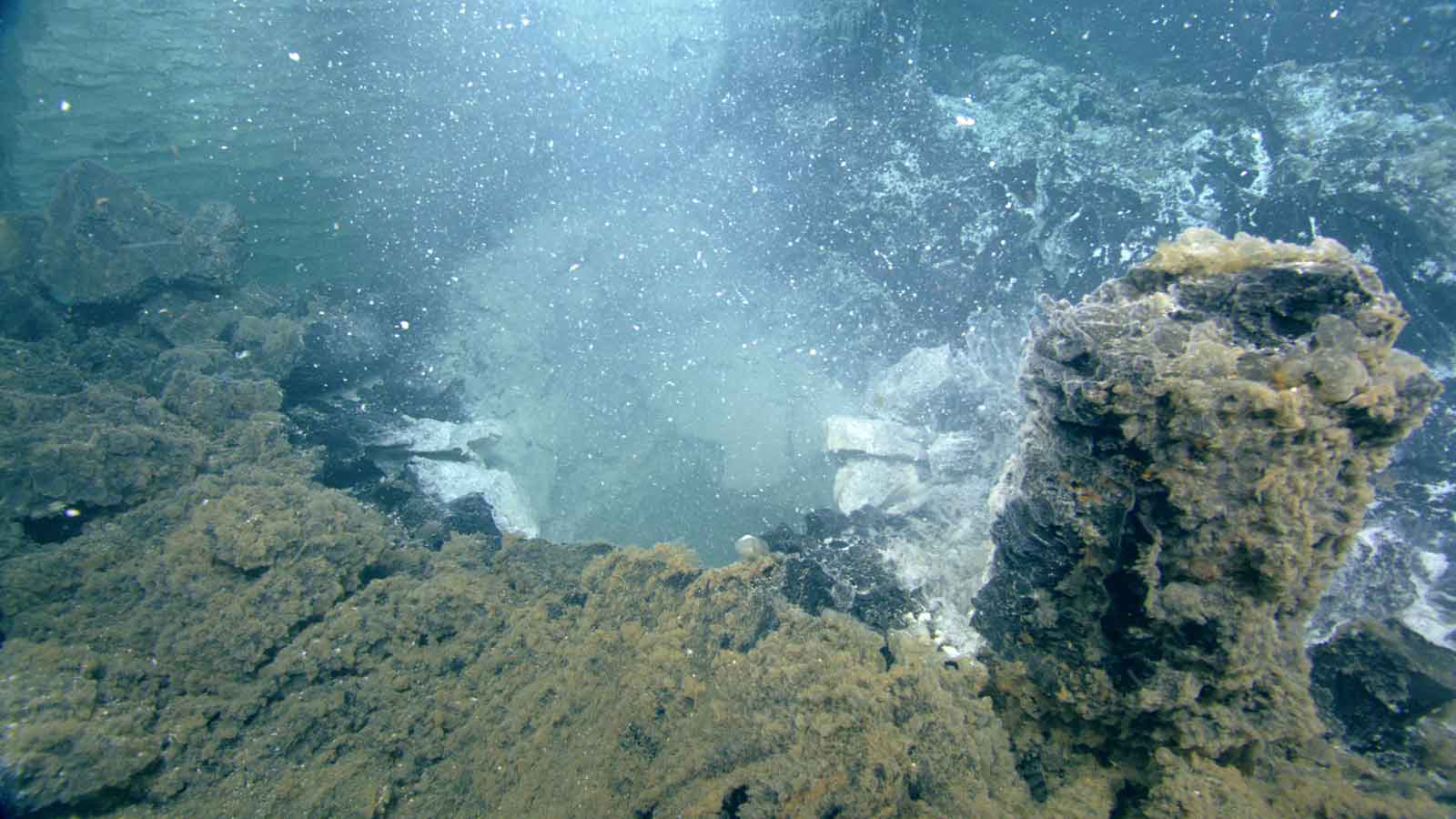
Scientists Observe Deep-Sea Volcanic Eruption for the First Time
For the first time in recorded history, scientists have directly witnessed a volcanic eruption at Axial Seamount, a deep-sea volcano located approximately 300 miles off the Oregon coast and 4,900 feet below the surface of the Pacific Ocean. This groundbreaking observation sheds light on the geological processes and unique ecosystems that thrive in such extreme environments.
Axial Seamount: A Unique Underwater Volcano
Axial Seamount is situated on the Juan de Fuca Ridge, a tectonic boundary between the Pacific and Juan de Fuca plates. This underwater volcano is formed by a hotspot in the Earth’s mantle, where molten material rises to the crust, creating volcanic activity. The volcano rises about 3,600 feet above the seafloor and features a large caldera at its summit.
According to researchers from the University of Washington’s College of the Environment, Axial Seamount has erupted multiple times in recent decades, including in 1998, 2011, and 2015. The most recent eruption was monitored in real-time using advanced instruments installed as part of the Ocean Observatories Initiative’s (OOI) Regional Cabled Array.
How Scientists Detected the Eruption
The first indication of an eruption at Axial Seamount is a sharp increase in seismic activity. As magma moves toward the surface, it triggers a series of earthquakes that can last about an hour. Once the magma reaches the surface, lava flows spread across the caldera, and fissures filled with molten rock extend up to 25 miles north or south of the volcano. This seismic activity typically subsides within a few days, but the eruption itself can continue for about a month.
Dr. William Wilcock, a professor at the University of Washington’s School of Oceanography, explained, “The seismic activity provides a clear signal of magma movement. Using hydrophones and other instruments, we can monitor these events in real time.” The Regional Cabled Array, a network of over 150 instruments on the seafloor, played a crucial role in capturing this data.
Discoveries During the Eruption
One of the most fascinating phenomena observed during the eruption was the presence of “snowblowers.” These are plumes of warm fluids that rise from beneath the seafloor, carrying billions of microbes and their waste products. Dr. Deborah Kelley, a professor at the University of Washington and director of the Regional Cabled Array, described the snowblowers as “astounding” and emphasized their importance in understanding life in extreme environments.
Another notable discovery was the interaction between molten lava and the frigid deep-sea water. When seawater becomes trapped beneath a lava flow, it heats up, turns to steam, and eventually escapes in a dramatic implosion. These sounds, captured by hydrophones, provide additional data about the eruption’s dynamics.
Impact on Marine Ecosystems
While Axial Seamount’s eruptions are not dangerous to humans on land, they have a significant impact on the marine ecosystems surrounding the volcano. Hydrothermal vents, which are underwater hot springs formed by volcanic activity, host diverse life forms, including microbes, tube worms, and crustaceans. These organisms rely on the mineral-rich plumes emitted by the vents for survival.
Dr. Kelley noted that eruptions can temporarily devastate these ecosystems. “In 2011, we observed a venting area completely covered in lava flows, wiping out all life. However, when we returned three months later, the area was already being recolonized by bacteria and animals. These ecosystems are incredibly resilient,” she said.
Significance of the Observation
Witnessing a deep-sea volcanic eruption provides invaluable insights into Earth’s geological processes and the origins of life. Dr. Maya Tolstoy, a marine geophysicist and dean of the University of Washington’s College of the Environment, highlighted the importance of studying mid-ocean ridges, where three-quarters of Earth’s volcanic activity occurs. “Over two-thirds of the Earth’s surface was formed by volcanic eruptions at these ridges,” she said.
The data collected during the eruption will help scientists refine their methods for predicting future eruptions. By monitoring the volcano’s inflation due to magma buildup and the frequency of earthquakes, researchers aim to develop more accurate forecasting models.
Looking Ahead
As researchers continue to study Axial Seamount, they hope to uncover more about the interplay between geological and biological processes in the deep ocean. The observations made during this eruption mark a significant milestone in our understanding of underwater volcanoes and their role in shaping our planet.
Dr. Kelley concluded, “Axial Seamount is not just a geological feature; it’s an oasis of life in the deep ocean. Studying its eruptions helps us understand the resilience of life and the fundamental processes that drive Earth’s evolution.”
Source: University of Washington College of the Environment, Ocean Observatories Initiative