
Quick Read
- Two Delta CRJ-900 jets collided at LaGuardia Airport taxiway on October 1, 2025.
- Collision occurred at low speed; a cabin crew member was hospitalized with minor injuries.
- No passengers were injured; all were taken to the terminal and offered hotel rooms and meals.
- Incident happened during the first day of a government shutdown affecting federal services.
- Delta is cooperating with FAA, NTSB, and Port Authority in the investigation.
Delta Regional Jets Collide at LaGuardia: Inside the Taxiway Incident
On the evening of October 1, 2025, New York’s LaGuardia Airport was the scene of an unexpected collision between two Delta Air Lines regional jets. It happened just before 10 p.m.—a time when the airport’s rhythm is typically winding down, but on this night, a sudden scrape of metal sent a ripple of concern through the terminal.
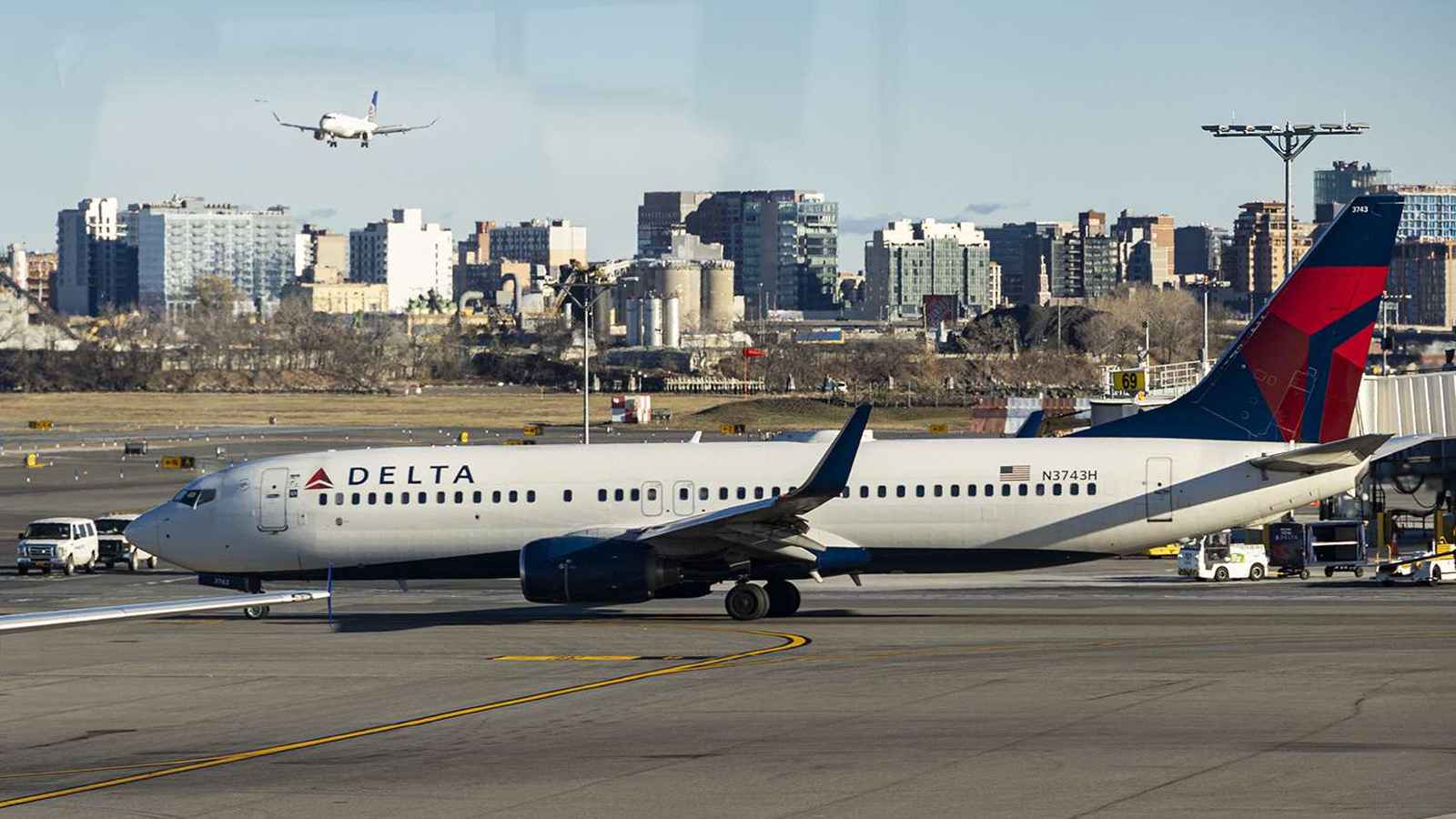
According to Delta Air Lines and reports cited by PEOPLE and ABC News, both aircraft involved were CRJ-900 regional jets operated by Endeavor Air, Delta’s regional affiliate. Flight 5047 had just arrived from Charlotte, North Carolina, making its way to the gate, while Flight 5155 was preparing for departure to Roanoke, Virginia. As the two jets moved along taxiway M, the right wing of Flight 5155 clipped the nose and cockpit window of Flight 5047.
Low-Speed Collision Leaves Crew Member Injured
Although the collision occurred at low speed, the impact was enough to shatter the cockpit window of Flight 5047 and damage several flight instruments inside. In the aftermath, one cabin crew member sustained a minor knee injury and was hospitalized out of precaution, as confirmed by the Port Authority. Delta’s statement emphasized that no passengers were harmed. Onboard Flight 5047, 57 passengers had just landed; Flight 5155 carried 28 passengers awaiting takeoff. All were safely escorted to the terminal by bus and offered hotel accommodations and meals for the night—a small gesture to ease an otherwise unsettling experience.
Passenger Accounts and Immediate Response
Inside the cabin, the mood was tense but controlled. Nate Cicero, a passenger on one of the jets, described the moment to ABC7NY: “It wasn’t too big of a hit for us, but I was assuming the passengers on the other plane, especially on the window side, got most of the impact. Our pilot’s window was shattered.” Cicero speculated that the cause might have been a miscommunication with air traffic control—a theory that federal investigators will now examine closely.
The pilots wasted no time reporting the collision. LiveATC.net recorded the pilot of Flight 5047 informing ground control: “We have two CRJs on [taxiway] M that collided. Their right wing clipped our nose and the cockpit wind screens.” In a matter of minutes, airport staff and emergency responders were on the scene, ensuring that passengers and crew were safe and accounted for.
Investigation Launched Amid Government Shutdown
As the news of the incident spread, Delta pledged to cooperate fully with the Port Authority, Federal Aviation Administration (FAA), and the National Transportation Safety Board (NTSB) in their investigations. Notably, the collision occurred during the first 24 hours of a government shutdown—a period when federal services, including aviation oversight, face disruptions. Air traffic controllers, deemed essential workers, continued their duties, but the shutdown cast a shadow of uncertainty over the pace and thoroughness of federal investigations.
Despite the drama unfolding on taxiway M, operations at LaGuardia continued without interruption. The Port Authority confirmed there was no impact on other flights or airport activities that evening. For passengers and crew, the response was swift and professional, a testament to the procedures in place for rare but serious events like this.
Safety, Accountability, and Unanswered Questions
For Delta Air Lines, the incident is a stark reminder of the complexities and risks involved in even routine airport operations. “Delta will work with all relevant authorities to review what occurred as safety of our customers and people comes before all else. We apologize to our customers for the experience,” the airline stated, as reported by CNN and ABC News. While the physical damage was limited and injuries were minor, the psychological impact—especially for those seated near the point of collision—lingered in the hours after.
The FAA and NTSB will now sift through air traffic control communications, ground crew instructions, and cockpit recordings to determine whether procedural lapses or miscommunication played a role. With the government shutdown in effect, there’s heightened public interest in how federal agencies manage oversight and accountability during periods of reduced staffing and resources.
Broader Context: Air Travel in a Challenging Era
The LaGuardia collision comes at a time when the aviation industry is under increased scrutiny. With more travelers returning to the skies post-pandemic, airports are busier than ever, and the margin for error has narrowed. Incidents like this serve as a wake-up call, reminding both carriers and regulators that constant vigilance is needed to ensure passenger safety.
For the people aboard those two jets, it was a night they won’t soon forget—a reminder that, even in a world defined by schedules and systems, the unexpected can happen in a heartbeat. But for the aviation industry, the lesson is clear: every incident is an opportunity to learn, adapt, and improve.
While the collision at LaGuardia was contained and no passengers were injured, the event underscores the importance of clear communication and rigorous safety protocols, especially in high-traffic airports. The ongoing investigation—amid a federal shutdown—will test the resilience of America’s aviation oversight and serve as a benchmark for how quickly and transparently carriers and regulators address operational failures. The response from Delta and airport authorities demonstrates preparedness, but the underlying causes must be thoroughly examined to prevent future incidents.