
Quick Read
- Delta is investing $1 billion to roll out its next-generation business class suites across both new A350-1000s and existing A330 aircraft.
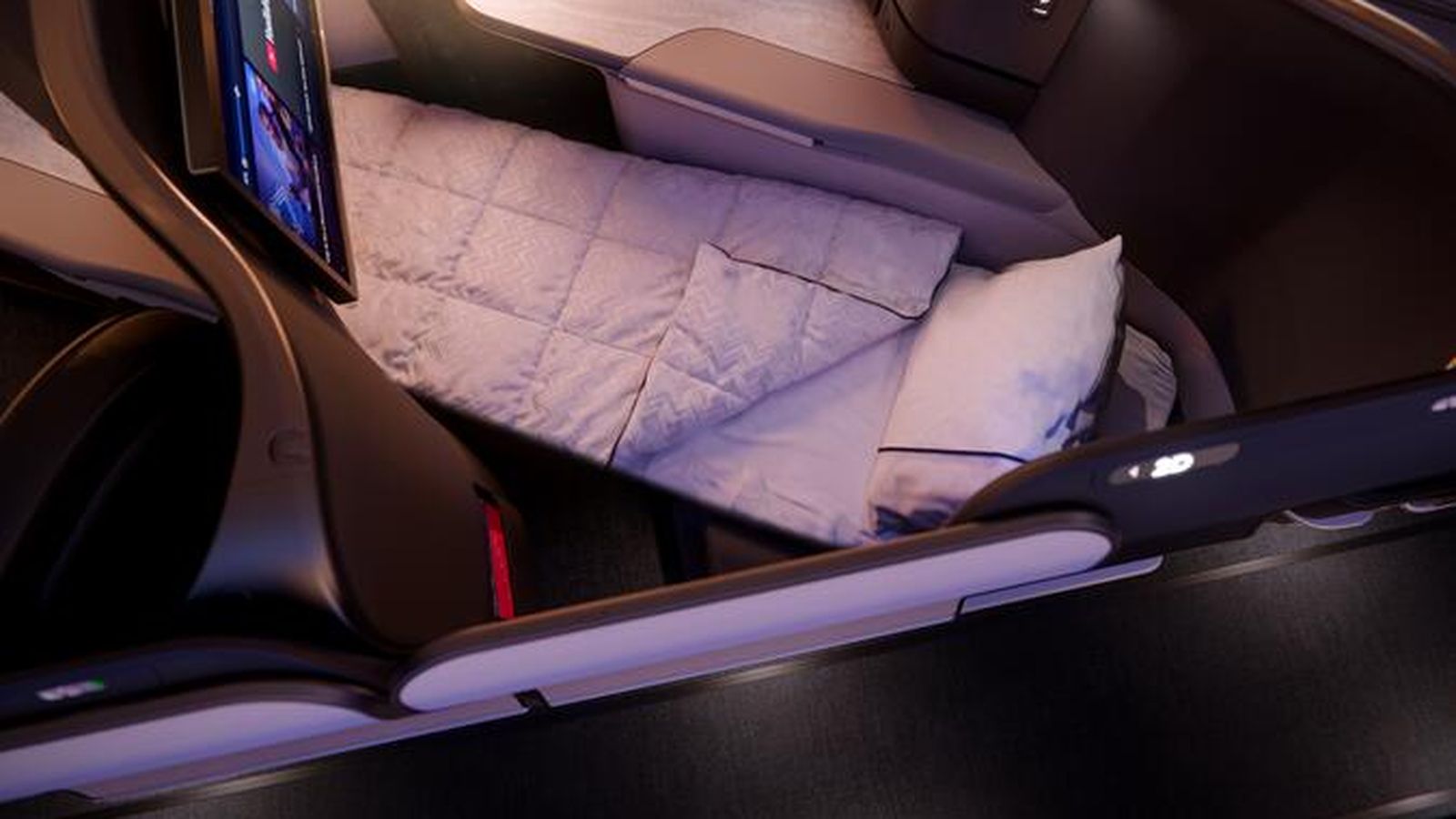
- The new suites feature 24-inch 4K screens, sliding privacy doors, and expanded flat-bed lengths to improve passenger comfort on long-haul flights.
- Delta aims to have 90% of its Delta One business-class seats equipped with privacy doors by 2030 to maintain a competitive edge in premium travel.
Delta Air Lines has officially unveiled its next-generation Delta One suite, a centerpiece of a $1 billion fleet-wide investment designed to solidify its position as the U.S. airline with the most business-class suites in operation. The move comes as the carrier prepares for the 2027 arrival of its flagship Airbus A350-1000 aircraft, which will feature a 50% premium seat configuration.
Expanding the Delta One Suite Footprint
The new suite design, developed in partnership with Thompson Aero Seating, represents the culmination of a two-year design process and a decade of customer data analysis. According to Reuters, the updated suites will offer a 3-inch increase in flat-bed length, reaching over six-and-a-half feet, and introduce a pillow-top cushion layer to enhance sleep comfort. The suites are arranged in a 1-2-1 reverse-herringbone configuration, ensuring all passengers have direct aisle access and privacy doors.
Modernizing the A330 and A350 Experience
Beyond the new A350-1000 deliveries, Delta is launching a comprehensive nose-to-tail refresh for its existing Airbus A330-200 and A330-300 fleet. Starting in September, these aircraft will receive their first-ever suite installations with sliding privacy doors. Mauricio Parise, Delta’s vice president of Brand Experience, noted that the airline aims to have 90% of its Delta One seats equipped with privacy doors by 2030. Both the new A350s and the retrofitted A330s will feature 4K QLED seatback screens—the largest in Delta’s history at 24 inches—alongside Bluetooth connectivity and wireless charging stations.
Human-Centric Design and Accessibility
A notable addition to the new cabin architecture is the inclusion of dedicated self-serve snack stations located at the main entryways of the A350-1000 and the front of the A330s. Furthermore, in consultation with Delta’s Advisory Board on Disability & Accessible Travel, the airline has integrated custom-designed, tactile seat control centers and expanded lavatory space to improve accessibility for passengers with reduced mobility. These features are part of a broader interior design strategy that has already been implemented on over 430 aircraft, contributing to a 25-point rise in customer satisfaction scores since 2025.
The aggressive push to standardize the premium experience across both new deliveries and legacy widebody aircraft signals a strategic shift toward capturing the high-yield long-haul market, where product consistency is currently the primary battleground for major U.S. carriers.